



An Inside Look: ZeroEyes, United Safety Partner to Resell Gun-Detection Product
ZeroEyes Co-Founder/Chief Revenue Officer Sam Alaimo and United Safety President/CEO Joseph Mirabile discuss with METRO how the partnership developed, plans to increase the awareness of the ZeroEyes product, and more.


ZeroEyes’ software layers over existing security cameras, identifying brandished guns and dispatching alerts to security personnel and local law enforcement as fast as three to five seconds from the moment of detection.
ZeroEyes
ZeroEyes and United Safety & Survivability Corp. formed a strategic partnership to increase safety and decrease gun-related violence on public transit.
As part of the agreement, United Safety will resell ZeroEyes’ proactive artificial intelligence (AI) gun detection solution to its extensive customer base of public transit agencies to reduce the probability and impact of active shooter threats on buses, subways, and other mass transit systems.
“The partnership was founded on the principle that both companies are dedicated to the mission of saving lives,” United Safety’s President/CEO Joseph Mirabile told METRO. “The founders of both companies were able to first connect and talk about the mission at the Navy Seal Future Foundation which both companies support. The passion that the ZeroEyes team put into developing this revolutionary product really resonated with the United Safety team. The partnership grew organically from there and led to collaborating to help accelerate the deployment of this technology into the public transit market.”
“Their support will give us the opportunity to introduce ZeroEyes to an entire global network of transit operators, supported by a name they already know and trust,” added Zero Eyes Co-Founder/Chief Revenue Officer Sam Alaimo. “United Safety provides 60 to 65 percent of U.S. public transit agencies with some type of safety-related product every year, not to mention their international customers.
ZeroEyes’ software layers over existing security cameras, identifying brandished guns and dispatching alerts to security personnel and local law enforcement as fast as three to five seconds from the moment of detection. Former U.S. military and law enforcement specialists verify every detection 24/7/365 from the in-house ZeroEyes Operations Center to deliver accurate and actionable intelligence on gun-related incidents, including the gunman's appearance, clothing, weapon, and last known real-time location.
A well-known supplier in the transit space, United Safety provides technology to protect lives and property across a wide range of industries, including transit, first responder, school bus, marine, military, mining and forestry. The company engineers and produces lifesaving systems in-house, and works with strategic partners like ZeroEyes to improve public safety globally.
“United Safety is dedicated to the mission of saving lives by bringing the most advanced and groundbreaking technologies into the markets which they serve,” said Mirabile. “The ZeroEyes technology fits the mission and vision of United Safety perfectly.”
ZeroEyes' A.I. was trained to detect only guns; it does not perform any facial recognition, so there is no risk of bias based on skin color or other personal characteristics. The system also does not receive, record, store, or share personal or biometric data, videos, or images of any kind.
“We have no need to store personal information,” said Alaimo. “We are purely focused on identifying guns and providing accurate and actionable intelligence to safety personnel and local law enforcement. Our algorithms look for guns, not faces or body types. Until a gun is identified, the monitoring screens in the ZOC stay absolutely blank, meaning our team does not see a live feed from any cameras. Our platform does not store personal or biometric data and does not conduct any kind of facial recognition.”
ZeroEyes was founded by a group of former Navy SEALs and technologists that used hundreds of thousands of proprietary images and videos to train its A.I. to be the most comprehensive gun detection technology on the market. Its technology is deployed across a variety of industries in 30-plus states, including K-12 school districts, commercial property groups, shopping malls, places of worship, hospitals, military bases, manufacturing plants, casinos, and Fortune 500 campuses.
In November, METRO reported that Philadelphia’s SEPTA will be the first transit agency to pilot the ZeroEyes technology on its passenger rail platforms. Alaimo said setup of the pilot is nearly complete and ready for launch.
Mirabile explained that in its role, United Safety won’t necessarily try to “market” the ZeroEyes product to the transit industry, but look to educate them on the product and the critical role it could play in boosting safety.
“United Safety’s plan is not to market but to educate the transit industry on this groundbreaking technology,” he said. “We believe through education and deployment we can help save and protect the lives of our transit hero workers and ridership on an everyday basis. United Safety believes this technology is the gold standard in AI weapons detection and monitoring around the world.”
More Security and Safety

Transit Agencies Highlight Safety Gains at National Summit
Leaders from 15 major transit systems shared crime-reduction results and safety initiatives while discussing the role of continued federal support.
Read More →
DART Launches Major Security, Fare Enforcement Initiative
The 90-day demonstration will deploy coordinated security teams at five light rail stations while testing controlled access and gathering data to guide future investments.
Read More →
RTD Launches NextRide App to Consolidate Trip Planning, Fares, Security Reporting
The app expands on RTD’s existing NextRide web application and allows customers to view real-time vehicle locations and service alerts, purchase and store digital fares, and access customer support.
Read More →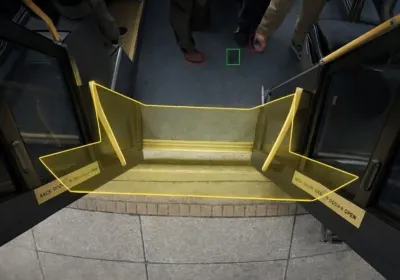
TAPTCO Updates OSHA Compliance Training for Transit Maintenance Operations
The revamped program addresses 26 OSHA standards for maintenance facilities, with TAPTCO pointing to training, documentation, and everyday shop hazards as continuing challenges for transit operations.
Read More →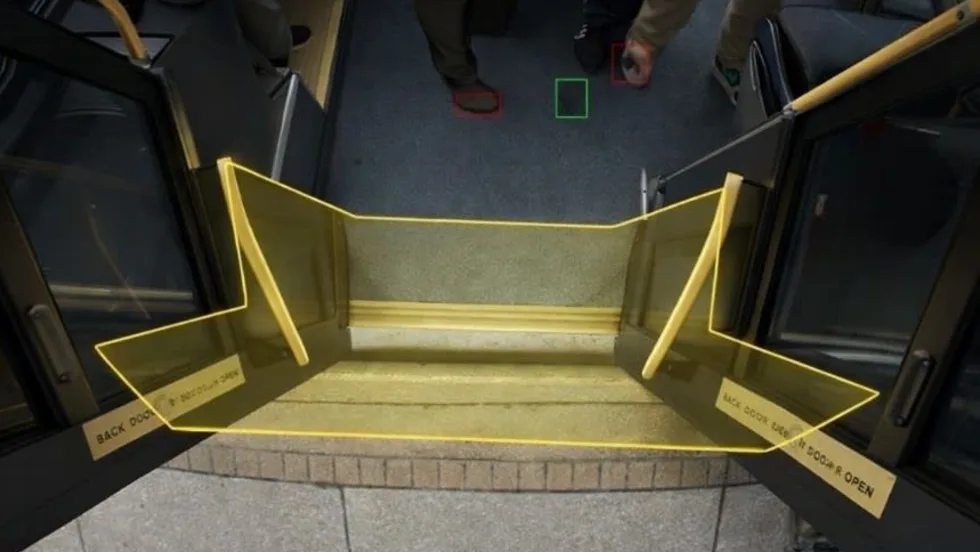
How VaporVision Adds Value to Transit Door Systems
Wabtec engineers explain how the system improves doorway detection, strengthens diagnostics and gives transit agencies and OEMs greater operating flexibility.
Read More →
FRA Announces $5.3B in Rail Investments, Including $2B for Amtrak
Funding will support grade-crossing improvements, infrastructure upgrades, and new Amtrak equipment in 23 states.
Read More →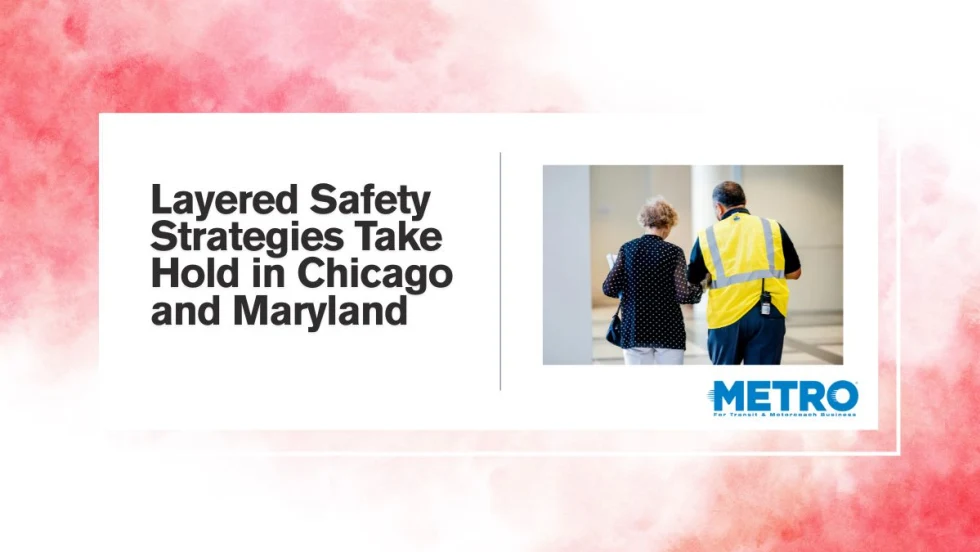
Chicago, Maryland Expand Non-Law-Enforcement Safety, Rider Support
The CTA and MTA are launching new programs aimed at de-escalation, crisis response, rider assistance, and greater transparency.
Read More →
LA Metro, City of West Hollywood, and Partners Advance Smarter Bus Lane Enforcement
The award-winning partnership combines AI-powered detection with human oversight to improve bus reliability, accessibility, and enforcement efficiency.
Read More →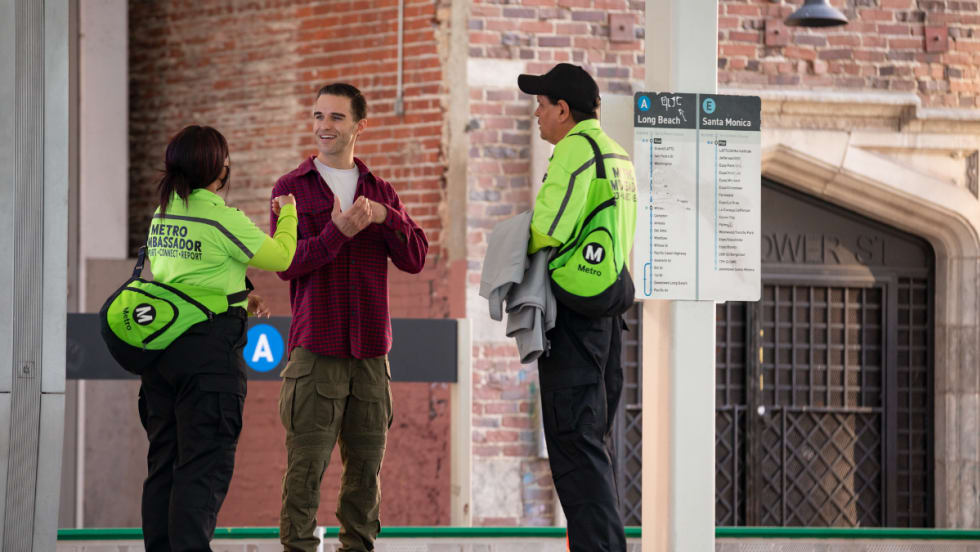
LA Metro Reports 57% Decline in Homelessness on Transit System Since 2024
The agency's latest homelessness count offers new data on how care-based services and cross-sector partnerships can complement traditional transit security strategies.
Read More →
FTA Launches 'Transit Moves America' Dashboard to Highlight Agency Safety and Performance
The online dashboard transforms National Transit Database information into a public-facing resource that allows users to compare transit agencies on key operational and safety metrics.
Read More →