



APTA ‘Webinar’ gives pointers on cutting rising health care costs
Increasing again at 1980s-style rates, health care costs are backing many public transport agencies into a Hobson’s choice between cutting coverage and risking labor-management conflict or cutting service to cope with exploding operating budgets.

Increasing again at 1980s-style rates, health care costs are backing many public transport agencies into a Hobson’s choice between cutting coverage and risking labor-management conflict or cutting service to cope with exploding operating budgets. This dilemma was the tenor of the discussion during a novel Webinar titled “Health Care Benefits — Managing for the Future.” It was convened by the American Public Transportation Association in April. The average employer contribution for health care benefits is now $700 per family, which is equivalent to a 60 cents-per-hour wage increase for each employee in a transit organization, said Gregory Dash, president of John A. Dash & Associates, a transit labor relations consulting firm located in Havertown, Pa. Thanks to the effects of cost-control measures such as managed care, health care employer costs saw slower rates of growth through most of the 1990s. In 1994, they actually declined, according to a survey of employer-sponsored health plans by management consulting firm Marsh & McLennan. Toward the end of that decade, however, costs began to rise again. In 2002, employer-paid health care costs rose 14.7%, the largest increase since 1990 and more than four times the rate of inflation. It also wiped out the 15% increase in farebox revenue transit achieved in the same year, noted Jon Kessler, CEO of WageWorks in San Mateo, Calif. This situation forced employers not only in the transit industry but in other sectors to either reduce employee choice by offering fewer insurance plans or restricting doctor access, or to shift part of the cost to employees by increasing the workers’ part of the premium or via higher deductibles and co-payments. Such strategies, however, have become a major — if not the primary — issue in recent labor-management negotiations in the public transport industry. For example, in the settlement between the New York City Transit Authority and the Transportation Workers Union, the agency agreed to continue health care benefits while the union accepted various cost-share programs such as higher deductibles and restricted-access provisions. In response, the union declared that the agreement “was equivalent to a 6% wage increase in the first year alone,” Dash said. To help cope with these increases, several experts in the Webinar presented a variety of approaches. Dash said that some transit systems are bargaining with their unions over a “package” of both wage and benefits increases so that annual amounts of increases could be changed year to year depending on the increases in the costs of health insurances or other benefits. For example, the city of Phoenix’s contract with the Amalgamated Transit Union (ATU) provides for wage increases of 5% annually, allowing the ATU to apply these increases “to wages, pension or medical increases or any combination thereof as the union desires each year,” Dash added. Others are trying consumer-directed health plans. These are a combination of health insurance, typically still through a managed-care insurer, and so-called medical savings accounts, which are funds deducted from workers’ paychecks and set aside for health expenses. Thanks to the advent of the Internet, many such plans can be directed through a secure Website. Consumer-directed plans are proving popular with companies and workers. Companies can control health care utilization and costs better than one-size-fits-all managed-care approaches and workers can tailor their spending to their medical needs. Such accounts are likely already in the vast majority of larger employers’ benefits packages and in a growing number of small and medium-sized organizations, said Kessler. However, he noted that consumer-directed plans are in their infancy, and hoped they go the way of similarly consumer-directed 401(k) retirement accounts, which are now used by nearly 50 million Americans. — Cliff Henke
More Management
People Movement: Connectpoint Expands Leadership Team, Stadler Names New Group CEO, and More
In this edition, we also spotlight recent personnel moves at Burns, UZURV, and more, highlighting the people taking on new roles across the transportation industry.
Read More →
More Than a Summer Job: Building the Next Generation of Transit Talent
The Delaware River Port Authority and PATCO have transformed their internship program into a hands-on professional development experience that introduces students to the breadth of transportation careers — and creates a pipeline for future employees.
Read More →
LA Metro Board Awards 220 Battery-Electric Bus Contract to ENC
The contract, which is the largest base award of battery-electric buses by a U.S. transit agency, will be built in Southern California, sustaining good jobs as LA prepares to welcome the world in 2028
Read More →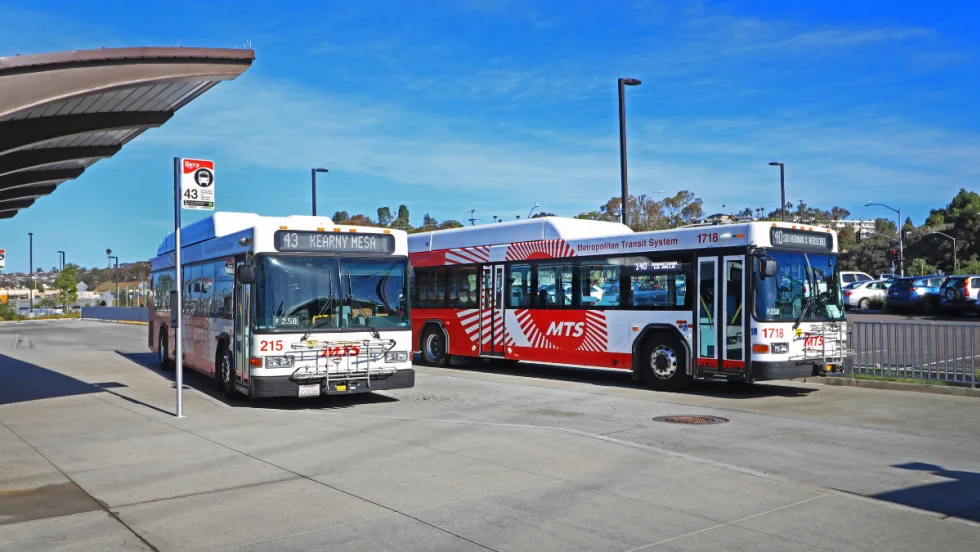
What’s Behind San Diego MTS’s Award-Winning Transit Strategy
Named one of APTA’s 2026 Outstanding Public Transportation Systems with 50 million or more annual passenger trips, California’s San Diego Metropolitan Transit System points to gains in ridership, safety, technology, and reliability as foundations of its success.
Read More →
Public Transit Conference Returning to GFX in 2027, Call for Papers Now Open
The Call for Papers is now open, allowing transit agency professionals and industry experts to help shape the PTC educational program by submitting session ideas for consideration.
Read More →
Indian River Transit’s Community-Focused Approach Earns National Recognition
Named APTA’s 2026 Outstanding Public Transportation System in its size category, Florida’s Indian River County transit system continues to grow ridership through fare-free service and a focus on evolving community needs.
Read More →
ENC Lands MATA Contract and More in Biz Briefs
In this edition of Biz Briefs, we spotlight the latest developments shaping the future of mobility.
Read More →
From Surviving to Thriving: Building Stronger Transportation Organizations
Bus Business Consultants founder Brian Dickson shares lessons on leadership, organizational health, and creating options for long-term success in a changing transportation industry.
Read More →
Everett Transit, Community Transit Outline Consolidation Agreement
The proposed agreement calls for a 50% increase in bus service in Everett, a new microtransit zone, continued paratransit service, and the transfer of Everett Transit operations to Community Transit.
Read More →
Strada360’s Steve Lassey on Turning Transit Data Into Better Decisions
From breaking down data silos to preparing for AI, Strada360 CEO Steve Lassey discusses how transit agencies can use technology to improve operations, customer information, and long-term decision-making.
Read More →