



Bus Coalition Leaders Push to Protect Transit Funding in Critical Reauthorization Year
Coalition leaders outline priorities for preserving bus funding, maintaining competitive grants, and ensuring flexibility for transit agencies nationwide.

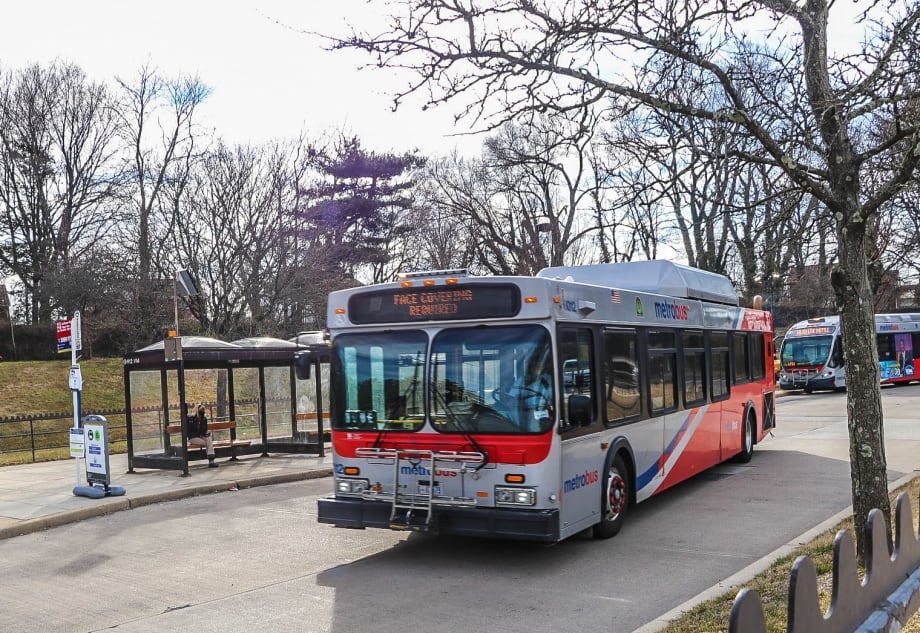
While funding remains the primary concern, The Bus Coalition's leaders acknowledged that other issues, including fleet modernization, spare ratio requirements, and propulsion technology, are also top of mind for members.
WMATA/Larry Levine
- Coalition leaders emphasize the importance of preserving funding for bus services.
- They advocate for maintaining competitive grant programs to support transit systems.
- Ensuring flexibility in operations for transit agencies nationwide is a top priority.
*Summarized by AI
In a recent episode of METROspectives, leaders from The Bus Coalition (TBC) — Executive Director Ed Redfern, President Corey Aldridge, and Washington Representative Joel Rubin — joined METRO Magazine’s Executive Editor Alex Roman to discuss the organization’s evolving role and its priorities heading into a pivotal federal surface transportation reauthorization year.
The Bus Coalition’s Ongoing Goals
Founded in 2013 amid significant changes to federal transit funding, TBC has grown from 17 founding members to more than 900 members and supporters across all 50 states. Despite that growth, its mission has remained consistent.
“Our core mission remains the same,” Aldridge said. “Our focus is on bus and bus facilities funding, which remains extremely important, if not even more important than when we began.”
The coalition was originally formed in response to reductions in discretionary funding, which many small and mid-sized transit systems rely on for major capital purchases. That funding focus remains central today, particularly as Congress prepares for the next surface transportation reauthorization.
Rubin emphasized that protecting the Federal Transit Administration’s (FTA) bus and bus facilities program is the coalition’s top priority.
“Our number one goal is to really protect, maintain, and hopefully increase that $2.2 billion level in the next reauthorization bill,” he said, noting that the program had previously dropped from about $1 billion annually to roughly $420 million under MAP-21 before rebounding in recent legislation.
Maintaining a balance between formula and competitive funding is also critical, as many agencies depend on discretionary grants to meet their capital needs.
For smaller systems, the stakes are particularly high.
Aldridge, who also serves as CEO of Santa Cruz Metro in California, illustrated the impact of shifting away from competitive funding.
“A million and a half buys one hydrogen fuel cell bus, and we have a fleet of 110 buses,” he said. “So it would take us roughly 110 years to replace our fleet, which is just not doable.”
That reality underscores the coalition’s concern that increased reliance on formula funding could leave many agencies without the resources needed to maintain and modernize their fleets.
TBC’s Policy Focus
Beyond funding levels, the coalition is also focused on several policy issues tied to reauthorization, including local match requirements, regulatory reform, and operational flexibility.
Rubin noted that many agencies struggle to meet the standard 20% local match required for federal funding.
“We hear from a lot of our members that coming up with that local match can be challenging,” he said, adding that some smaller systems are forced to pursue creative, and often impractical, ways to secure those funds. Reducing or modifying those requirements, particularly for smaller and rural systems, is a key goal.
The coalition’s membership reflects the full diversity of the transit industry, spanning small rural providers to large urban systems, as well as manufacturers and private-sector partners. That broad base reinforces the importance of bus transit across all modes.
“Even large systems that run rail understand that bus transit is the workhorse of their system,” Aldridge said. “They understand the value of discretionary grant funding to replace those buses.”
While funding remains the primary concern, coalition leaders acknowledged that other issues, including fleet modernization, spare ratio requirements, and propulsion technology, are also top of mind for members.
Rubin pointed to ongoing shifts in federal priorities around zero-emission vehicles and the challenges that create for agencies trying to plan long-term investments.
“What we hear from our members is, let the transit managers decide what the best mode is for their system,” he said, advocating for a more “propulsion-neutral” approach that allows agencies to respond to local needs and operational realities.
At the same time, Aldridge noted that transitioning to new technologies is not always straightforward.
“We’re seeing that the alternative fuel technology is still in its infancy, and there still are issues,” he said, adding that some agencies are seeking flexibility to continue using hybrid or compressed natural gas buses while new technologies mature.
Working to Advance Priorities
To advance its priorities, TBC has ramped up its advocacy efforts on Capitol Hill, engaging directly with lawmakers and staff. Rubin said the group has already met with roughly 75 congressional offices and continues to expand its outreach.
“We want to make sure they understand the value and the need behind the bus and bus facility program,” he said.
A key part of that effort includes educating policymakers about how funding structures impact different types of systems, particularly in rural and mid-sized communities.
The coalition has also helped establish a bipartisan Congressional Bus Caucus, which now includes about 40 members. The caucus serves as a platform to elevate the role of bus transit and highlight both funding needs and industry innovation.
“There’s so much technology and innovation happening right now,” Rubin said. “The bus caucus tries to shine a light on that, in addition to the needs of bus funding.”
Redfern emphasized that the coalition’s strength lies in its broad, nationwide footprint and nonpartisan approach.
“Bus transit is in every state and every congressional district,” Rubin added, noting that this allows the coalition to connect with lawmakers across the political spectrum and tailor its message to local needs.
As the reauthorization process moves forward, coalition leaders said engagement from transit agencies, manufacturers, and industry partners will be essential. Advocacy efforts extend beyond Washington, D.C., with an emphasis on connecting lawmakers to the systems and communities they represent.
“We try to get their congressional members into their districts,” Redfern said, highlighting the importance of firsthand experience in understanding transit needs.
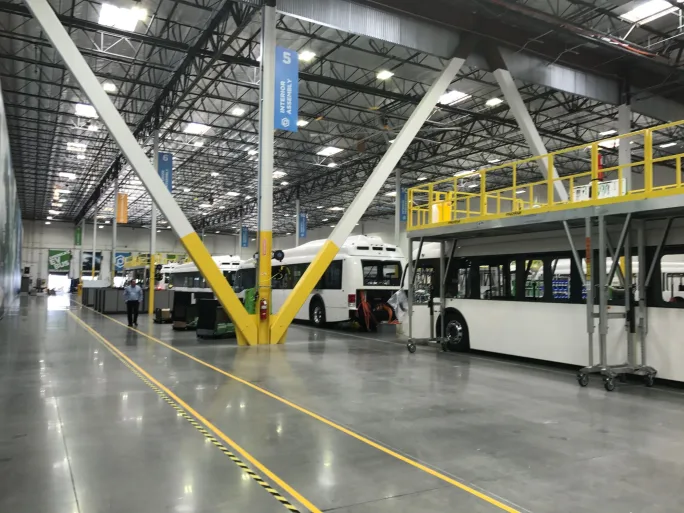
Ultimately, coalition leaders stressed that bus transit plays a critical role not only in mobility but also in economic development and community well-being.
METRO
The Importance of Bus Transportation
Ultimately, coalition leaders stressed that bus transit plays a critical role not only in mobility but also in economic development and community well-being.
“It’s about the service that our systems provide every day,” Rubin said, pointing to connections to jobs, healthcare, and essential services. “That story resonates.”
With the expiration of current federal infrastructure legislation approaching, TBC is positioning itself to ensure that bus transit remains a central part of the national transportation conversation — and that agencies of all sizes have the resources they need to serve their communities.
This article, generated using OpenAI, was edited for accuracy and style and based on an episode of METROspectives
Quick Answers
Preserving bus funding is crucial to ensure the continued operation and expansion of transit services, which are vital for public mobility, reducing traffic congestion, and supporting environmental sustainability.
*Summarized by AI
More Bus

LA Metro Board Awards 220 Battery-Electric Bus Contract to ENC
The contract, which is the largest base award of battery-electric buses by a U.S. transit agency, will be built in Southern California, sustaining good jobs as LA prepares to welcome the world in 2028
Read More →
Public Transit Conference Returning to GFX in 2027, Call for Papers Now Open
The Call for Papers is now open, allowing transit agency professionals and industry experts to help shape the PTC educational program by submitting session ideas for consideration.
Read More →
Indian River Transit’s Community-Focused Approach Earns National Recognition
Named APTA’s 2026 Outstanding Public Transportation System in its size category, Florida’s Indian River County transit system continues to grow ridership through fare-free service and a focus on evolving community needs.
Read More →
ENC Lands MATA Contract and More in Biz Briefs
In this edition of Biz Briefs, we spotlight the latest developments shaping the future of mobility.
Read More →
From Surviving to Thriving: Building Stronger Transportation Organizations
Bus Business Consultants founder Brian Dickson shares lessons on leadership, organizational health, and creating options for long-term success in a changing transportation industry.
Read More →
Everett Transit, Community Transit Outline Consolidation Agreement
The proposed agreement calls for a 50% increase in bus service in Everett, a new microtransit zone, continued paratransit service, and the transfer of Everett Transit operations to Community Transit.
Read More →
SEPTA Details Accelerate Vision for Transit System
The plan outlines investments in trolley modernization, new Metro and Regional Rail vehicles, accessible stations, and more frequent bus and rail service.
Read More →
Report: Transit Bus Manufacturing Supports 34,100 Jobs, $5.1B in GDP
The “Buses Mean Business” report examines the transit bus manufacturing industry’s economic footprint, supply chain, and rising demand for vehicle replacements.
Read More →
Biz Briefs: New Flyer Delivers in Columbus, Houston, Beep and Freebee Merge, and More
In this edition of Biz Briefs, we spotlight the latest developments shaping the future of mobility.
Read More →
People Movement: Dan Dipert Coaches Adds Third-Generation Leader, Keolis Names New Valley Metro VP/GM, and More
In this edition, we also cover recent appointments and announcements at the Wabtec, SilverRide, HNTB, and more, showcasing the individuals helping to shape the future of transportation.
Read More →