



Asian recovery revives transport projects
Asian cities are undertaking major urban transit projects to mitigate congestion and pollution of enormous proportion.

Asian cities are undertaking major urban transit projects to mitigate congestion and pollution of enormous proportion. Some cities, such as Manila, implemented light rail solutions. Others, such as Kuala Lumpur, Taipei and Singapore, implemented light rail, rapid transit and automated guideway systems, and Guangzhou implemented a subway system. The rapidly increasing traffic congestion in major metropolitan cities can no longer be handled by the thousands of buses, colorful jeepneys and bicycles that regularly crowd the streets. This almost unbearable situation has made the development of transportation solutions an immediate priority of Asian governments. Though it is difficult to cover the magnitude of current activity in Asian countries, some examples can be reflective of the overall approach and activity. The approach is driven by politics, massive private and foreign government investments and solutions resulting from a combination of both. Many Asian rail projects are a combination of public and private ventures with foreign governments taking a substantial investment role. Several projects continue to be funded by Obuchi funds from the Japanese government. For example, rail projects in the Philippines are entering the implementation stage and were endorsed to receive Obuchi funding. The north rail project will connect Metro Manila with the Clark Special Economic Zone. Phase one of the project is estimated at about $700 million. The south rail (Manila-Calabarzon Express Commuter Rail) project, estimated to cost about $370 million, will connect Paco or Santa Mesa (in Manila) to Batangas. The south rail line project consists of 35 miles of trackway and 16 stations. Fifty diesel powered train units will initially be required. The project is politically complicated, and about $100 million will have to be spent on the relocation of squatters along the line. The project is supported by Ayala (a real estate developer) and Mitsubishi Heavy Industries, which have undertaken extensive studies to advance the project to the implementation stage. When Obuchi funding is not feasible or desired, creative private funding mechanisms are used. That can be well illustrated by the financial approach to the Manila Light Rail Transit (LRT) Line 1 extension. The existing Line 1 is undergoing a $597 million expansion (awarded to Canadian firm SNC-Lavalin) that will extend the system from Pasay City to the Cavite Province. For the LRT 1 extension project (7.4 miles), the joint venture of the Light Rail Transit Authority (LRTA) and SNC-Lavalin offered a private/public alternative to the Obuchi funding promoted by the Marubeni Corp. The SNC-Lavalin package offers a rapid 3.5-year implementation plan that is within the term of the current administration. As part of its proposal, a special purpose company, the Manila Bay Area Rapid Transit Corp., would be formed to provide non-recourse financing for the electrical and mechanical portion of the work. SNC-Lavalin would also finance, design and construct the civil works based on a guaranteed amortization payment schedule provided by the LRTA. Through the joint venture agreement, the government of the Philippines would recover its costs, including amortization payments for the civil works, over the 30-year life of the joint venture arrangement. As part of the package, the capacity of the existing line would be increased from 27,000 to 40,000 passengers per hour per direction. Bangkok’s Skytrain system is another example of creative financing, but suffers from poor planning. The system is losing money due to substantially lower ridership in comparison to projections. Consultants tend to overestimate patronage projections in an effort to get projects approved, creating additional needs for their continuous consulting services. The Bangkok system is built without feeders and intermodal links, which is typical for American light rail systems but cannot work in an entirely private funded environment. Various non-Asian government authorities on all levels are seeking opportunities to invest in Asian projects to promote their leading industries and establish their long-term presence. For example, the Bavarian state government within Germany is dispatching representatives across Asia offering investments. The Spanish government funded various feasibility studies, Frankfurt Airport invested in the new Manila airport terminal and Milan Airport is negotiating with Guangzhou in China. Those investments are not always accepted automatically, as politics typically plays an instrumental role in project awards.
— Andrew S. Jakes
More Management
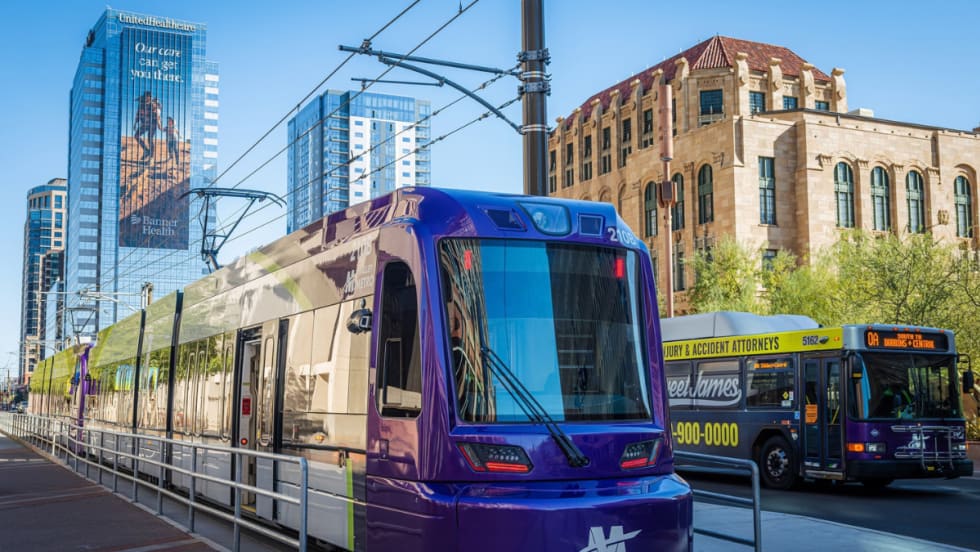
How Valley Metro Is Balancing Transit Growth With the Rider Experience
The APTA award-winning agency is pairing rapid system expansion with investments in workforce, safety, technology, and the fundamentals of transit service.
Read More →
Bus Tech Talk: Keeping Transit Technicians Ahead of the Technology Curve
In this episode of Bus Tech Talk, Complete Coach Works’ Business Development Manager Mark Hollenbeck and METRO’s Executive Editor Alex Roman sit down with Obed Mejia, Senior Technical Trainer for Bus Maintenance, at LA Metro to discuss how rapidly evolving bus technology is changing the maintenance shop — and the skills technicians need to keep pace.
Read More →
Michael Schneider Joins Paslay Group to Expand Transportation Practice
The longtime transportation executive will help Paslay Group grow its advisory and program management work across transit, highway, and other infrastructure sectors.
Read More →
People Movement: Connectpoint Expands Leadership Team, Stadler Names New Group CEO, and More
In this edition, we also spotlight recent personnel moves at Burns, UZURV, and more, highlighting the people taking on new roles across the transportation industry.
Read More →
More Than a Summer Job: Building the Next Generation of Transit Talent
The Delaware River Port Authority and PATCO have transformed their internship program into a hands-on professional development experience that introduces students to the breadth of transportation careers — and creates a pipeline for future employees.
Read More →
LA Metro Board Awards 220 Battery-Electric Bus Contract to ENC
The contract, which is the largest base award of battery-electric buses by a U.S. transit agency, will be built in Southern California, sustaining good jobs as LA prepares to welcome the world in 2028
Read More →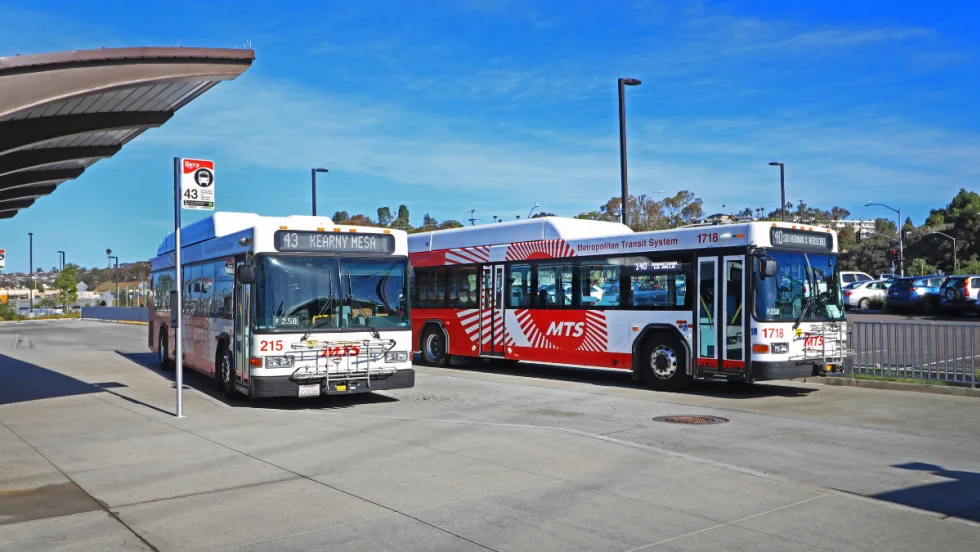
What’s Behind San Diego MTS’s Award-Winning Transit Strategy
Named one of APTA’s 2026 Outstanding Public Transportation Systems with 50 million or more annual passenger trips, California’s San Diego Metropolitan Transit System points to gains in ridership, safety, technology, and reliability as foundations of its success.
Read More →
Public Transit Conference Returning to GFX in 2027, Call for Papers Now Open
The Call for Papers is now open, allowing transit agency professionals and industry experts to help shape the PTC educational program by submitting session ideas for consideration.
Read More →
Indian River Transit’s Community-Focused Approach Earns National Recognition
Named APTA’s 2026 Outstanding Public Transportation System in its size category, Florida’s Indian River County transit system continues to grow ridership through fare-free service and a focus on evolving community needs.
Read More →
ENC Lands MATA Contract and More in Biz Briefs
In this edition of Biz Briefs, we spotlight the latest developments shaping the future of mobility.
Read More →