



Bauer's Intelligent Transportation - San Francisco
Bauer's uses eco-tools to cut emissions, costs
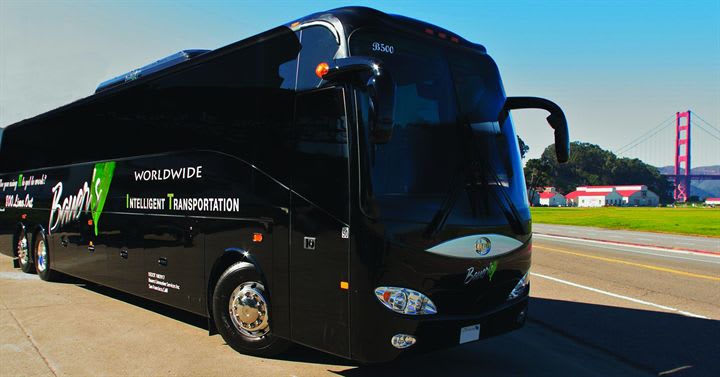
Bauer's was awarded the UMA's 2009 Green Highway Award for its eco-conscious efforts.
[IMAGE]MET1Innovative-Bauers-2.jpg[/IMAGE]It's been a long haul for Gary Bauer, founder and CEO of Bauer's Intelligent Transportation, from starting his first limousine company in the 1980s to becoming one of the greenest transportation companies in the nation.
"You can believe what you want to believe about the ozone layer, but at the end of the day, if everybody is taking a step toward the right direction to try to help out, it just makes it a better place for all of us and all of our kids in the future," says Bauer about his company's environmentally-friendly practices.
Ninety-six percent of Bauer's miles traveled are green miles, thanks to an extensive fleet of late-model vehicles — using compressed natural gas, propane, hybrid and biodiesel - that meet air quality standards developed by the California Air Resources Board to be put into effect in 2013.
The company began focusing on the environment around 1998, Bauer explains.
"We started doing all the shuttles at San Francisco International Airport and they were concerned about pollution, so we replaced 86 diesel and gas vehicles with 18 propane vehicles for the free shuttle services from the hotels to the airport," he says. "When we took that over, we reduced emissions by about 80 percent, as well as traffic. Before, the Hyatt used to run 13 shuttles and the Marriott ran 15 shuttles, now we run four between the two of them and provide better service."
At the 2010 BusCon Expo in Chicago, Bauer showcased two eco-conscious initiatives to support his company's quest to make a positive impact on the environment.
The first was the new Solar Hybrid Bus Powering System that Bauer himself helped invent, which consists of four one-eighth-inch-thick film solar panels that run the length of the bus and charge an on-board battery bank, enabling the operation to run air-conditioning, Wi-Fi, DirectTV, lights and more when the bus engine is off, as well as meet anti-idling standards.
"The idling laws in California and, most states now, [state] that you can only idle for five minutes at a time or 30 seconds in a school zone. So, we had to come up with some way to cool down the bus without running the engine," Bauer explains.
The system runs between $9,000 to $14,000, with the cost being offset within a year, considering idling, which Bauer explains is what a bus does 40 percent of the time, is eliminated, thus saving approximately $14,000 in fuel per bus, per year.
Another eco-friendly initiative being employed by Bauer on his fleet is a hydrogen generator fuel system that attaches directly to an engine to reduce emissions and improve gas mileage. It uses a Generation Series Europafilter oil cleaning system, which after being tested for 20 years, has proven it can reduce oil consumption by up to 90 percent, he says.
"A normal gas or diesel engine burns about 18 percent of the fuel at the flash point when it explodes," Bauer says. "This injector burns 90 percent of the fuel, meaning you have a lot less emissions coming out of the tail pipe and you're also looking at about 35 percent better fuel economy."
In addition to its green fleet, Bauer's also teaches its "chauffeurs" about the impact of idling. If unnecessary engine idling occurs, dispatch is flagged, creating an opportunity to counsel the driver to modify the situation. If the operation's chauffeurs violate its standards too often, they are required to retake the company's training program.
Bauer explains that all of these efforts to alleviate his operation's impact are reflective of the growing concerns of world, especially for the younger generation of travelers.
"When we were growing up, our parents were always telling us to 'turn the lights off, you're wasting electricity,'" he says. "Now, it's the kids telling the parents to turn the lights off, so times are definitely different."
More Motorcoach

People Movement: Dan Dipert Coaches Adds Third-Generation Leader, Keolis Names New Valley Metro VP/GM, and More
In this edition, we also cover recent appointments and announcements at the Wabtec, SilverRide, HNTB, and more, showcasing the individuals helping to shape the future of transportation.
Read More →
METRO Opens Submissions for 2026 Motorcoach Awards
Nominations are now being accepted for METRO Magazine’s Operator of the Year and Innovative Operator of the Year awards.
Read More →
Biz Briefs: Alstom Lands Canadian Contract, LYT to Supply California TSP, and More
In METRO's latest installment, we take a look at recent news from Complete Coach Works, Beep, FlixBus, and more partnerships making headlines across the transportation sector.
Read More →
Biz Briefs: RIPTA Unveils New Frontrunners, Clevland RTA Adds New Siemens, and More
In METRO's latest installment, we take a look at recent news from Siemens, Prevost, Dodge, and more partnerships making headlines across the transportation sector.
Read More →
People Movement: Holly Arnold Joins Transdev and More
In this edition, we also cover recent appointments and announcements at Pace, CamTran, MCI, and more, showcasing the individuals helping to shape the future of transportation.
Read More →
ABA Report: Motorcoach Travel Generates $161.6B Economic Impact
The 2025 analysis finds motorcoach travel supported nearly 900,000 jobs and generated $28 billion in federal, state, and local taxes.
Read More →
CharterUP’s Armir Harris on Technology, AI, and the Future of Group Mobility
In a recent episode of METROspectives, CharterUP Founder/CEO Armir Harris discussed the company’s evolution from an online charter bus marketplace into a technology platform supporting public- and private-sector mobility and much more.
Read More →
People Movement: ABC Names John Walsh as Chief Commercial Officer
In this edition, METRO also covers recent appointments and announcements at the DART, STV, and more, showcasing the individuals helping to shape the future of transportation.
Read More →
From Surviving to Thriving: Building Stronger Transportation Organizations
Bus Business Consultants founder Brian Dickson shares lessons on leadership, organizational health, and creating options for long-term success in a changing transportation industry.
Read More →
Biz Briefs: Luminator Marks Milestone and More
From manufacturers and suppliers to transit agencies and motorcoach operators, these updates offer a snapshot of the projects, partnerships and business moves driving the industry forward.
Read More →