



Build a business plan, learn from it
Developing a business plan is not only a requirement for a bank loan — it’s also a prerequisite for achieving long-term goals and success.
Developing a business plan is not only a requirement for a bank loan — it’s also a prerequisite for achieving long-term goals and success. Whether success means purchasing two additional coaches or expanding your tour business by 50%, small and medium-sized companies can follow the lead of Fortune 500 companies that use this tool. Less than 5% of U.S. companies have a written business plan. But all of the Fortune 500 companies have them, says Gene Siciliano, president and founder of Western Management Associates, dba Your CFO For Rent®. Though dwarfed by Fortune 500 corporations, small businesses should emulate their larger counterparts and put together a business plan if they haven’t already. A high debt load and strong price-based competition makes a business plan essential for motorcoach operators. “When you get in that environment, you cannot afford false starts,” Siciliano says. “You cannot afford to run your business by trial and error.” Sitting down and thinking about what the goals of your company are is an important step in achieving those goals. “That’s the whole power of planning,” Siciliano says. Making financial sense There are key steps to take before developing a business plan. It is important to first make financial sense of your business and make a list for your goals. “Lay out all of the goals that you wish to accomplish and put a price tag next to them,” Siciliano says. “It’s important to find a way to connect the budget dollars to the things we are going to do.” There are two categories to budget: fixed costs such as rent, phone bills and salaries, and money spent to grow the business, like funding for a new coach or for relocation. It will be more difficult, obviously, to budget for the latter category. The business plan and budget go hand in hand. Building your plan Once you have your budget laid out, you can begin the process of building your business plan. It’s important to focus on only one or two goals — three maximum. “People tend to lay out a lot of goals for themselves, and it’s only a dream until you take action,” Siciliano says. “It’s far better to have one or two goals that you achieve than 10 goals you don’t.” The essence of the business plan takes one main goal, which is broken down into successive smaller goals. These smaller goals are then broken down even further, until you reach goals that can be accomplished in the short term. “Once you get down to the last row of actions, you ask yourself if they are things that you can start doing today,” Siciliano says. “That’s when you know your plan is complete.” As an example of the business plan, Siciliano uses an imaginary company with eight coaches and gives it an arbitrary goal of attaining $1.5 million in revenue by December 2007. This goal is then broken down into three actions: increase charter service 50% by December 2006, increase tour service 50% by June 2004 and add scheduled service in 2005. In order to attain those goals, each are broken down again. Choosing one, the increase in tour service is broken down into: forming a strategic alliance, hiring a tour marketing manager and developing marketing tools. These are then broken down again, until you have reached actions that can be achieved today, such as placing an ad for the marketing manager position. “Things in the bottom layer [of the plan] will get you to achieve things in the next layer. Those in turn will get you to your goal,” Siciliano says. Once a plan is assembled, business owners should make putting resources toward these goals an everyday objective. Plans should be looked at annually for revision purposes. Smaller businesses should review business plans quarterly. One last step in the process involves comparing budget results with goals. Questions that may arise: Why the difference? What should we do now? What are we learning? “There is no such thing as a successful or unsuccessful business plan, but there is successful and unsuccessful implementation,” Siciliano says. In addition to books and software, business planning tools are available from the Small Business Administration, which can be reached online at www.sba.gov or by phone at (800) U-ASK-SBA.
More Management

People Movement: Connectpoint Expands Leadership Team, Stadler Names New Group CEO, and More
In this edition, we also spotlight recent personnel moves at Burns, UZURV, and more, highlighting the people taking on new roles across the transportation industry.
Read More →
More Than a Summer Job: Building the Next Generation of Transit Talent
The Delaware River Port Authority and PATCO have transformed their internship program into a hands-on professional development experience that introduces students to the breadth of transportation careers — and creates a pipeline for future employees.
Read More →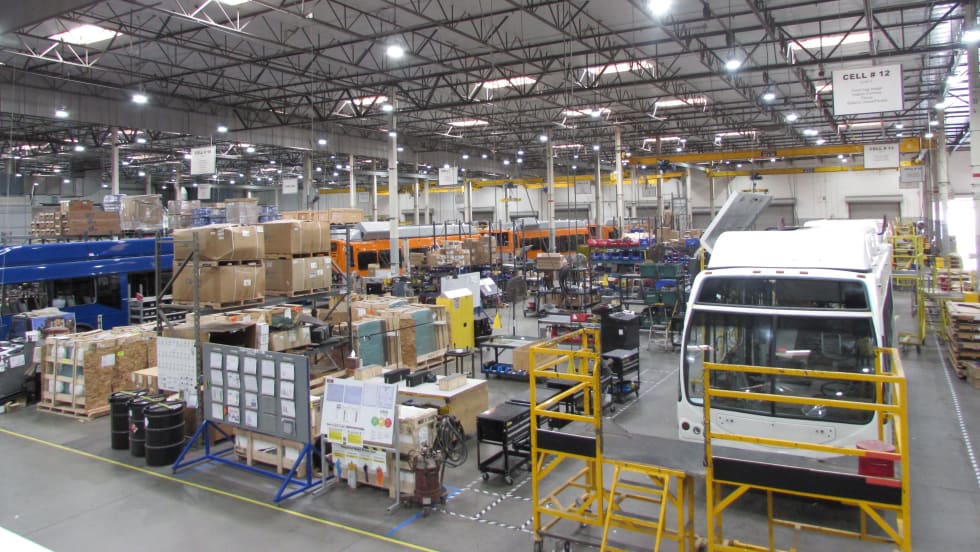
LA Metro Board Awards 220 Battery-Electric Bus Contract to ENC
The contract, which is the largest base award of battery-electric buses by a U.S. transit agency, will be built in Southern California, sustaining good jobs as LA prepares to welcome the world in 2028
Read More →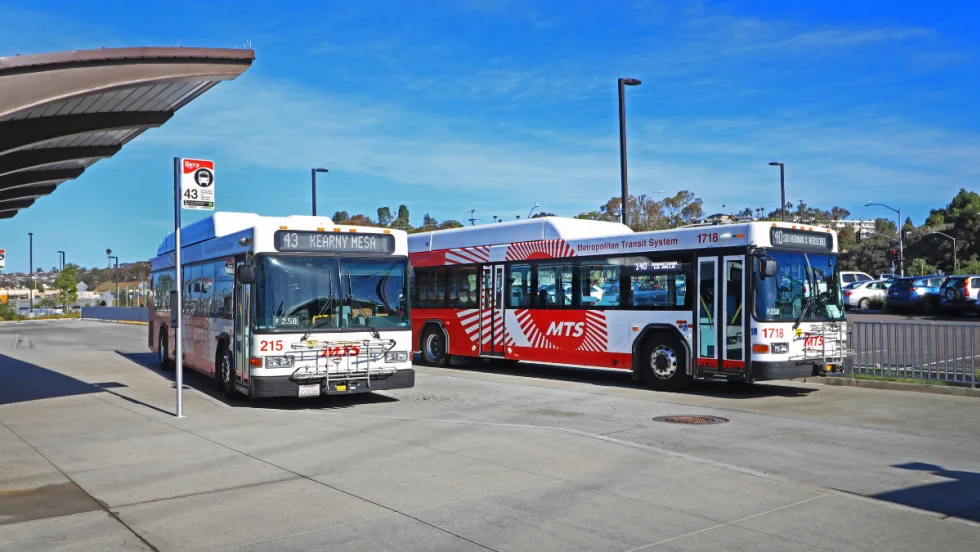
What’s Behind San Diego MTS’s Award-Winning Transit Strategy
Named one of APTA’s 2026 Outstanding Public Transportation Systems with 50 million or more annual passenger trips, California’s San Diego Metropolitan Transit System points to gains in ridership, safety, technology, and reliability as foundations of its success.
Read More →
Public Transit Conference Returning to GFX in 2027, Call for Papers Now Open
The Call for Papers is now open, allowing transit agency professionals and industry experts to help shape the PTC educational program by submitting session ideas for consideration.
Read More →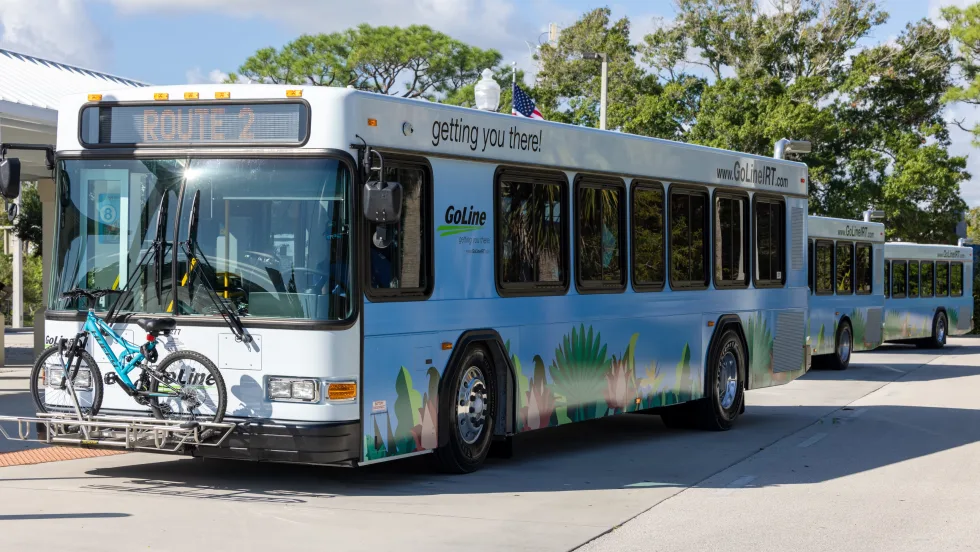
Indian River Transit’s Community-Focused Approach Earns National Recognition
Named APTA’s 2026 Outstanding Public Transportation System in its size category, Florida’s Indian River County transit system continues to grow ridership through fare-free service and a focus on evolving community needs.
Read More →
ENC Lands MATA Contract and More in Biz Briefs
In this edition of Biz Briefs, we spotlight the latest developments shaping the future of mobility.
Read More →
From Surviving to Thriving: Building Stronger Transportation Organizations
Bus Business Consultants founder Brian Dickson shares lessons on leadership, organizational health, and creating options for long-term success in a changing transportation industry.
Read More →
Everett Transit, Community Transit Outline Consolidation Agreement
The proposed agreement calls for a 50% increase in bus service in Everett, a new microtransit zone, continued paratransit service, and the transfer of Everett Transit operations to Community Transit.
Read More →
Strada360’s Steve Lassey on Turning Transit Data Into Better Decisions
From breaking down data silos to preparing for AI, Strada360 CEO Steve Lassey discusses how transit agencies can use technology to improve operations, customer information, and long-term decision-making.
Read More →