




Transit Agencies Nationwide Gear Up to Move World Cup Crowds
FIFA World Cup Matches Are Driving Record Transit Ridership Nationwide
See how World Cup matches are generating record transit demand across North America, with ridership surpassing Super Bowls, concerts, and Olympic-era events.
June 18, 2026

With parking limited around many World Cup venues and host cities encouraging sustainable transportation options, agencies report that large numbers of fans are choosing rail and bus networks as their primary means of accessing stadiums.
Credit:
METRO
4 min to read
- FIFA World Cup matches are causing a surge in transit ridership across North America.
- Current transit demand due to these matches exceeds that of Super Bowls, concerts, and past Olympic events.
- This trend highlights the World Cup's significant impact on public transportation use.
*Summarized by AI
Public transit agencies across North America are reporting record-breaking ridership in the opening weeks of the FIFA World Cup, highlighting the critical role transit systems play in moving hundreds of thousands of fans to matches and related events.
Agencies have reported ridership levels surpassing some of the largest events in recent history, including Super Bowls, major concerts, and even Olympic benchmarks.
In the San Francisco Bay Area, the Santa Clara Valley Transportation Authority (VTA), working alongside BART and Caltrain, transported 37,642 passengers to and from the opening World Cup match between Qatar and Switzerland on June 13 at Levi's Stadium, temporarily renamed San Francisco Bay Area Stadium for the tournament.
The figure set a new transit ridership record for a major event at the venue and exceeded transit demand recorded during Super Bowl LX by more than 6,000 passengers.
Just as notable was VTA's post-match performance. Despite a significant surge of fans leaving the stadium after the game, the agency cleared light rail platforms serving the venue in less than 90 minutes, outperforming the two-hour benchmark typically used for major events.
"This was a tremendous success for VTA and our regional transit partners," said VTA General Manager and CEO Carolyn Gonot. "Thousands of fans chose transit to get to and from the match, and together with BART and Caltrain, we provided a seamless travel experience that kept people moving and got them home safely."
More recently, VTA reported carrying more than 39,500 passengers to and from the Austria-Jordan match on June 16, surpassing the previous tournament record set during the Bay Area opener by approximately 2,500 riders.
Regional Rails Help Break Ridership Records During Event
Regional rail partners also reported significant increases in demand. BART recorded a more than 160% increase in ridership at Milpitas Station compared with the previous weekend, while Caltrain carried nearly 7,000 fans traveling to and from the match.
A similar trend emerged north of the border in Vancouver, where TransLink reported its busiest Saturday ridership for a BC Place event since the 2010 Winter Olympics during the city's first FIFA World Cup 2026 match.
According to preliminary data, TransLink recorded more than one million boardings and approximately 648,200 trips systemwide on June 13, representing an 18% increase over a typical Saturday. Ridership at stations serving BC Place exceeded previous event-day records set by Taylor Swift's Eras Tour and Lionel Messi's local match.
SkyTrain ridership increased by nearly 25% compared with a typical Saturday, reaching almost 450,000 boardings, while SeaBus experienced the largest percentage gain, with ridership rising more than 37%.
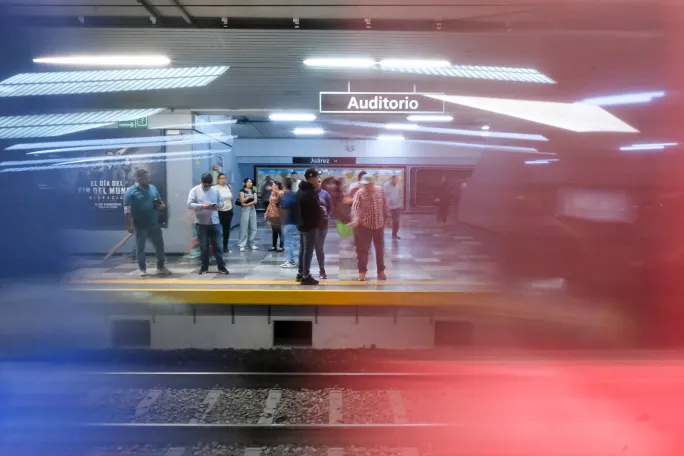
Additional staffing and crowd-management measures will be deployed at key stations in Guadalajara, including Estadio Chivas, to help ensure safe, efficient fan movement.
Credit:
SITEUR
In Guadalajara, Mexico, transit officials are proactively expanding service throughout the tournament. The Urban Electric Train System (SITEUR) announced a special World Cup mobility plan that includes a 12.2% increase in Light Rail capacity, adding nearly 27,000 passenger spaces during the event.
Light Rail Lines 1, 2, and 3, along with the Macro Periférico bus rapid transit system and Line 5 Macro Airport service, will extend operating hours by up to four hours after matches at Estadio Guadalajara. Additional staffing and crowd-management measures will be deployed at key stations, including Estadio Chivas, to help ensure safe, efficient fan movement.
The expanded service reflects the extensive planning underway across host cities as agencies prepare for sustained demand throughout the month-long tournament.
The World Cup Is Truly a Month-Long Transit Stress Test
The early results suggest that the FIFA World Cup is becoming one of the largest transit-demand generators ever experienced by many host cities. Unlike single-day events such as the Super Bowl, the month-long tournament creates repeated opportunities for agencies to test crowd management strategies, regional coordination, and service scalability across multiple matches and fan events.
Transit agencies have responded by deploying additional trains, expanding staffing levels, coordinating transfers between regional operators, and implementing enhanced crowd-management plans designed to move large numbers of spectators efficiently while maintaining regular service for residents.
The strong turnout also reflects a shift toward transit use for major sporting events. With parking limited around many World Cup venues and host cities encouraging sustainable transportation options, agencies report that large numbers of fans are choosing rail and bus networks as their primary means of accessing stadiums.
With dozens of matches still to be played across North America, agencies will continue to monitor ridership trends as the tournament progresses. If early numbers are any indication, additional records may be broken before the World Cup concludes.
More Management

METRO Opens Submissions for 2026 Motorcoach Awards
Nominations are now being accepted for METRO Magazine’s Operator of the Year and Innovative Operator of the Year awards.
Read More →
New York MTA Advances Final Contract for Second Avenue Subway Expansion
Contract Four is the largest in the Second Avenue Subway Phase 2 project and includes construction of station infrastructure, tracks, and signals for the subway expansion, MTA officials said. Work on Contract Four will begin in 2027.
Read More →
Transit Agencies Highlight Safety Gains at National Summit
Leaders from 15 major transit systems shared crime-reduction results and safety initiatives while discussing the role of continued federal support.
Read More →

NITA Names New Leadership, Expands Reduced-Fare Program at First Board Meeting
The new regional transit authority appointed its first board chair and interim executive director while extending reduced fares across CTA, Metra, and Pace for eligible riders.
Read More →
Beyond the Checklist: A Structured Approach to Transit Maintenance
Reliability-Centered Maintenance helps transit agencies move beyond routine checklists to focus limited resources on the assets and failures that have the greatest impact on safety, reliability, and service.
Read More →
APTA 2026 Nominating Committee Selects Leadership Slate, Names Chair and Vice Chair Nominees
Leadership changes will help shape the association’s priorities and its representation of the transportation industry during the 2026–2027 term.
Read More →
DART Launches Major Security, Fare Enforcement Initiative
The 90-day demonstration will deploy coordinated security teams at five light rail stations while testing controlled access and gathering data to guide future investments.
Read More →
Sponsored•September 9, 2026
Advancing Fare Collection Through Technology and Innovation
Learn about delivering 1300 gates at 91 stations while managing fare evasion. Explore the large scale deployment, solution customization and real-world results that affect the region. Prepare for deployment in your region now.
Read More →
Game Day in Motion: Moving Millions During the 2026 World Cup
Between packed transit stations and team motorcoaches, see how agencies and operators across North America tackled the transportation demands of the 2026 FIFA World Cup.
Read More →
Surface Transportation Extension Averts Shutdown, Leaves Transit Funding Gap
The stopgap keeps federal transportation programs moving, but missing advance funding could complicate the transit and rail projects agencies are planning next.
Read More →