



Building Charter Business with Marketing Charm
In a challenge-a-day industry, generating charter coach revenues requires a savvy business plan focusing on creative, low-cost promotional efforts and a winning image.
Charter business in the motorcoach industry is almost entirely driven by individual customer needs. Because charter travelers create and plan their own trips, for the most part, an operator is hard pressed to find creative ways to generate new business.
Unfortunately, many motorcoach operators today find it hard to survive by focusing solely on chartered business. In the past few years, a spate of market pressures has resulted in countless price increases to group trips and diversification into tours, regular routes and other services. Hiring dependable and well-trained employees, keeping up with government regulations and competing with discounted carriers have exacerbated worries.
“The problem lies in trying to meet the customers’ wants within the regulated and human factors that control the industry, while still making a profit doing it,” says Peter Hunter, president of Hunter Motor Coach in Coxsackie, N.Y. “We have been forced to raise prices four times in the past year alone to keep up with fuel, insurance and toll increases.”
In many cases, the situation appears bleak. But in a tight-knit industry characterized by hard work, family values and entrepreneurial innovation, there are always recipes for staying ahead of the curve, no matter how steep.
Executing a comprehensive and shrewdly planned business model, driven by imaginative marketing and an emphasis on company image, can lead to promising results.
A new attitude
The motorcoach industry depends on being conservative. Capitalizing on the allure of the open road and reliable coaches as an alternative to the stress of take-offs and landings, operators have never seen a pressing need for a glamorous image makeover. Yet, successful companies are beginning to report more of a reliance on spruced-up promotional strategies to keep their charter customers filing in.
The first step to upgrading the marketing strategy involves an attitude adjustment, and changing the way you think about your product is one way to do this, says David Brown, president of Holiday Tours in Randleman, N.C. “The core is as simple as providing a better customer experience,” he says. “It is better to run fewer high quality trips than many in which you have to compromise quality to deliver. It’s more profitable, too, because people will always pay more for quality.”
Changing the company message also involves understanding ever-evolving market conditions. As reports of losses in senior citizen business appear to be on the rise, searching for new client bases should become routine. In a recent survey conducted by the American Bus Association, three new market segments — corporations, baby boomers and students — were revealed to be emerging. Reaching these and other fresh segments should become a priority for an enterprising charter business.
Add to this a healthy focus on current economic happenings. With interest rates on a steady incline, group charters may become more attractive to travelers, Brown says.
Moreover, in the post 9/11 era, the choice of when and how to travel has become a bigger concern to most people than in years past. Playing on this trend can also pay dividends.
For example, Brown says Holiday is moving more into thinking of itself as a provider of transportation, rather than just a group charter and tour operator. “One facet of this move is an increase in mid-week business,” he says.
Another obvious condition of today’s travel environment is security anxiety, and tailoring the safety message goes a long way in allaying customer fears. Brown says that service to New York and D.C. is starting to pick up again as people loosen up, and emphasizing a reduction in personal risk is starting to resonate better with prospective travelers.
Bob Older of Rainbow Charter Service in Newark, Del., says that charter business suits this approach well. One of the advantages of charter trips, he says, is that they free the operator from having to do the bulk of itinerary planning, giving carriers more leeway to focus on the message of offering a safe, comfortable trip.
Creative communications
In the past, motorcoach companies, especially small, family-owned operators, were content to rely on more traditional methods of promoting their services. Word of mouth and the Yellow Pages have been integral mediums utilized for increasing business. While mass media options remain cost-prohibitive to many operators, energizing the time-tested, conventional ways of reaching out can be a great equalizer.
Every good charter operator has company brochures and promotional handouts, but what they do with them always tolerates a closer examination. Maureen Leo, vice president of Lakeland Bus Lines Inc. in Dover, N.J., touts the various ways the company uses printed material. “We have a twice yearly event booklet with updated information that is mailed to everyone on our customer list,” she says. “We also hand out flyers on all our charter trips and hang large posters on all our buses.”
Lakeland also has a newsletter for what it refers to as “special customers,” and in it the company includes special discounts, information on upcoming events and offers for cancellation insurance. Leo says that the goal is to make people feel like VIPs.
When printed materials alone don’t get the job done, always be on the lookout for other low-cost promotional outlets. The Internet, obviously, is a growing medium, and industry research indicates that charter operators are pulling between 5% and 10% of their bookings through company Websites.
But not just any site will do these days. Motorcoach operators are increasingly finding that a modern, aesthetically appealing home page makes a difference. While the up-front investment in a flashy Website can be high, the long-term costs of site management are relatively insignificant when weighed with the potential benefits.
Most PR is good PR
Focusing on public relations is another way to reap results. One part of this is taking advantage of special events, celebrity clients or the chance appearance of a coach on the news.
For instance, Upstate Tours in Saratoga Springs, N.Y., recently received the unique opportunity to have one of its coaches used in the filming of an independent movie. By contacting nearby media outlets to inform them of their big screen performance, Upstate gleaned a windfall of positive local publicity.
Similarly, Hemphill Brothers Coach Co. in Nashville, Tenn., made headlines last year when President Bush toured the nation on the campaign trail. Scarcely a news program in the nation failed to show at least one shot of Bush’s luxury coach making the rounds of the American back roads.
Clearly, not everyone can be the transportation provider of choice for the commander in chief, but the principle is clear. It pays to keep your eyes open for the right opportunity to call your local news station and comment on a recent development involving your business.
When playing the hands of fate fails, you can always attempt to put yourself in position to receive some promising exposure. Leo of Lakeland Bus Lines says that the company frequently schedules events in public places to hand out schedules and fliers. “We set up a display at one of our local malls for three days to let people know who we are and what we do,” she says. “We also go out to select organizations and talk to people in person.”
If nothing else, such a public appearance offers an excellent photo op.
Image is everything
Your marketing strategies, public relations efforts and advertising message are the most overt routes to building charter business, but the proof is still in the product itself and the work you put into improving it.
“You have to stay one step ahead of the devil,” says Kim Buckingham of Buckingham Bus in Groton, Mass. “You have to work long hours and focus on good maintenance, good equipment, good employees, honesty and integrity.”
Concentrating on solid business practices and attention to detail is hardly a groundbreaking remedy, but desperate times in a struggling market call for constant reinforcement of your mission.
“It can be very simple,” says Holiday Tours’ Brown. “We increase revenues by having anything from uniformed drivers to showing up on time in a freshly cleaned motorcoach.”
The impression you give off is important, too. “We have security-trained, professional charter staff, and we always send out thank-you notes to customers,” says Leo. The company also hands out satisfaction questionnaires after every trip to gauge its performance.
More Management

ENC Lands MATA Contract and More in Biz Briefs
In this edition of Biz Briefs, we spotlight the latest developments shaping the future of mobility.
Read More →
From Surviving to Thriving: Building Stronger Transportation Organizations
Bus Business Consultants founder Brian Dickson shares lessons on leadership, organizational health, and creating options for long-term success in a changing transportation industry.
Read More →
Everett Transit, Community Transit Outline Consolidation Agreement
The proposed agreement calls for a 50% increase in bus service in Everett, a new microtransit zone, continued paratransit service, and the transfer of Everett Transit operations to Community Transit.
Read More →

Strada360’s Steve Lassey on Turning Transit Data Into Better Decisions
From breaking down data silos to preparing for AI, Strada360 CEO Steve Lassey discusses how transit agencies can use technology to improve operations, customer information, and long-term decision-making.
Read More →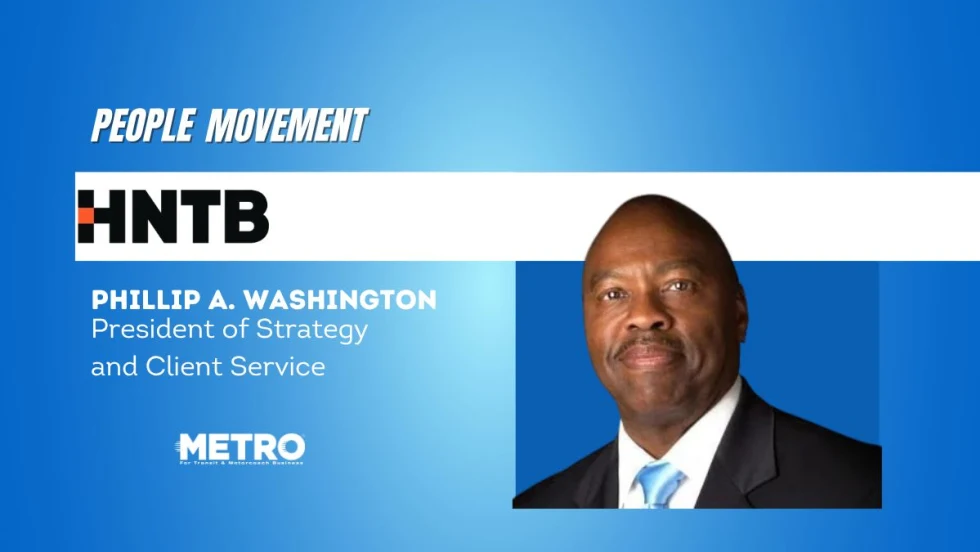
People Movement: Phil Washington Joins HNTB, Denver RTD Launches CEO Search, and More
In this edition, we also spotlight recent personnel moves at STV, the Eno Center for Transportation, and more, highlighting the people taking on new roles across the transportation industry.
Read More →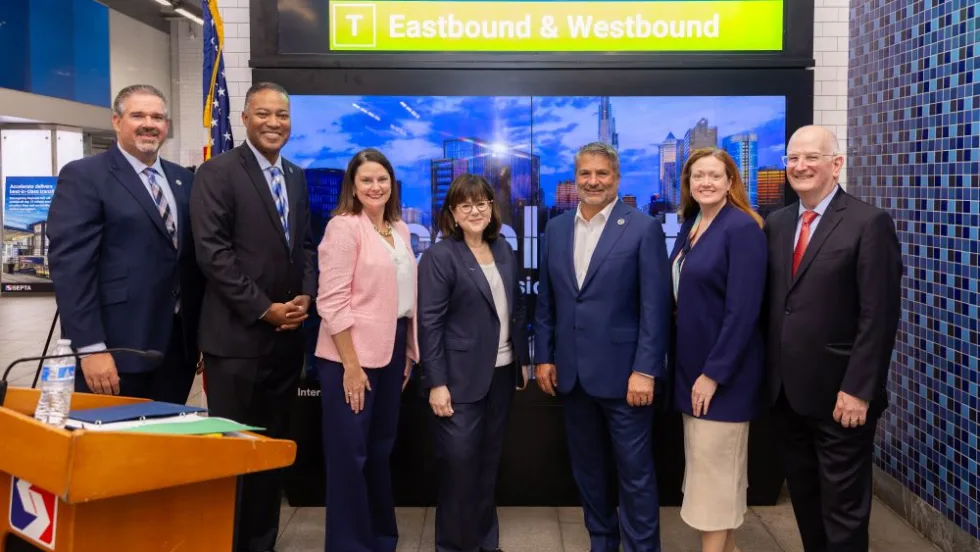
SEPTA Details Accelerate Vision for Transit System
The plan outlines investments in trolley modernization, new Metro and Regional Rail vehicles, accessible stations, and more frequent bus and rail service.
Read More →
FTA Ends Direct Oversight of MBTA Safety Actions
The federal agency closed its remaining special directive to the Massachusetts Department of Public Utilities following a safety review that began in 2022.
Read More →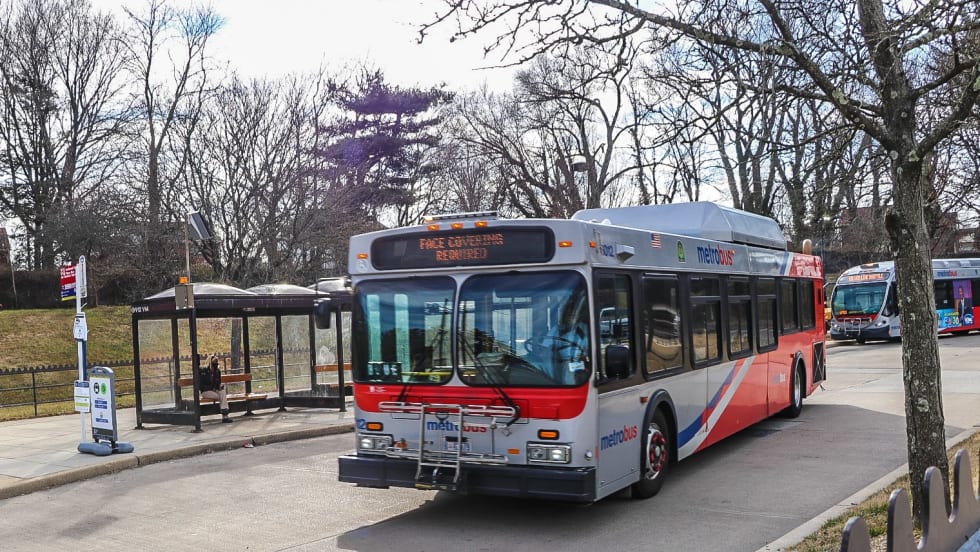
Report: Transit Bus Manufacturing Supports 34,100 Jobs, $5.1B in GDP
The “Buses Mean Business” report examines the transit bus manufacturing industry’s economic footprint, supply chain, and rising demand for vehicle replacements.
Read More →
LIT Marks 10-Year Milestone at Annual Summit
Hosted by the COTA from September 10 to 13, the Summit carried the theme “Celebrating 10 Years of Excellence, Leadership, and Impact,” with every part of the program honoring the people, agencies, and partners who built LIT over its first decade.
Read More →
People Movement: Dan Dipert Coaches Adds Third-Generation Leader, Keolis Names New Valley Metro VP/GM, and More
In this edition, we also cover recent appointments and announcements at the Wabtec, SilverRide, HNTB, and more, showcasing the individuals helping to shape the future of transportation.
Read More →