



Buy America gets challenged again
Countries all over the world recognize the need for government investment to jump-start their economies, build their heavy industry, and keep or add more higher-wage jobs.
Although not the major objection, a loud outcry to the stimulus legislation just signed into law was raised over Buy America provisions in the bill. The kind of misinformation being raised about the issue could be a signal of things to come, and the public transportation industry must be prepared to deal with it.
Buy America attacks create misinformation
As the bill was being debated shortly after President Obama was inaugurated, a chorus of conservatives began throwing a series of charges at the proposals. They contended that the bill was too big, spent too much on things that “were not stimulative” (never mind that any spending generates economic activity as the money is spent into the economy) or that there was not enough infrastructure spending. Others said there was too much infrastructure spending, calling it “pork.” At the other end of the political spectrum, some liberal economists worried that the bill was not big enough to stimulate the economy as much as is needed.
Then, as the bill was headed for passage, another objection was raised: protectionism. Opponents charged that the bill contained “Buy America” provisions that could “trigger a trade war” of the kind that helped worsen the Great Depression or was propping up obsolete companies. While these provisions remain intact in the final legislation, we in the industry should take this minor squabble as a warning that a big debate about this issue could be coming within the federal surface transportation authorization debate scheduled to take place later this year.
First, though, we must dispel the myth that the Buy America provisions of federal transportation policy, which have been with us since the 1970s, are protectionist or anti-trade. Rather, they are incentives for transit agencies to use U.S. tax dollars (or, more lately, money borrowed from Asian sovereign wealth funds) to procure hardware made in America to create or preserve American jobs. By the way, European and Asian nations dealing with their own economic crises have enacted massive infrastructure investments with their own incentives to ensure that the money gets spent in their own economies. As President Obama said of the U.S. strategy, “spending is the whole point.”
Let us remain united
The other major point about Buy America is this: it is existing, settled U.S. law — and it has worked. Sure, the regulations implementing the law are complicated and arcane, but because of this policy many companies headquartered in other countries have invested in the U.S. marketplace, spending millions if not billions of dollars to build factories and hire American workers. Would they have done so without the law? Possibly, but certainly not to the levels they have were there no minimum requirements. More than that, because the law has existed for so long and has worked, it would be grossly unfair to the companies who have made those investments to allow competition from those who have not.
Countries all over the world recognize the need for government investment to jump-start their economies, build their heavy industry, and keep or add more higher-wage jobs, especially in industries that grow a greener economy. The last thing the U.S. needs is to pursue some purists’ notions of what international trade should be — even though it never has been what they think.
More Bus

Finding the ‘Happy Medium’: Optimizing Maintenance Without Sacrificing Reliability
The key to maintenance optimization isn’t doing less work—it’s doing the right work at the right time on the right assets.
Read More →
LA Metro, City of West Hollywood, and Partners Advance Smarter Bus Lane Enforcement
The award-winning partnership combines AI-powered detection with human oversight to improve bus reliability, accessibility, and enforcement efficiency.
Read More →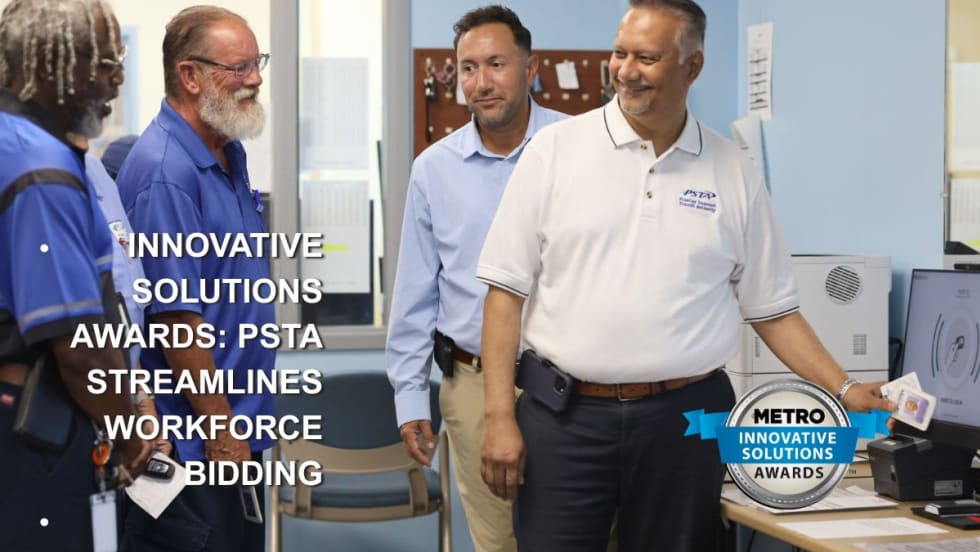
PSTA Modernizes Workforce Management with Digital Bidding System
The award-winning Workforce Transit Modernization project replaced paper bidding with a transparent digital platform, cutting administrative effort while improving access for operators.
Read More →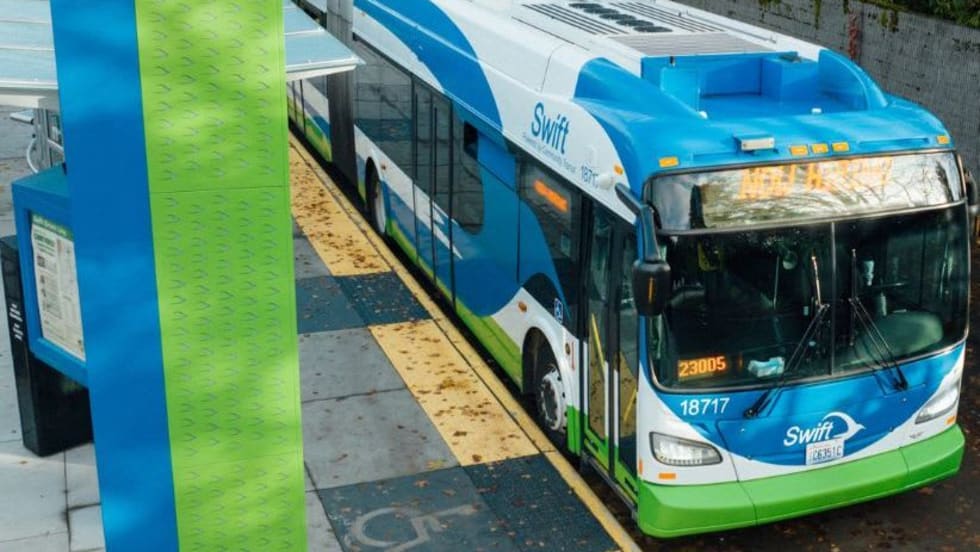
Washington's Community Transit Sets Six-Year Roadmap for Growth, Expansion
Approved TDP targets more bus service, new mobility options, Swift BRT expansion, and a potential Everett Transit annexation.
Read More →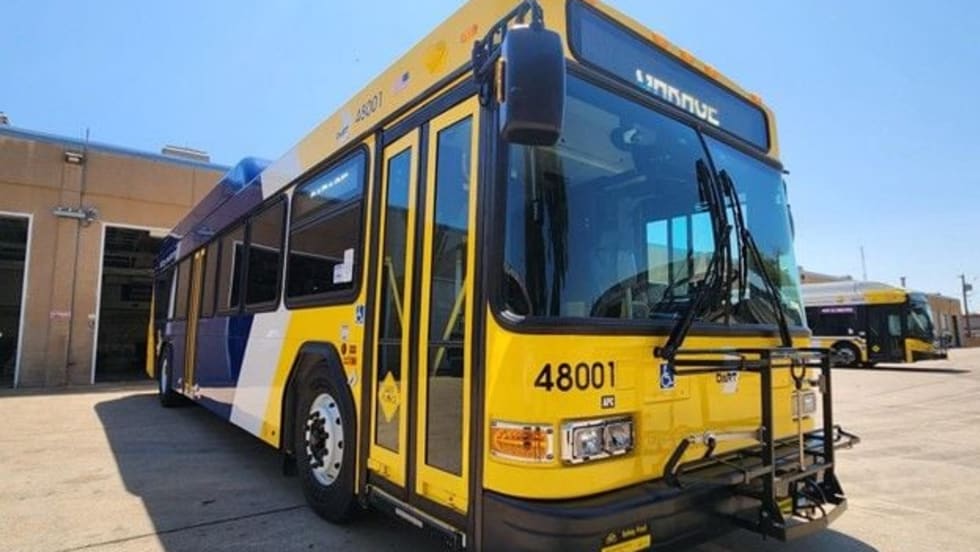
DART Customer Satisfaction Reaches Six-Year High
Overall satisfaction rose to 74.9%, while the agency’s Net Promoter Score reached a record 33.7.
Read More →
How DART's GoPass Is Redefining Regional Mobility
Serving 14 transit agencies, GoPass simplifies multimodal travel by allowing riders to plan, pay for, and manage an entire trip through one app.
Read More →
Biz Briefs: OCTA Taps Clean Energy for Hydrogen Station, Stadler to Supply Via Rail Vehicles, and More
From manufacturers and suppliers to transit agencies and motorcoach operators, these updates offer a snapshot of the projects, partnerships and business moves driving the industry forward.
Read More →
METRO Magazine Announces 2026 Innovative Solutions Awards Winners
Projects Recognized for Advancing Mobility Through Technology, Accessibility, Workforce Innovation, and Operational Excellence
Read More →
Biz Briefs: STV teams with Amtrak, Motorcoach Operators Boost Fleet and Land Contracts, and More
From manufacturers and suppliers to transit agencies and motorcoach operators, these updates offer a snapshot of the projects, partnerships and business moves driving the industry forward.
Read More →
LA Metro Marks Banner Year, Sets Ambitious Goals for New Fiscal Year
Incoming LA Metro Board Chair and Los Angeles Mayor Karen Bass joined outgoing Board Chair Fernando Dutra and LA Metro CEO Stephanie Wiggins to review accomplishments from fiscal year 2026, which included the opening of new rail extensions, advancement of major transit projects, expanded safety programs, and new rider amenities.
Read More →