



Buy America, hanging in the balance
Now is the time to ensure that Buy America legislation lives up to its name.
With the reauthorization of TEA 21 nearing resolution in Washington, D.C., we must remember that more is at stake than billions of dollars in federal funding for transit and highways. The reauthorization will also contain language that could affect provisions of the decades-old Buy America law.
As you probably know, Buy America rules protect American manufacturing interests by requiring that rolling stock, steel and manufactured products purchased with federal funds meet domestic content and assembly requirements.
The protections afforded by Buy America provisions are particularly crucial these days given the number of American jobs that are being outsourced overseas.
House bill has the goods
At press time, the House had done its part, incorporating key Buy America provisions into HR 3. Those provisions include an amendment to the public interest waiver that would require the U.S. Department of Transportation (DOT) to issue a written justification of the waiver and allow the public to comment. They would also allow for a party that believes it is adversely affected by a federal agency action in connection with Buy America regulations to seek review under the Administrative Procedures Act.
In addition, the provisions would require the DOT to issue a final rule clarifying that any waiver for a microprocessor, computer or microcomputer applies only to a device used solely for the purpose of processing or storing data and does not extend to a product containing a microprocessor, computer or microcomputer. They would also define the terms “end product,” “negotiated procurement” and “contractor.” In defining the terms, the DOT would be mandated to develop a list of representative items that are subject to Buy America requirements and address the procurement of systems under the definition to ensure that major system procurements are not used to circumvent Buy America requirements.
The key now is to build support in the Senate for the provisions already adopted in the House. In a best-case scenario, an ally would introduce on the Senate floor the exact provisions on Buy America in the House bill as part of a “Manager’s Amendment,” thus circumventing a House-Senate conference that might water down the provisions.
Transit lobbyists have approached Sen. Richard Shelby (R-Ala.), chair of the Senate Banking Committee, to introduce this Manager’s Amendment. He is reviewing that request.
Let’s spread our influence
The transit supplier coalition supporting the strengthening of Buy America provisions suggests that you send Senator Shelby’s key staff member, Sherry Little, a note asking for her help. Her e-mail address is sherry_little@banking.senate.gov. In your note, remind her of the following:
Over the past 20 years, changes in the transit industry and technology have caused the old interpretations of the Buy America rules for manufactured products to become obsolete.
The House-passed Buy America provisions create a process that will allow the Federal Transit Administration (FTA) and the industry to work together to update rules and standards governing Buy America. The House bill does not make major amendments to the Buy America law itself.
The House-passed provisions represent a broad industry consensus. All points of view will have their day in court in the FTA regulatory process. This is our chance to ensure that the Buy America legislation lives up to its name. Let’s make the most of it.
More Management
Brian Dickson on Building Stronger, More Resilient Transportation Organizations
Bus Business Consultants Founder Brian Dickson discusses the leadership principles, operational discipline, and strategic planning that separate transportation companies positioned for long-term success from those stuck in survival mode.
Read More →
LA Metro Breaks Ground on Vermont BRT Project
The 12.4-mile corridor is projected to serve 66,200 daily riders, reduce travel times by up to 24%, and create the nation's busiest bus rapid transit corridor.
Read More →
Building Stronger Leaders, More Resilient Transit Teams
Dr. Carol Parker Walsh discusses leadership development, employee retention, workplace culture, and preparing transit’s workforce for AI and automation.
Read More →
Roman Cornell on ABC Companies’ Evolution and the Future of Passenger Transportation
The company’s CEO discusses carrying forward a third-generation family legacy, ABC’s continued evolution in passenger transportation, support for increasingly complex fleets, and how technology and continued investment could help operators improve uptime.
Read More →
CATS Launches West Charlotte Microtransit Zone, Expands Transit Services
The new microtransit zone connects residents to key destinations as Charlotte Area Transit System rolls out the first phase of its 2055 Transit System Plan.
Read More →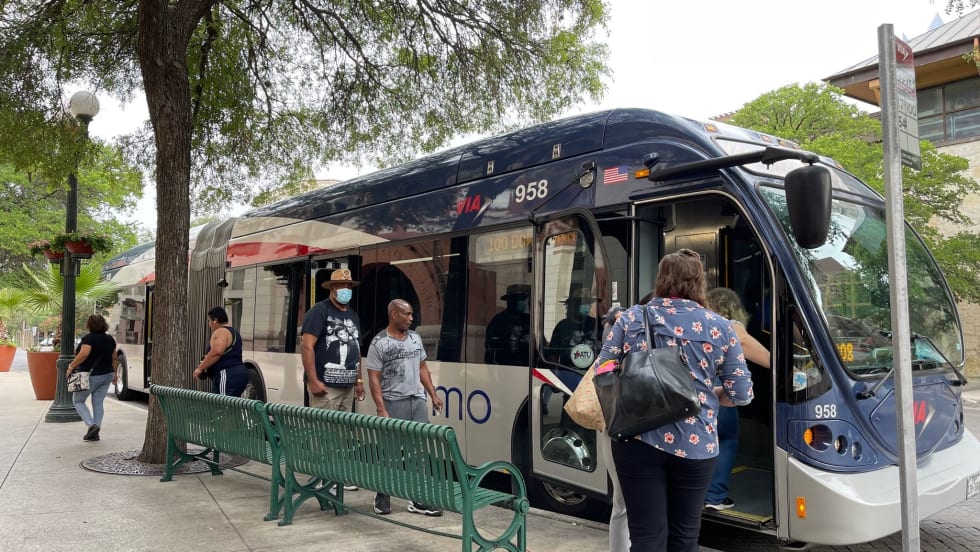
VIA Bus Ridership Grows 10.1% Through August 2026
San Antonio's VIA Metropolitan Transit reported the highest bus ridership growth among major Texas transit systems. Federal Transit Administration data ranked it second among the nation's 50 largest transit systems.
Read More →
CSA Group Releases Climate Resilience Standard for Transit, Passenger Rail
Developed with support from the Standards Council of Canada, CSA D700 guides assessing climate-related risks and planning adaptation measures for transit and passenger rail systems.
Read More →
ETA CEO John Maglio on Transit Technology, Innovation, and Building Agency Trust
ETA founder and CEO John Maglio explores the evolution of transit technology, the importance of reliable systems, and how stronger partnerships can help agencies improve operations and the passenger experience.
Read More →
COTA Launches First Customer Experience Action Plan to Improve Transit Service
The new plan outlines improvements to service reliability, accessibility, communication, and the overall rider experience across Central Ohio's transit system.
Read More →
LA Metro September Ridership Climbs 3.9%, Led by Rail Growth
The agency recorded more than 27.2 million boardings, with rail ridership increasing 12.4% year over year and the D Line posting the largest gains.
Read More →