




Related Content: Cincinnati Metro Launching New Fare Structure in July
Cincinnati Metro Begins Countywide Bus Stop Sign Upgrade
Metro launches a 24-month project to replace 3,700 bus stop signs, introducing improved visibility, QR-enabled rider info, and expanded amenities across Hamilton County.
April 13, 2026
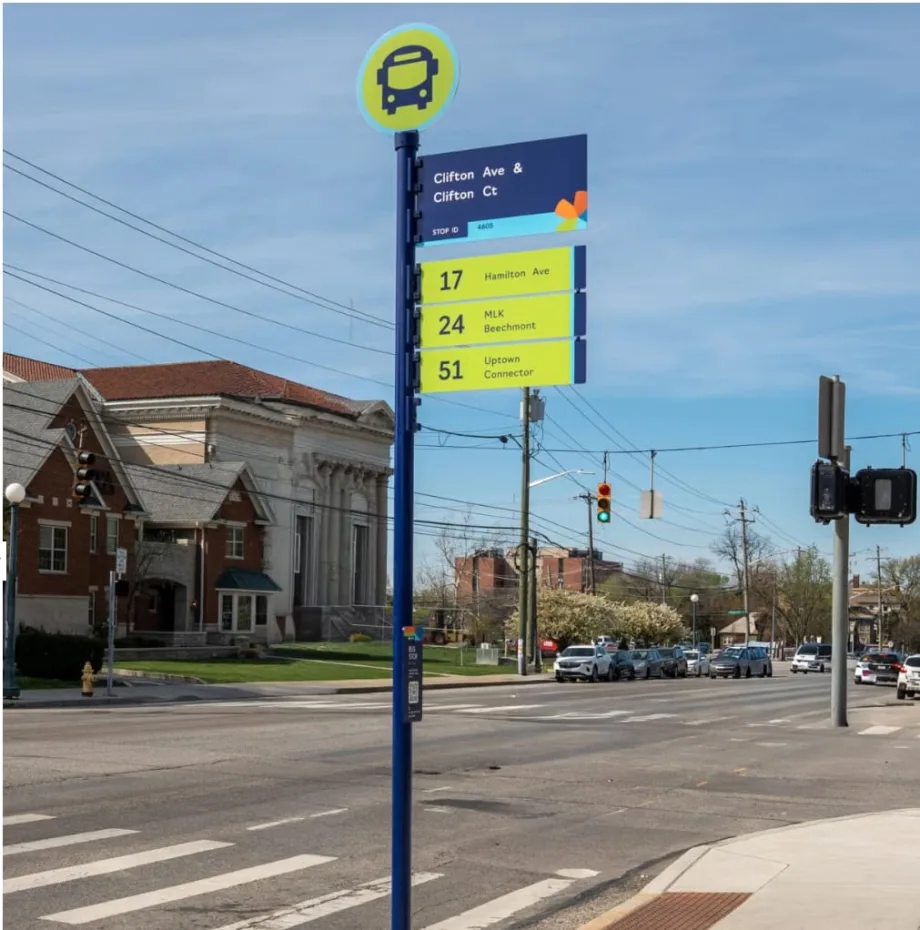
Cincinnati Metro begins rolling out redesigned bus stop signage to improve visibility, accessibility, and rider navigation across Hamilton County.
Credit:
Cincinnati Metro
2 min to read
- Cincinnati Metro initiates a 24-month initiative to upgrade 3,700 bus stop signs within Hamilton County.
- The new signs will feature improved visibility and QR-enabled rider information for enhanced user experience.
- The project will include expanded amenities to better serve the transit needs across the county.
*Summarized by AI
Cincinnati Metro unveiled the first of its newly designed bus stop signs, launching a countywide effort to replace 3,700 signs across Hamilton County over the next 24 months. The project updates an aging signage system as part of Metro’s Reinventing Metro plan.
Metro collaborated with operators, riders, and design students and faculty from the University of Cincinnati’s College of Design, Architecture, Art, and Planning (DAAP) to improve the look and functionality of the signage. The updated design aims to improve readability and consistency across the system.
Updated Signage and Rider Information
The new signs feature larger route numbers, a simplified layout, and improved color contrast and reflective materials for visibility in both daytime and nighttime conditions. Each sign includes a QR code linking riders to schedules and trip planning tools.
At select stops, digital signage will provide real-time information on upcoming service.
“These new signs represent a step forward in how we communicate with our riders,” said Brandy Jones, Metro chief communications and marketing officer. “They are designed to be clear and easy to understand, helping riders navigate the system.”
Broader System Improvements
Funded in part by federal transportation funding, including support from U.S. Rep. Greg Landsman, the project also includes installation of 400 new benches and 200 new shelters across Hamilton County.
Metro marked the first installation with remarks from agency leaders, local officials, and DAAP representatives, highlighting the investment in systemwide infrastructure improvements.
Quick Answers
The goal is to replace 3,700 bus stop signs to improve visibility, introduce QR-enabled rider information, and expand amenities across Hamilton County.
*Summarized by AI
More Management

APTA 2026 TRANSform & EXPO Kicks Off in Chicago
After 45 years, APTA returns to Chicago with a focus on next-generation fleets, AI, connected transit networks, and the funding strategies shaping public transportation’s future.
Read More →
New York MTA Warns Federal Tariffs Could Add $1 Billion to Rolling Stock Costs
The agency said tariffs on specialized imported components could reduce the purchasing power of its $23 billion investment in new subway cars, railcars, and buses.
Read More →
From the Show Floor: What’s Happening at APTA TRANSform & EXPO 2026
Follow the latest product launches, partnerships, technology updates, and transit industry announcements coming out of APTA TRANSform & EXPO in Chicago.
Read More →
How Valley Metro Is Balancing Transit Growth With the Rider Experience
The APTA award-winning agency is pairing rapid system expansion with investments in workforce, safety, technology, and the fundamentals of transit service.
Read More →
Bus Tech Talk: Keeping Transit Technicians Ahead of the Technology Curve
In this episode of Bus Tech Talk, Complete Coach Works’ Business Development Manager Mark Hollenbeck and METRO’s Executive Editor Alex Roman sit down with Obed Mejia, Senior Technical Trainer for Bus Maintenance, at LA Metro to discuss how rapidly evolving bus technology is changing the maintenance shop — and the skills technicians need to keep pace.
Read More →
Michael Schneider Joins Paslay Group to Expand Transportation Practice
The longtime transportation executive will help Paslay Group grow its advisory and program management work across transit, highway, and other infrastructure sectors.
Read More →
People Movement: Connectpoint Expands Leadership Team, Stadler Names New Group CEO, and More
In this edition, we also spotlight recent personnel moves at Burns, UZURV, and more, highlighting the people taking on new roles across the transportation industry.
Read More →
More Than a Summer Job: Building the Next Generation of Transit Talent
The Delaware River Port Authority and PATCO have transformed their internship program into a hands-on professional development experience that introduces students to the breadth of transportation careers — and creates a pipeline for future employees.
Read More →
LA Metro Board Awards 220 Battery-Electric Bus Contract to ENC
The contract, which is the largest base award of battery-electric buses by a U.S. transit agency, will be built in Southern California, sustaining good jobs as LA prepares to welcome the world in 2028
Read More →
What’s Behind San Diego MTS’s Award-Winning Transit Strategy
Named one of APTA’s 2026 Outstanding Public Transportation Systems with 50 million or more annual passenger trips, California’s San Diego Metropolitan Transit System points to gains in ridership, safety, technology, and reliability as foundations of its success.
Read More →