



CATS Light Rail Success Moves Transit Plan Ahead
The 9.6-mile LYNX Blue Line light rail has been a runaway success for the City of Charlotte, N.C., and will be enhanced by a 9.4-mile extension expected to open around 2016.
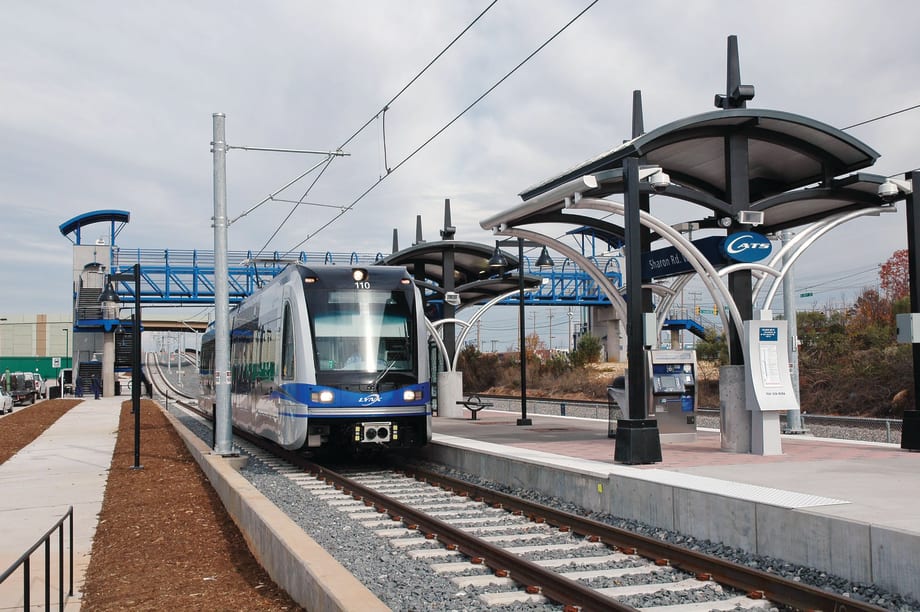
The LYNX Blue Line surpassed its 20-year projected ridership within its first year of service, providing more than 12 million rides since opening in November 2007. An extension is slated for opening around 2016. Photos Courtesy: CATS
The LYNX Blue Line surpassed its 20-year projected ridership within its first year of service, providing more than 12 million rides since opening in November 2007. An extension is slated for opening around 2016. Photos Courtesy: CATS
Serving the south corridor of Charlotte, N.C., since November 2007, the Charlotte Area Transit System's (CATS) successful LYNX Blue Line (LBL) light rail system is one of many planned city projects, including a light rail extension slated to open around 2016.
The 9.6-mile LBL surpassed its 20-year projected ridership within its first year in service and has provided more than 12 million rides since opening. As part of its 2030 Transit Corridor System Plan, CATS also plans to create bus rapid transit, commuter rail, fixed-route bus lines, streetcar and facility improvements in an integrated transit and land use approach.
The LBL's 15 stations and seven park-and-rides serve more than 15,000 Mecklenburg County daily commuters as well as special-events traffic, nearby residents, lunch-time riders and customers visiting historic Charlotte.
Thanks to integration with the CATS bus system, customers can get off the LBL at a station and walk right to their next bus, and vice versa, says Carolyn Flowers, CEO of CATS. "[It's] very easy for customers to transfer from one to another."
Currently, the LBL has a 99 percent on-time service rate, according to CATS. "Everybody wants their rail next," says Jean Leier, CATS manager of public and community relations. "It's a good problem to have. We can't build them fast enough."
Scaling Down the Project
During the planning process, establishing light rail in an area that did not have previous rail history proved to be the greatest challenge for CATS, Flowers says. The aftermath of Hurricane Katrina, rising prices of steel and the onset of the recession were also major obstacles.
"A lot of labor went down to the New Orleans area to help clean up after [Hurricane Katrina]," says John Muth, CATS deputy director. As a result of various cost increases and funding issues, CATS decided to reduce the scope of the project.
"We cut [the length of the platforms] from three-car platforms to two-car platforms to try and save some money," Muth says. "So, not only did we put a bit of extra money in, but we also had to cut some things from the project."
Despite some setbacks, the LBL has proven to be a great success for Charlotte and continues to draw riders, en masse, on a daily basis. In addition to rising gas prices, Muth attributes the great customer response to the land use ordinances CATS put in place to encourage transit area development around LBL stations.
"The city had a $50 million infrastructure program that built and expanded sidewalks and bicycle access onto our station areas," Muth adds. "As soon as we opened, [customers] were out there using the system."
[PAGEBREAK]
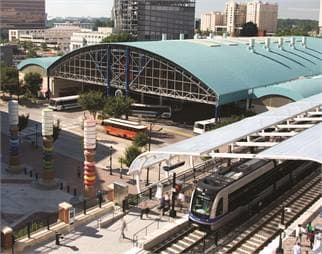
Thanks to integration with the CATS bus system, LYNX riders can get off of a Blue Line train at a station and walk right to their next bus, and vice versa.
Extending the LYNX
Due to the success of the LBL, CATS is moving forward with plans to add a 9.4-mile LYNX Blue Line Extension (BLE) that will serve the city's Northeast Corridor and reduce congestion on Interstate 85.
The BLE will run from Charlotte's 7th Street and terminate at the University of North Carolina — Charlotte (UNC-Charlotte) campus. In addition to 11 stations, the extension will include four park-and-rides with about 3,000 spaces, 18 light rail vehicles and a number of other additions. The estimated total cost for the project at this point is $961 million total.
"Once the extension is built, you'll be able to get on the southern terminus and take it all the way up to the northern part of Charlotte," Leier says. "Whether going up there for work, school, or entertainment, it's going to create more connectivity in the area for our customer."
The BLE is expected to begin revenue operations in November 2016 or early 2017, with a projected ridership of 24,500 on average weekday trips by 2035, Flowers says. "The bus ridership in that corridor is now our highest ridership line and, so, we will be able to provide a higher level of productivity and mobility options to that corridor."
The economic climate also has proven to be a challenge for the BLE project in similar ways to the challenges CATS faced developing the LBL. As a result, the BLE has undergone a 20 percent reduction in scope, removing about $200 million in cost from the project, Flowers says.
Some of the cuts have included parking area modifications, reducing the fleet size and shortening the terminus to UNC-Charlotte instead of Interstate 485. By shortening the terminus about 1.1 miles, the BLE project was able to save an estimated $92 million. One of the other important cost-saving recommendations for the project is to run two-car trains every 7.5 minutes, initially, and, eventually, switch over to three-car trains around the year 2025.
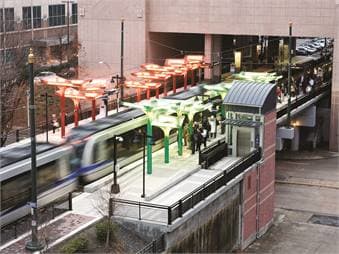
With the Blue Line's success, CATS is moving forward with a 9.4-mile extension.
Organizing a Streetcar Line
The City of Charlotte also will be moving forward on its Streetcar Starter Project, a plan that was awarded an Urban Circulator Grant of about $25 million from the FTA last July.
The streetcar line will initially be built to run the length of 1.5 miles with six stops and three trolleys. This is part of an overall planned 10-mile streetcar line. CATS and the City of Charlotte expect the starter project to be completed around 2015.
More Bus

New York MTA Plans Largest Bus Fleet Upgrade in More Than a Decade
The agency is seeking manufacturers for 650 new CNG buses to replace aging vehicles, improve reliability, and advance its broader fleet modernization strategy.
Read More →
Building a Flexible Path to Transit Electrification
John Hroncich discusses BAE Systems’ modular and scalable approach, lessons learned from decades of real-world operations, and how agencies can identify electrification strategies that fit their fleets.
Read More →
Bus Tech Talk: Keeping Transit Technicians Ahead of the Technology Curve
LA Metro’s Obed Mejia discusses technician training, evolving maintenance technology, fleet replacement, and strategies for getting the most out of today’s transit fleets.
Read More →
Biz Briefs: RIPTA Unveils New Frontrunners, Clevland RTA Adds New Siemens, and More
In METRO's latest installment, we take a look at recent news from Siemens, Prevost, Dodge, and more partnerships making headlines across the transportation sector.
Read More →
People Movement: Holly Arnold Joins Transdev and More
In this edition, we also cover recent appointments and announcements at Pace, CamTran, MCI, and more, showcasing the individuals helping to shape the future of transportation.
Read More →
The High Cost of Transit Buses: Industry Leaders Look to Procurement Reform
Transit leaders and policymakers examine how standardized bus designs, streamlined procurement, and predictable funding could help agencies stretch budgets and deliver better service.
Read More →
The Business Voice Behind Public Transportation
As chair of APTA’s Business Members Board of Governors, Ray Melleady explains how more than 850 business members are partnering with transit agencies to advance funding, innovation, and industry-wide collaboration.
Read More →
From Surviving to Thriving: Building Stronger Transportation Organizations
Bus Business Consultants founder Brian Dickson shares lessons on leadership, organizational health, and creating options for long-term success in a changing transportation industry.
Read More →
Finding the ‘Happy Medium’: Optimizing Maintenance Without Sacrificing Reliability
The key to maintenance optimization isn’t doing less work—it’s doing the right work at the right time on the right assets.
Read More →
LA Metro, City of West Hollywood, and Partners Advance Smarter Bus Lane Enforcement
The award-winning partnership combines AI-powered detection with human oversight to improve bus reliability, accessibility, and enforcement efficiency.
Read More →