



Changing of the guard
With current leaders in the transit industry heading towards retirement, where will their replacements come from?
The oldest baby boomers turned 60 last year. And the younger boomers aren’t far behind. According to the U.S. Census Bureau, there are 78.2 million boomers in the U.S., comprising about one-quarter of the population. Approximately 3 million of them turned 60 last year, equivalent to 330 per hour.
That means a significant number of leaders in the transit industry are heading toward retirement.
How will the boomers’ headlong rush into their 60s impact the transit industry? It could have a ground-shaking effect. These 60-something movers and shakers will be taking their experience and expertise with them into the next stage of their lives — and leaving behind a void of talent at the highest management levels.
As Editor Steve Hirano illustrates in his article beginning on pg. 28 ["Leadership Gap Threatens Future of Transit Industry," May 2007], many general managers at transit systems across the country agree that the next five to 10 years will be critical for the industry in regard to leadership development.
Are we prepared?
As ridership on buses and trains continues to grow, the industry needs to capitalize on these gains and push for even higher levels of ridership and service. The success of this push will hinge on the ability of management teams to inspire, excite and innovate. This challenge will not be easily met.
As we lose our top transit managers in the coming years, we will struggle to maintain the competence and efficiency of our organizations — unless we start to attract and develop people to fill the breach.
Many of these future leaders already are working in the transit industry. They could be bus operators, dispatchers, maintenance managers or route supervisors. We need to recognize the people in the organization who have aptitude for leadership and develop their skills and talents. This can be achieved through leadership development and mentoring programs. Ask any transit general manager how he or she was able to climb the ladder to reach the top post and I’m sure you’ll hear a story about a particular supervisor who provided mentoring and encouragement.
Transit systems need to support programs that will shepherd promising individuals into positions of increasing responsibility and provide in-house training and educational opportunities that will leverage this objective.
Making transit a career choice
The industry also needs to look at how it will attract new people into its fold. Public transportation is generally not viewed as a desirable career destination by most college students or graduates. We need to find ways to change that perception. Those of us associated with this industry know how fulfilling and challenging it can be, but we haven’t made a strong effort to get the word out.
APTA has made some progress in this regard. The association offers assistance to promising college students studying public transportation. Through its Transit Hall of Fame Scholarships, sponsored by the American Public Transportation Foundation, APTA awards a minimum of seven scholarships each year — a small number, yes, but still a worthy effort.
With the growing emphasis on sustainability, the time is right to start spreading the message that public transportation is a vibrant, leading-edge career that it is going to make a critical difference in the preservation of the environment.
The loss of our best and brightest transit leaders, both on the public side and the supplier side, could have an adverse impact on systems around the country. Or it could be an opportunity to infuse the transit industry with new ideas, enthusiasm and energy.
Let’s start now to ensure that the transition is healthy and robust.
More Management

ENC Lands MATA Contract and More in Biz Briefs
In this edition of Biz Briefs, we spotlight the latest developments shaping the future of mobility.
Read More →
From Surviving to Thriving: Building Stronger Transportation Organizations
Bus Business Consultants founder Brian Dickson shares lessons on leadership, organizational health, and creating options for long-term success in a changing transportation industry.
Read More →
Everett Transit, Community Transit Outline Consolidation Agreement
The proposed agreement calls for a 50% increase in bus service in Everett, a new microtransit zone, continued paratransit service, and the transfer of Everett Transit operations to Community Transit.
Read More →

Strada360’s Steve Lassey on Turning Transit Data Into Better Decisions
From breaking down data silos to preparing for AI, Strada360 CEO Steve Lassey discusses how transit agencies can use technology to improve operations, customer information, and long-term decision-making.
Read More →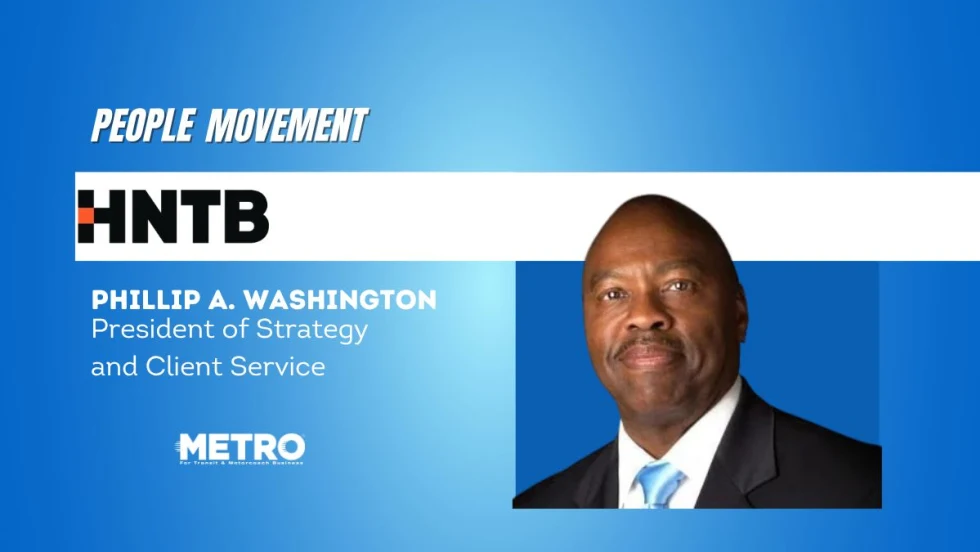
People Movement: Phil Washington Joins HNTB, Denver RTD Launches CEO Search, and More
In this edition, we also spotlight recent personnel moves at STV, the Eno Center for Transportation, and more, highlighting the people taking on new roles across the transportation industry.
Read More →
SEPTA Details Accelerate Vision for Transit System
The plan outlines investments in trolley modernization, new Metro and Regional Rail vehicles, accessible stations, and more frequent bus and rail service.
Read More →
FTA Ends Direct Oversight of MBTA Safety Actions
The federal agency closed its remaining special directive to the Massachusetts Department of Public Utilities following a safety review that began in 2022.
Read More →
Report: Transit Bus Manufacturing Supports 34,100 Jobs, $5.1B in GDP
The “Buses Mean Business” report examines the transit bus manufacturing industry’s economic footprint, supply chain, and rising demand for vehicle replacements.
Read More →
LIT Marks 10-Year Milestone at Annual Summit
Hosted by the COTA from September 10 to 13, the Summit carried the theme “Celebrating 10 Years of Excellence, Leadership, and Impact,” with every part of the program honoring the people, agencies, and partners who built LIT over its first decade.
Read More →
People Movement: Dan Dipert Coaches Adds Third-Generation Leader, Keolis Names New Valley Metro VP/GM, and More
In this edition, we also cover recent appointments and announcements at the Wabtec, SilverRide, HNTB, and more, showcasing the individuals helping to shape the future of transportation.
Read More →