




Microtransit’s Next Chapter:Data, Equity, and Job Access at Scale
Inside Monterey-Salinas Transit’s New Approach to Ridership Recovery
See how the agency is aligning service with shifting travel patterns, delivering ridership gains while advancing equity across its system.
April 17, 2026
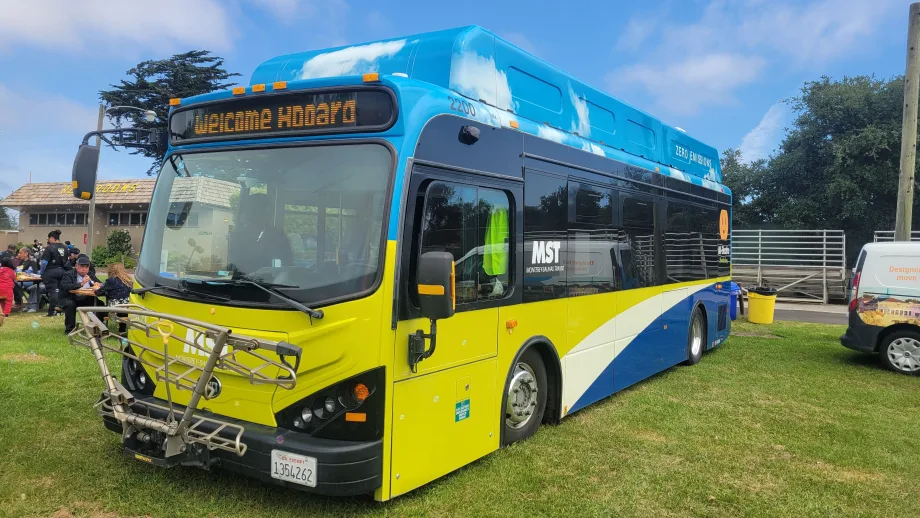
Monterey-Salinas Transit is navigating multiple dynamics at once, reshaping its system around the riders who depend on it most while preparing for a future defined by new technologies, new expectations, and continued funding uncertainty.
Credit:
Monterey-Salinas Transit
9 min to read
- Monterey-Salinas Transit is realigning services to better match evolving travel patterns among its users.
- The agency’s efforts are resulting in increased ridership, showing positive outcomes from their strategic adjustments.
- Emphasis is being placed on advancing equity within the transit system to ensure fair and accessible services for all communities.
*Summarized by AI
Although a common goal in the transit industry lies in chasing a return to pre-pandemic ridership, California’s Monterey-Salinas Transit is striving for more. The agency has been working diligently on redefining who its system is built to serve.
“We have seen tremendous growth in ridership in areas deemed ‘disadvantaged communities’ by the state, particularly in the urban area of Salinas, where boardings are over 110% of pre-COVID levels,” said Carl Sedoryk, general manager and CEO of MST.
Being rather modest, that growth tells only part of the story. Systemwide, ridership has rebounded to roughly 90% of pre-pandemic levels and continues to climb month after month. These numbers reflect deliberate changes in how MST allocates services and measures success.
For example, rather than restoring services evenly across its 168-square-mile service area, the agency concentrated resources in areas with the highest transit demand, targeting essential workers, lower-income riders, and rural communities in the Salinas Valley.
The strategy marks a departure from traditional transit recovery models, with MST’s success no longer defined solely by total ridership, but by who is riding and how effectively public transit meets their needs. The result is a system that is leaner in some areas, stronger in others, and more aligned with the realities of post-COVID travel behavior.
Plus, the agency’s work hasn’t gone unnoticed by the industry. In early 2025, MST was awarded the American Public Transportation Association’s Outstanding Public Transportation System Award in the small operator category.
Serving more than 436,000 residents with a network of 40 routes, 966 stops, and more than 3 million annual passenger trips in 2025, MST is emerging as a case study in how mid-sized transit agencies can rebuild ridership without skimping out on advancing equity and adapting to shifting demands.
A System Built on Regional Collaboration
MST’s current evolution did not happen overnight, so let’s provide some background. The agency’s foundation is rooted in decades of regional cooperation aimed at connecting the diverse communities of California’s Central Coast.
The Monterey-Salinas Transit District was formally established in 2010 through state legislation (AB644), succeeding the Monterey-Salinas Transit Joint Powers Agency formed in 1981. That entity itself grew out of an earlier partnership dating back to 1972, when the Monterey Peninsula Transit Joint Powers Agency first began coordinating transit services across jurisdictions. Over time, these layered efforts merged into the unified district MST that operates today.
Today, the agency manages a fleet of 162 vehicles and an additional 40 vehicles dedicated to MST RIDES, its paratransit and specialized mobility service. Across its services, MST delivers more than 3.8 million revenue miles annually, supported by a workforce of approximately 250 direct employees and 100 contracted Transdev employees who operate and maintain the agency’s fleet of minibuses.
Those figures highlight the scale and complexity of serving a region spanning dense urban centers, coastal communities, and rural agricultural areas. Balancing those needs has long defined MST’s role, but that balancing act has become more pronounced in the wake of the pandemic.
Reimagining Service Through the Better Bus Network
Faced with shifting travel patterns and constrained resources, MST undertook a comprehensive redesign of its system through the Better Bus Network (BBN), an effort that changed how and where service is delivered.
“The BBN was the culmination of over a year of planning and community meetings to reshape public transit in response to COVID, focusing our limited resources on those parts of the communities we serve where transit was needed most,” Sedoryk said.
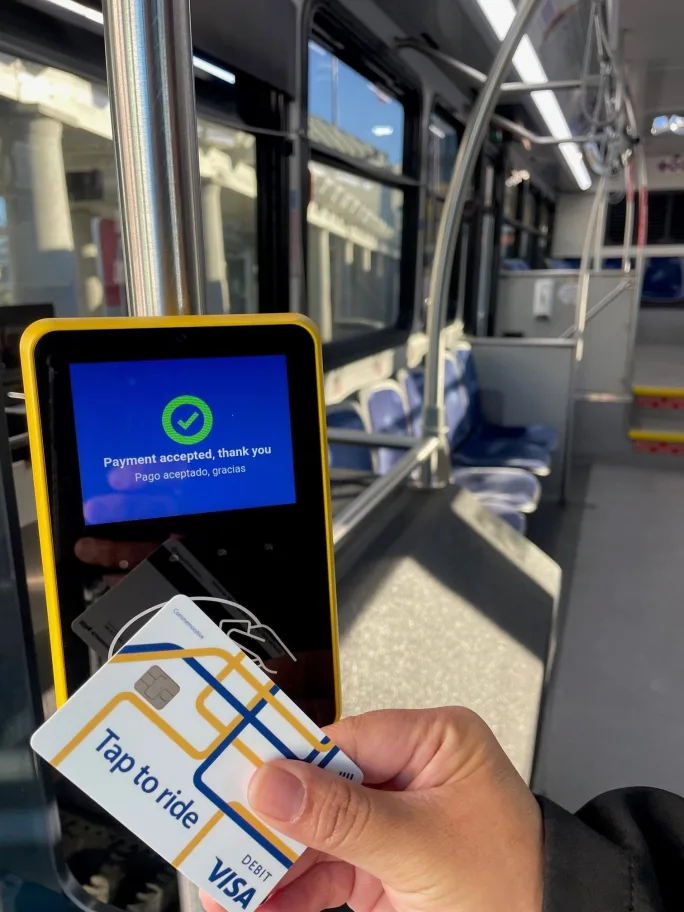
MST introduced fare capping, allowing riders to pay with bank cards or mobile devices without exceeding certain limits.
Credit:
Monterey-Salinas Transit
That approach required difficult tradeoffs. As Sedoryk explained, “Allocating more service to the Salinas Valley resulted in less service in the more affluent areas of the Monterey Peninsula,” a shift that has helped drive ridership gains where transit is most essential.
Supporting the agency’s recently recorded ridership gains — remember, a 110% ridership increase in the urban area of Salinas! — are a series of rider-focused policy changes. MST simplified its fare structure to “a simple $2 for 2 hours of unlimited rides,” while introducing fare capping that allows riders to pay using bank cards or mobile devices without exceeding daily, weekly, or monthly limits.
The agency also expanded alternative commute options. Sedoryk noted that a vanpool subsidy program offering “$500-per-month” has seen participation “more than doubled over the past 3 years,” extending MST’s reach beyond traditional fixed-route service.
Together, those changes reflect a broader shift in philosophy: designing transit around actual rider behavior rather than legacy service patterns.
What MST Learned from Microtransit
MST’s willingness to adapt is perhaps most evident in its experience with microtransit.
The agency first implemented microtransit about a decade ago in rural communities in the Salinas Valley and lower-density areas of the Monterey Peninsula, but results were mixed. As Sedoryk explained, “The app-based solutions were not popular with the primarily Spanish- or indigenous-speaking farmworkers of the Salinas Valley,” many of whom “continued relying on their phones to reserve rides through services like a traditional general-purpose dial-a-ride service.”
Rather than abandoning the concept entirely, MST leveraged what it learned. The app platform provided valuable data, specifically geocoded trip patterns and travel times, that planners used to redesign service. Sedoryk noted this allowed the agency “to design customized fixed-route circulators for each rural community,” which have since replaced microtransit in quite a few areas.
“With the new fixed-route circulators built around data from the microtransit app, ridership has increased dramatically, more than doubling, in these communities,” he said.
MST has also expanded on-demand options for specific populations. Using local sales tax funding, the agency partners with taxi providers to offer “deeply discounted same-day on-demand services for seniors, veterans, and persons with disabilities,” helping reduce reliance on more expensive ADA paratransit in urban areas.
However, challenges remain in extending similar services to rural communities. As Sedoryk noted, MST has “been unable to attract either taxi cabs or TNCs” in those areas due to “low population densities and long travel distances,” and continues working with providers to develop a model that is both viable and affordable.
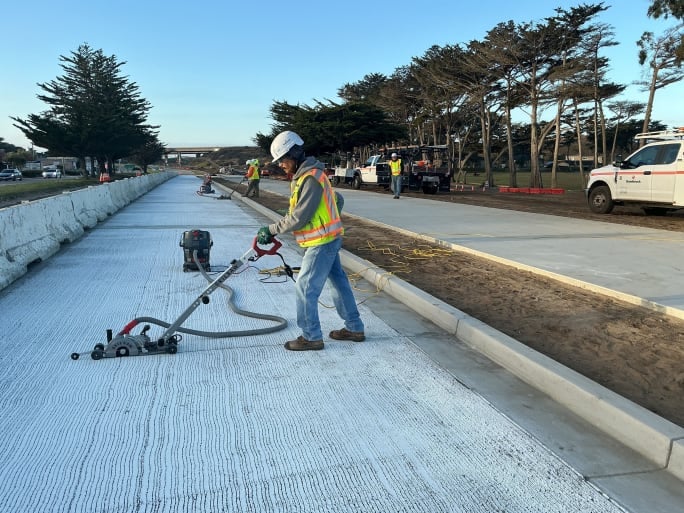
Monterey-Salinas Transit is now advancing a far more ambitious project: the SURF! Busway and Bus Rapid Transit line (construction pictured).
Credit:
Monterey-Salinas Transit
Bus Rapid Transit: Building Faster, More Reliable Corridors
While MST has focused heavily on service redesign, targeted infrastructure investments are also playing a big role in improving mobility and attracting riders.
To date, the agency has implemented one bus rapid transit (BRT) service (the JAZZ line), which Sedoryk describes as “BRT-lite.” The project, delivered under the now-defunct FTA Very Small Starts program, represented a comparatively small-scale $5 million investment but delivered meaningful improvements. Described as a “simple” project, it does not feature fixed guideways or bus-only lanes.
The 6.75-mile corridor connects Sand City and Seaside to jobs and educational destinations in Monterey, featuring upgraded stops, improved shelters, traffic signal coordination, and bus signal prioritization. According to Sedoryk, “The biggest improvements that resulted from the projects were improved frequency and on-time performance for customers, and reduced traffic congestion and general traffic in the corridor.”
Building on that foundation, MST is now advancing a far more ambitious project: the SURF! Busway and Bus Rapid Transit line.
The project will transform Line 20, MST’s busiest corridor, into a 17-mile high-performance transit route connecting Salinas to the Monterey Peninsula. This project hinges on a five-mile dedicated bus-only guideway adjacent to Highway 1, where congestion can slow traffic to an average of just 8 mph during peak periods.
“MST zero-emission buses will utilize the fixed guideway with 15-minute frequency, greatly improving service speed, frequency, and reliability,” Sedoryk said, adding the project is expected to drive “increased ridership, reduced traffic congestion, and improved customer satisfaction.”
These investments reflect MST’s strategy of pairing operational changes with targeted capital improvements to create a faster, more competitive transit network.
Zero-Emission Transition: Ambition Meets Reality
Alongside service and infrastructure improvements, MST is navigating one of the most significant industrywide shifts: the transition to zero-emission buses (ZEBs).
California’s Innovative Clean Transit (ICT) rule, adopted in 2019, requires all transit agencies in the state to purchase only battery-electric or fuel-cell electric buses after 2028 and to achieve fully zero-emission fleets by 2040.
MST has already made good progress toward that goal. By the end of this year, 17 of its 85 heavy-duty vehicles, which equals about 20%, will be battery-electric buses. But, meeting the state’s long-term mandate presents substantial financial and operational challenges.
“The promise of additional funding, improved reliability of rolling stock and charging infrastructure, and increased supply of ZEB vehicles contemplated when the ICT was implemented has not been realized,” Sedoryk said.
Like many transit agencies, MST is balancing competing priorities: investing in more expensive zero-emission vehicles while expanding service to meet growing demand.
“MST plans show an unfunded deficit of $150-$200 million to meet the state mandate,” Sedoryk noted, underscoring the scale of the challenge.
Funding constraints have already limited progress. “Over the past 10 rounds of Low-No funding, MST has only just recently been successful in receiving a grant for $1 million,” he said, which will support a battery storage system designed to maintain service during grid outages caused by events such as wildfires or flooding.
At the same time, broader fiscal pressures are compounding the issue. “The state is facing a $16 billion deficit and is having difficulty funding its current programs, including transit capital programs,” Sedoryk added. The result is a difficult balancing act that requires MST to advance climate goals while maintaining reliable and accessible service.
Funding the Future with Local Support Despite Uncertainty
Sustaining that balance will depend heavily on long-term funding stability. In 2014, MST secured a key funding source by passing a countywide 1/8-cent sales tax (the first of its kind in Monterey County) dedicated to supporting mobility programs for seniors, veterans, and individuals with disabilities.
“This 1/8th of 1% local sales tax has been critical to allowing MST to meet and exceed our responsibilities under the Americans with Disabilities Act,” Sedoryk said.
Unfortunately, that funding source is not permanent. The agency’s authority to collect the tax is set to expire in 2030, creating urgency around renewal efforts. To prepare, MST successfully pursued state legislation that will make it easier to renew the existing tax and allow the agency to propose an additional 1/8-cent sales tax to support fixed-route services.
“The ability to place a measure on the ballot is no guarantee that the California-required 2/3 supermajority of support will be achieved,” Sedoryk cautioned, particularly “during times when voters are experiencing rising costs for groceries, rent, and other necessities.”
As federal relief funding continues to taper off, MST’s financial future will likely depend on its ability to secure sustained local support while navigating broader economic pressures.
Looking Ahead: Expansion, Innovation, and Workforce Development
Despite these challenges, MST continues to plan for long-term growth and innovation.
“We will continue our vision of connecting communities, creating opportunities, and being kind to the planet,” Sedoryk said, outlining the agency’s guiding philosophy for the next decade.
New initiatives are already taking shape. MST is advancing plans for a new BRT service in Salinas to further improve mobility in one of its fastest-growing ridership areas. At the same time, the agency is in the early stages of acquiring property for a new Salinas Operations and Maintenance Facility. Beyond supporting expanded service, the facility is envisioned as a hub for workforce development.
Sedoryk said it will include “a regional advanced transportation technology training center,” developed in partnership with local community colleges and vocational schools to “introduce students to transit technology and develop a local pipeline of talent for our industry.”
These efforts reflect MST’s broader strategy: investing in the people and systems needed to sustain transit in the long term as much as service and infrastructure. But, MST’s experience underscores the complex realities facing transit agencies today.
Ridership is returning, but it’s uneven. Equity-focused planning is delivering results, but requires difficult tradeoffs. Climate mandates are accelerating change, but without fully aligned funding.
In Monterey County, MST is navigating all of these dynamics at once, reshaping its system around the riders who depend on it most while preparing for a future defined by new technologies, new expectations, and continued funding uncertainty.
In doing so, the agency is pulling double duty by rebuilding ridership while redefining what success in public transit looks like.
Subscribe to Our Newsletter
More Management
Indian River Transit’s Community-Focused Approach Earns National Recognition
Named APTA’s 2026 Outstanding Public Transportation System in its size category, Florida’s Indian River County transit system continues to grow ridership through fare-free service and a focus on evolving community needs.
Read More →
ENC Lands MATA Contract and More in Biz Briefs
In this edition of Biz Briefs, we spotlight the latest developments shaping the future of mobility.
Read More →
From Surviving to Thriving: Building Stronger Transportation Organizations
Bus Business Consultants founder Brian Dickson shares lessons on leadership, organizational health, and creating options for long-term success in a changing transportation industry.
Read More →

Everett Transit, Community Transit Outline Consolidation Agreement
The proposed agreement calls for a 50% increase in bus service in Everett, a new microtransit zone, continued paratransit service, and the transfer of Everett Transit operations to Community Transit.
Read More →
Strada360’s Steve Lassey on Turning Transit Data Into Better Decisions
From breaking down data silos to preparing for AI, Strada360 CEO Steve Lassey discusses how transit agencies can use technology to improve operations, customer information, and long-term decision-making.
Read More →
People Movement: Phil Washington Joins HNTB, Denver RTD Launches CEO Search, and More
In this edition, we also spotlight recent personnel moves at STV, the Eno Center for Transportation, and more, highlighting the people taking on new roles across the transportation industry.
Read More →
SEPTA Details Accelerate Vision for Transit System
The plan outlines investments in trolley modernization, new Metro and Regional Rail vehicles, accessible stations, and more frequent bus and rail service.
Read More →
FTA Ends Direct Oversight of MBTA Safety Actions
The federal agency closed its remaining special directive to the Massachusetts Department of Public Utilities following a safety review that began in 2022.
Read More →
Report: Transit Bus Manufacturing Supports 34,100 Jobs, $5.1B in GDP
The “Buses Mean Business” report examines the transit bus manufacturing industry’s economic footprint, supply chain, and rising demand for vehicle replacements.
Read More →
LIT Marks 10-Year Milestone at Annual Summit
Hosted by the COTA from September 10 to 13, the Summit carried the theme “Celebrating 10 Years of Excellence, Leadership, and Impact,” with every part of the program honoring the people, agencies, and partners who built LIT over its first decade.
Read More →