



Comforting Trends in Transit Seating
How seating manufacturers are trying to meet the demands of transit authorities, who prize passenger comfort, reliability, safety, vandal resistance and interchangeability, not necessarily in that order.
Ridden in a transit bus lately? If not, you’ve probably forgotten how bumpy the ride can be, especially along streets that have not seen the business end of a paver in several years. That’s why it’s so important that passengers have comfortable seating that provides shock-absorbing inserts or upholstery, ergonomic support and the maximum amount of knee-to-hip room. Doesn’t hurt if the seating looks good, too. Not surprisingly, seating and fabric manufacturers are trying to improve their products through research and development with an eye toward bringing the next generation of equipment into the marketplace. Transit properties, as well, understand that passengers have higher expectations these days about the quality of the ride. “A passenger will opt out of a ride on the bus if the seat is dirty and uncomfortable,” says Nan Swanson, market manager for transportation at American Seating. “People have choices. They can ask themselves, ‘Do I really want to use public transportation as a means of travel if the ride is not comfortable?’” Actually, transit-dependent riders may not have much of a choice, but there’s no reason why they shouldn’t be treated to an ergonomically satisfying trip on the bus, is there? Creature comforts In the hierarchy of attributes, passenger comfort is probably at the top of the list for most transit agencies. Customers who have to constantly shift and squirm because of an uncomfortable seat are not happy customers. The introduction of fabric that wears well, cushions the ride and resists vandalism has helped tremendously in that regard. “People used to be afraid to use fabrics because of vandalism and wear and tear,” says Dan Wagner, a sales representative for John Holdsworth & Co. But the development of fabrics that meet the heavy demands of transit use has broken down that resistance. “Since the late 1980s, we’ve seen a strong movement toward use of fabrics,” he says. Ergonomically correct seats can also help to reduce the discomfort of a long ride on a bus or railcar. “One has to make sure that the contouring of the seat matches the body,” says Christian Hammarskjold, president/CEO of USSC Group. Instead of a bench seat, USSC offers contoured bucket seats that are European in style but North American in design. “The Europeans have been innovative in coming up with stylish, comfortable, ergonomic designs,” he says. “In the U.S. market, the same design has been around for the past 20 years. There hasn’t been any innovation.” Another comfort factor is hip-to-knee room, especially for taller passengers. USSC designed a new seat called Aries that increases clearance by employing a contoured backrest and thinner profile. “This allows transit authorities to keep the same seat pitch and yet give everyone an extra two inches of knee room,” he says. “Alternatively, they could put more seats into a bus and increase capacity.” Seat design also needs to take into consideration the expanding girth of the American population.You can blame fast food or better home cooking, but you can’t deny that people are getting larger. “Yes, we’re taller and bigger than before,” says American Seating’s Swanson. “The 5th and 95th percentile have changed. Since buses can’t be made wider, we need to be more clever about seat configuration, inserts and ergonomic design so people have more room to spread out.” Aesthetic sensibility Creating a pleasant environment aboard a bus or railcar requires attention to detail and a sense for interior design. To that end, transit agencies are looking for contemporary seating designs that are ergonomically correct and pleasing to the eye. “There’s a big move toward a more contemporary, comfortable-looking environment in the bus,” says Dan Cohen, sales manager at Freedman Seating. “The right angle, squarish designs of the past are giving way to more curvaceous or stylish products. The typical interior is not the same as it has been in the past.” To push transit agencies in the direction of aesthetic sensibility, an entrepreneur has developed a system to digitally preview the interior of a bus — seating fabric, pole color, flooring and sidewalls — using a Web-based software application. Holdsworth’s Wagner says color choice runs the full spectrum. “Some agencies are conservative and like muted colors and others like the bright stuff,” he explains. A trend in fabric design is toward smaller patterns because they hide dirt and wear better than large, bold patterns. In some cases, marketing departments at transit properties are influencing the aesthetics of seating, especially fabric selection. At Long Beach Transit in southern California, seating fabric on some buses has been “personalized” with the agency’s LBT logo as part of a branding initiative, according to Jim Ditch, director of maintenance and facilities. Another design incorporates colorful images of fish as part of a marketing tie-in with the Aquarium of the Pacific, a tourist attraction in Long Beach. Ditch adds that the transit agency is moving toward greater flexibility in interior design. For example, different bus lines could have their own color and design schemes, depending on the communities they serve. “We look at the bus as a marketing tool, exterior and interior,” he says. Thwarting vandals Transit buses will always be the target of vandals who like to carve up anything that will yield to sharp instruments. This sad fact has forced seating manufacturers to constantly upgrade the vandal resistance of their products. “Nothing’s really vandal proof,” says Frank Bascas, operations manager at Transportation Seating Inc. (TSI). But he says the Holdsworth inserts used with TSI’s fiberglass seats hold up very well under duress. “You can take a razor blade and cut them up but you still can’t pull the fabric off the metal substrate,” he says. One way of providing as much passenger comfort as possible while minimizing vandalism is to create split seating, with fully upholstered seats near the front of the bus and fiberglass seats with vandal-resistant inserts toward the back. Bascas says this configuration deters vandalism of the upholstered seats, which are nearer the driver, and reduces the damage to the less comfortable seats near the back of the bus, away from the driver’s prying eyes. “You need to limit the damage that a vandal can do to a seat and to discourage ways of them getting started,” says Freedman’s Cohen. To that end, Freedman weaves kevlar into its seating fabric. “This virtually negates the effect of a blade on the fabric,” he says. “When they cut the fabric, they can’t see the cut because it’s hidden. This way, they don’t see the benefits of their efforts.” Freedman now offers a textured stainless steel back option on its new CitiPro line that resists vandalism. “Textured steel is much more difficult to damage than plastic or fiberglass,” says Cohen, adding that the backing is lightweight and minimizes reduction in hip-to-knee room. Versatility is a plus Lyle Howard, product development manager at the Bi-State Development Agency in St. Louis, says the interchangeability between bus and rail vehicles is one of the things the transit property is looking for in its seating specs. To that end, Howard says the authority uses the same fiberglass shell and inserts in both its buses and light rail vehicles. “And we use only Holdsworth fabric for its excellent wear characteristics and comfort,” he says. “We use a dark color that does not show stains, and there are no stripes so all inserts are useable in all vehicles. This is not innovative stuff, but it works for us.”
More Management
People Movement: Connectpoint Expands Leadership Team, Stadler Names New Group CEO, and More
In this edition, we also spotlight recent personnel moves at Burns, UZURV, and more, highlighting the people taking on new roles across the transportation industry.
Read More →
More Than a Summer Job: Building the Next Generation of Transit Talent
The Delaware River Port Authority and PATCO have transformed their internship program into a hands-on professional development experience that introduces students to the breadth of transportation careers — and creates a pipeline for future employees.
Read More →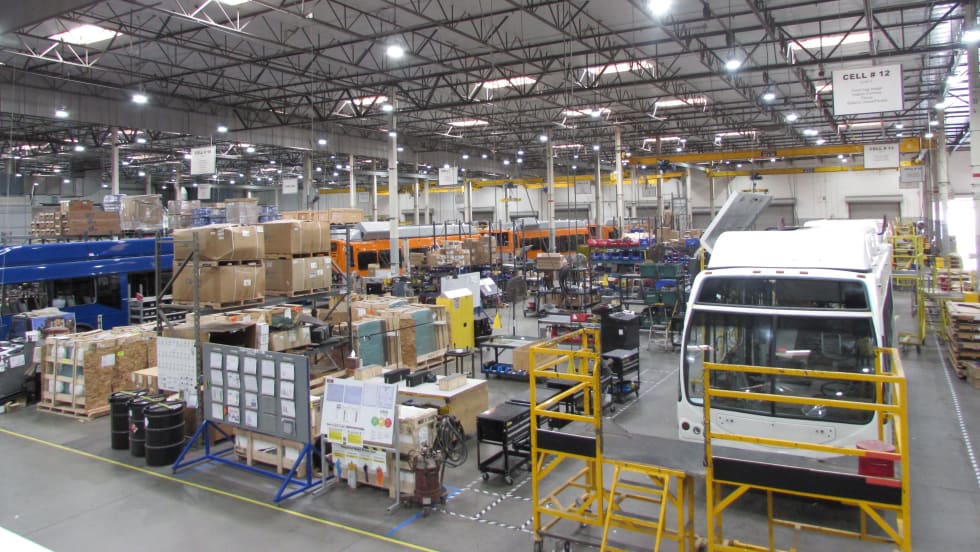
LA Metro Board Awards 220 Battery-Electric Bus Contract to ENC
The contract, which is the largest base award of battery-electric buses by a U.S. transit agency, will be built in Southern California, sustaining good jobs as LA prepares to welcome the world in 2028
Read More →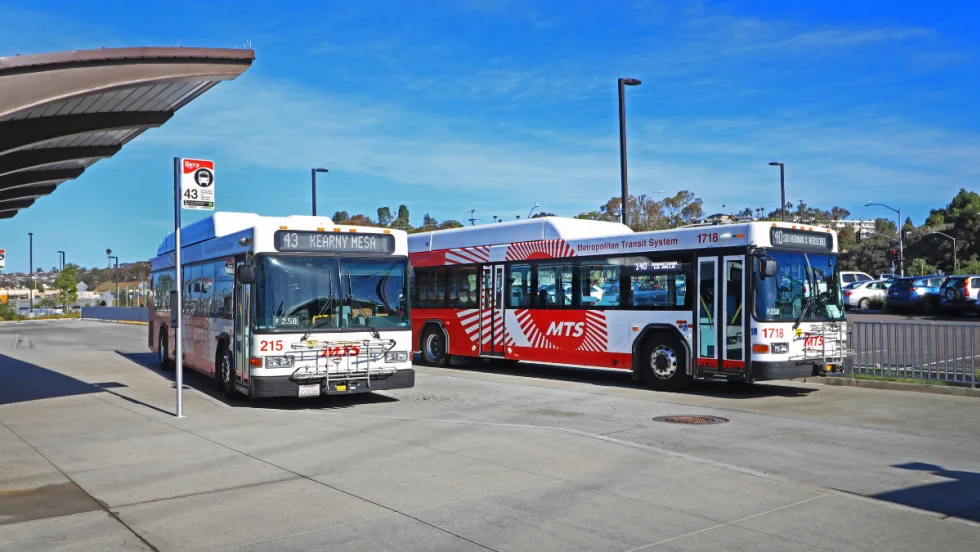
What’s Behind San Diego MTS’s Award-Winning Transit Strategy
Named one of APTA’s 2026 Outstanding Public Transportation Systems with 50 million or more annual passenger trips, California’s San Diego Metropolitan Transit System points to gains in ridership, safety, technology, and reliability as foundations of its success.
Read More →
Public Transit Conference Returning to GFX in 2027, Call for Papers Now Open
The Call for Papers is now open, allowing transit agency professionals and industry experts to help shape the PTC educational program by submitting session ideas for consideration.
Read More →
Indian River Transit’s Community-Focused Approach Earns National Recognition
Named APTA’s 2026 Outstanding Public Transportation System in its size category, Florida’s Indian River County transit system continues to grow ridership through fare-free service and a focus on evolving community needs.
Read More →
ENC Lands MATA Contract and More in Biz Briefs
In this edition of Biz Briefs, we spotlight the latest developments shaping the future of mobility.
Read More →
From Surviving to Thriving: Building Stronger Transportation Organizations
Bus Business Consultants founder Brian Dickson shares lessons on leadership, organizational health, and creating options for long-term success in a changing transportation industry.
Read More →
Everett Transit, Community Transit Outline Consolidation Agreement
The proposed agreement calls for a 50% increase in bus service in Everett, a new microtransit zone, continued paratransit service, and the transfer of Everett Transit operations to Community Transit.
Read More →
Strada360’s Steve Lassey on Turning Transit Data Into Better Decisions
From breaking down data silos to preparing for AI, Strada360 CEO Steve Lassey discusses how transit agencies can use technology to improve operations, customer information, and long-term decision-making.
Read More →