



Commuter Railroad Tackles Complex Shop Construction
A 10-year, four-phase improvement program will rebuild undersized and antiquated facilities to support expanded fleet operations. Concerns of local residents also being addressed.
The Metro-North Railroad, a subsidiary of New York's Metropolitan Transportation Authority, is the second-largest commuter railroad in the United States, providing 250,000 commuter trips each weekday and more than 73 million trips per year.
With 384 route miles and 775 track miles, Metro-North serves 120 stations in New York and Connecticut. Its service territory covers approximately 2,700 square miles. Three lines east of the Hudson River — the Hudson, Harlem and the New Haven — operate out of Grand Central Terminal in New York City. The Hudson line extends 74 miles from Grand Central Terminal to Poughkeepsie and is serviced by both diesel and electric train sets.
Shop renovation required
Metro-North has an ongoing process to match capital investment with available funding. In the late 1990s, rebuilding the Harmon Shop Complex rose to the top of the list. This complex is Metro-North’s primary equipment repair facility and is located at Croton-on-Hudson in New York’s Westchester County. It is where Metro-North stores, services and maintains the majority of its fleet.
The existing turn-of-the-century facilities were not only inadequate to support the expanded fleet and future operations, but their ability to support the current operation was becoming questionable. As part of an operating plan study, the projected train fleet requirements were compared to the existing service facilities.
Metro-North’s initial challenge was to determine how to modify and rebuild the existing Harmon complex yard and buildings while maintaining operations at the same time. The existing complex was fully occupied and in full service — 24 hours a day, seven days a week.
To complicate matters, a large community of upscale condominiums was rapidly developing adjacent to the site along the Hudson River. Increasingly, these new residents were complaining about noise from idling diesel locomotives. Metro-North knew that improvements should be made, but the question remained as to what needed to be done and how to accomplish it.
Needs analysis formulated
Metro-North formed an internal task force to analyze its own long-term needs and requirements. At the same time, it retained the services of Gannett Fleming Inc., which has been designing train servicing and maintenance facilities for more than 30 years, and Parsons Brinckerhoff. The consultant team’s task was to document and analyze the existing facilities and operations, to study Metro-North’s 2020 Plan and then to prepare a sequenced plan of development to guide the future Harmon Shop Complex reconstruction. During an intensive three-month period in 1998, a strategic plan for the complex redevelopment was created.
The strategic development plan looked at many alternate site layout schemes. The selected scheme recommended a four-phase, 10-year improvement plan to redevelop the complex while maintaining all existing operations.
Phase 1: South diesel trainset storage and service yard reconstruction.
Phase 2: Maintenance of way and communications hub facilities construction.
Phase 3: New locomotive, coach and support shop construction.
Phase 4: Electric car shop reconstruction.
When completed, the overall cost of the project will be several hundred million dollars.
First phase completed
Metro-North is now well into the implementation of its strategic development plan. Phase 1 was recently completed under budget at a cost of $64 million. This initial and critical phase of the project included the following improvements:
Expansion of the diesel trainset storage capacity in the yard.
Addition of five locomotive servicing stations.
Addition of toilet flushing stations (along each yard storage track).
Replacement of the signal system (connecting to the main line tracks to New York City).
Addition of a new communication system, including a yard telephone/paging system.
Significant reduction of the noise level at the condominium complex (due to the relocation of the idling diesel locomotives and installation of wayside outlets).
Addition of an employee overpass (eliminating employees crossing one mainline and multiple yard tracks to report to work). The major operational improvement to the south yard was the construction of five new locomotive servicing stations. Each station provided for one-stop servicing of complete 10-car diesel trains in the yard. This innovative approach to servicing has significantly reduced the time required to fuel, lube and sand the diesel trains. All servicing operations are now performed at one location without moving the trainsets. Operational features of the servicing stations include the following: Fueling: The diesel fuel system, supplied by a new 200,000-gallon diesel fuel tank, utilizes skid-mounted, dual pumps with a delivery system that includes a fuel crane at each locomotive service station. Fuel spill/overfill collection provisions are also provided at each station. Lubrication: The lubrication oil delivery system utilizes skid-mounted, dual pumps. Each service station uses a reel-type dispenser to deliver lubrication to the locomotives. Inspection: Inspection pits at selected service stations are now used to facilitate brake shoe change-outs. Sanding: The elaborate sanding system consists of two storage silos, an air-compressor building adjacent to each storage silo and an associated above-ground pneumatic delivery system. This system conveys sand to elevated sand drums, from which the sand is discharged by gravity to the locomotive sand boxes. Progress in Phase 2
The $45 million Phase 2 portion of the renovation plan is under way. Railroad Construction Company Inc. was awarded the design/build contract, with Gannett Fleming as the design engineer. This portion of the project addresses a number of key strategic plan elements:Maintenance of way storage facility relocation.
Communications hub building construction.
Material distribution center expansion. Most importantly, Phase 2 will clear the area where the new coach, locomotive and support shops will be constructed during Phase 3. As was required with Phase 1, all existing operations will have to be maintained during this phase. Metro-North is preparing design/ build contracts for Phase 3. This work will include construction of the following shop facilities: Coach shop: The 126,000-square-foot facility will include two train maintenance tracks, one scheduled periodic inspection track and three unscheduled repair tracks, along with associated repair and storage areas, offices and employee facilities. The shop will be a double-ended, run-through facility with the capacity to inspect or repair 28 push-pull coaches. Locomotive shop: The 85,000-square-foot shop will be located next to the coach shop in the south yard. It will be configured as a double-ended, run-through facility. The shop will have the capacity to inspect or repair 14 locomotives simultaneously. Support shop: The 133,000-square-foot shop will be the primary component repair and rebuild facility. It will be constructed adjacent to the material distribution center, which will facilitate the efficient movement of parts and material between the two buildings. The importance of Phase 3 is that it will separate the diesel and electric maintenance and repair operations that co-exist today. Phase 4 is key to success
To properly service and maintain Metro-North’s current and future train fleet, Phase 4 of the strategic plan will closely follow Phase 3. Phase 4 will be critical to the overall success of this multi-phase project. It will focus on the replacement of the existing, turn-of-the-century main shop building (which is presently used to maintain both the electric and diesel fleets), reconstruction of the north yard for the storage of the electric trainsets and construction of a new train washer. The new electric car shop will cover approximately 216,000 square feet. It will include two train maintenance tracks to handle a full-length electric train set for the first time. It will also include eight repair tracks, a parts storage area and the necessary support offices. The shop will be a double-ended, run-through facility with the capacity to efficiently inspect and repair 44 electric trainsets simultaneously.
More Management
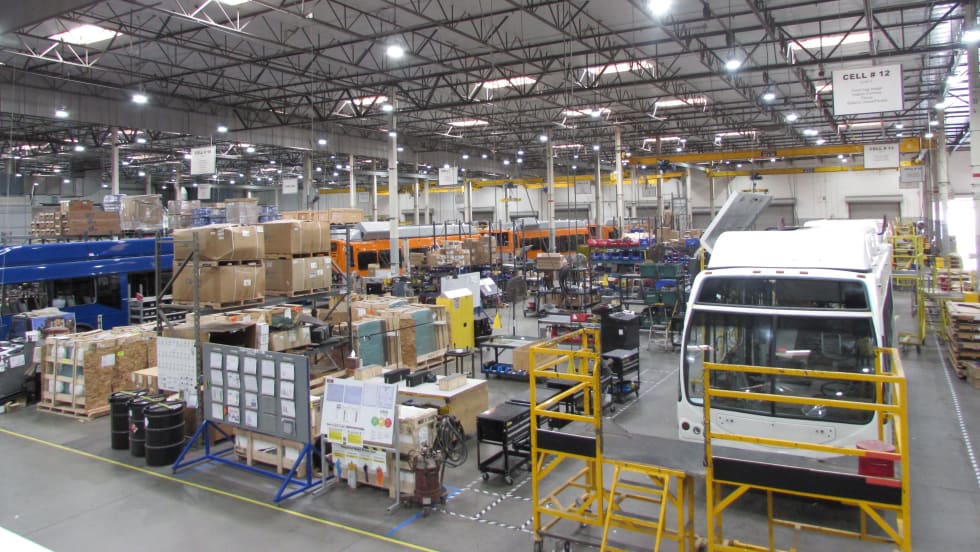
LA Metro Board Awards 220 Battery-Electric Bus Contract to ENC
The contract, which is the largest base award of battery-electric buses by a U.S. transit agency, will be built in Southern California, sustaining good jobs as LA prepares to welcome the world in 2028
Read More →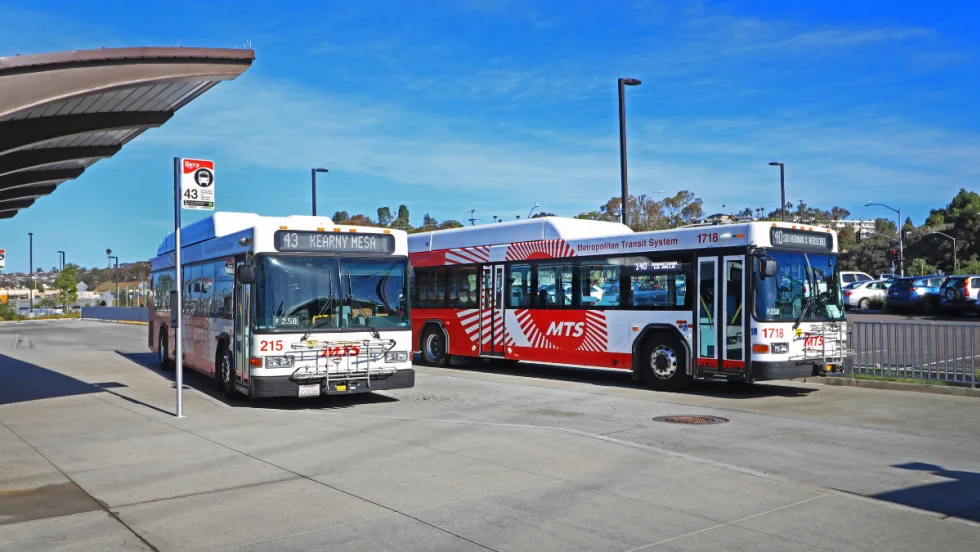
What’s Behind San Diego MTS’s Award-Winning Transit Strategy
Named one of APTA’s 2026 Outstanding Public Transportation Systems with 50 million or more annual passenger trips, California’s San Diego Metropolitan Transit System points to gains in ridership, safety, technology, and reliability as foundations of its success.
Read More →
Public Transit Conference Returning to GFX in 2027, Call for Papers Now Open
The Call for Papers is now open, allowing transit agency professionals and industry experts to help shape the PTC educational program by submitting session ideas for consideration.
Read More →
Indian River Transit’s Community-Focused Approach Earns National Recognition
Named APTA’s 2026 Outstanding Public Transportation System in its size category, Florida’s Indian River County transit system continues to grow ridership through fare-free service and a focus on evolving community needs.
Read More →
ENC Lands MATA Contract and More in Biz Briefs
In this edition of Biz Briefs, we spotlight the latest developments shaping the future of mobility.
Read More →
From Surviving to Thriving: Building Stronger Transportation Organizations
Bus Business Consultants founder Brian Dickson shares lessons on leadership, organizational health, and creating options for long-term success in a changing transportation industry.
Read More →
Everett Transit, Community Transit Outline Consolidation Agreement
The proposed agreement calls for a 50% increase in bus service in Everett, a new microtransit zone, continued paratransit service, and the transfer of Everett Transit operations to Community Transit.
Read More →
Strada360’s Steve Lassey on Turning Transit Data Into Better Decisions
From breaking down data silos to preparing for AI, Strada360 CEO Steve Lassey discusses how transit agencies can use technology to improve operations, customer information, and long-term decision-making.
Read More →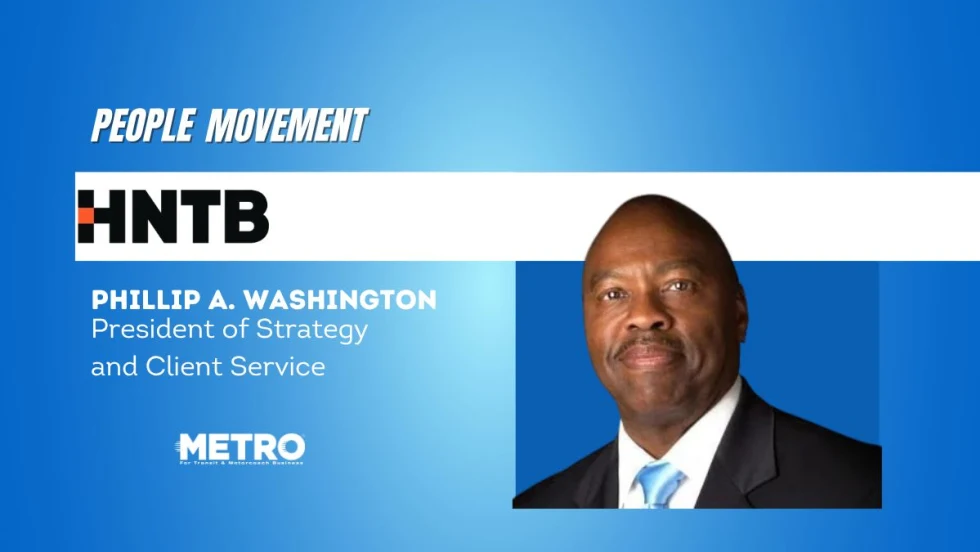
People Movement: Phil Washington Joins HNTB, Denver RTD Launches CEO Search, and More
In this edition, we also spotlight recent personnel moves at STV, the Eno Center for Transportation, and more, highlighting the people taking on new roles across the transportation industry.
Read More →
SEPTA Details Accelerate Vision for Transit System
The plan outlines investments in trolley modernization, new Metro and Regional Rail vehicles, accessible stations, and more frequent bus and rail service.
Read More →