



Consultant Q&A: Data, Defining Success, and More with HNTB's Tam
In her most recent role as the Customer Experience Lead for Dallas Area Rapid Transit’s System Modernization program, DART Transform, Tam and her team collaborate closely with the transit agency to improve riders’ day-to-day experience.


As a licensed architect and certified planner, Vince Tam's experience centers on the design aspects of complex mixed-use development and transportation projects
Photo: HNTB
- Tam holds the role of Customer Experience Lead in DART's System Modernization program, known as DART Transform.
- She collaborates with the transit agency to enhance daily experiences for riders.
- Her work focuses on improving the overall customer experience in public transit.
*Summarized by AI
Vince Tam, a sr. urban planner at HNTB, has been reimagining and improving transportation systems and the built environment for the past 14 years.
As a licensed architect and certified planner, her experience centers on the design aspects of complex mixed-use development and transportation projects. She has led several international and domestic large-scale sports and entertainment projects and community revitalization plans.
In her most recent role as the Customer Experience (CX) Lead for Dallas Area Rapid Transit’s System Modernization program, DART Transform, Tam and her team collaborate closely with the transit agency to improve riders’ day-to-day experience.
Tam spoke to METRO about modernizing transit services, data, and much more.
Defining Success, Modernizing Services
How do you define success in improving the customer experience and increasing ridership?
Success in improving the customer experience and increasing ridership starts with understanding current perceptions. Agencies can establish a baseline measurement through feedback mechanisms, such as surveys, to know how people are currently feeling when they are using different modes of transportation throughout their journey.
A key indicator is the improvement of experience noted in a continuous journey mapping effort. Once the baseline is established, an improvement strategy plan can be created and implemented. It is then essential to go back and measure the effectiveness of the CX initiatives.
Another key indicator of success is ridership growth — attracting new riders and reengaging previous riders. When transit becomes the preferred choice of transportation rather than just a necessity, it signals a system that is reliable, convenient, and enjoyable. This shift reflects meaningful improvements that enhance the overall rider experience.
What are the key factors transit agencies can consider when modernizing their services?
Modernizing transit services creates an opportunity to introduce new technologies into systems that can lead to safer, more efficient, and more enjoyable travel experiences for riders.
Establishing clear communication and implementing strategies that minimize service disruptions are essential to ensuring a smooth transition during modernization efforts. These efforts help maintain rider trust while empowering employees to embrace new systems, participate in training, and effectively manage the operation and maintenance of modernized services.
Balancing the experience of employees and the experience of riders throughout the modernization process can lead to great success. This dual focus helps ensure a comprehensive approach to improving transit systems. Communicating the long-term benefits and addressing any concerns or misconceptions from agency employees, the public, or policymakers is essential. Focusing on maintaining staff satisfaction will positively influence the rider experience.
Successful modernization requires balancing innovation with system reliability, proactive communication, and investments in technology and people.
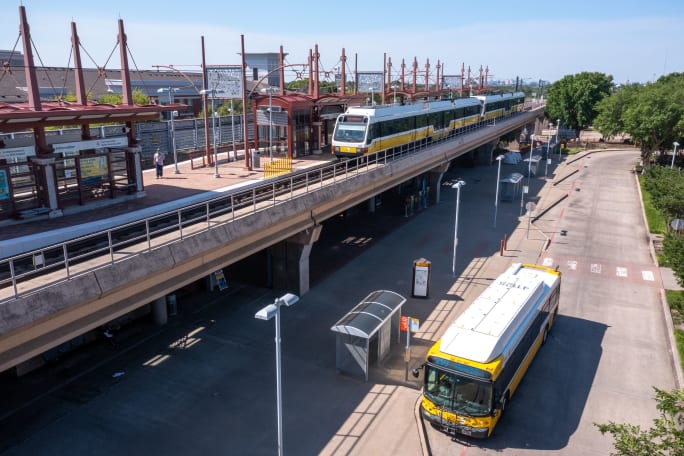
In her current position, Tam and her team collaborate closely with the transit agency to improve riders’ day-to-day experience.
Photo: DART
How do you balance innovation with the realities of competing priorities and existing infrastructure?
Balancing innovation with budget constraints requires prioritizing cost-effective, high-impact solutions.
Instead of focusing solely on large-scale infrastructure overhauls, transit agencies can improve service by identifying the places in the customer experience with the most immediate impact and targeting those areas first.
Incremental improvements — such as optimizing real-time passenger information systems, enhancing station amenities, or refining service scheduling — can offer significant benefits without requiring major capital investments. Another way agencies can innovate while managing costs is by leveraging data analytics to predict maintenance needs rather than react to breakdowns.
Phased technology implementation allows transit agencies to align upgrades with available funding. By rolling out improvements gradually and evaluating their effectiveness, agencies can ensure efficient resource allocation while maintaining system reliability.
Ultimately, focusing on innovative and scalable investments that enhance service quality is the key to balancing innovation with financial realities.
Leveraging Data
How does your approach to journey mapping leverage data analytics to improve the transit experience?
Journey mapping is a powerful tool that leverages data analytics to enhance the transit experience in these ways:
Identifying Pain Points: By analyzing real-time and historical data from GPS tracking, ticketing systems, and rider feedback, agencies can pinpoint bottlenecks, service gaps, and inefficiencies in the transit journey. This data-driven approach ensures improvements are focused on where they are most needed.
Pattern Recognition: Data analytics can reveal patterns in rider behavior and experience. For example, specific low points in the experience may be related to particular modes of transport, geographic areas, or demographic factors. Recognizing these patterns helps in developing targeted solutions.
Continuous Improvement: Journey mapping is not a one-time exercise. It involves periodically revisiting and mapping the journey to measure the effectiveness of improvement projects. This constant dialogue with customers ensures that the transit system evolves in response to their needs and feedback.
What data sources are most valuable for understanding and optimizing passenger journeys?
Analyzing fare and ticketing data helps transit agencies understand travel patterns and peak usage times. This information is crucial for optimizing schedules and resource allocation. Feedback like surveys provides direct insights into riders' experiences and preferences. This qualitative data helps identify gaps in the service and areas for improvement.
Engaging with focus groups, such as Citizen Advisory Councils, Paratransit Accessibility Advisory Groups, and other community organizations, provides a deeper understanding of specific needs and challenges faced by different rider groups. This engagement fosters a sense of ownership and trust in the transit system.
Security camera feeds can also identify patterns in passenger behavior, dwell times, and congestion points, leading to improved wayfinding or design improvements. This approach requires a balance with strong privacy policies and ethical considerations.
Quick Answers
Tam serves as the Customer Experience Lead for the DART Transform program, focusing on enhancing the daily experience of transit riders.
*Summarized by AI
More Management

METRO Opens Submissions for 2026 Motorcoach Awards
Nominations are now being accepted for METRO Magazine’s Operator of the Year and Innovative Operator of the Year awards.
Read More →
New York MTA Advances Final Contract for Second Avenue Subway Expansion
Contract Four is the largest in the Second Avenue Subway Phase 2 project and includes construction of station infrastructure, tracks, and signals for the subway expansion, MTA officials said. Work on Contract Four will begin in 2027.
Read More →
Transit Agencies Highlight Safety Gains at National Summit
Leaders from 15 major transit systems shared crime-reduction results and safety initiatives while discussing the role of continued federal support.
Read More →

NITA Names New Leadership, Expands Reduced-Fare Program at First Board Meeting
The new regional transit authority appointed its first board chair and interim executive director while extending reduced fares across CTA, Metra, and Pace for eligible riders.
Read More →
Beyond the Checklist: A Structured Approach to Transit Maintenance
Reliability-Centered Maintenance helps transit agencies move beyond routine checklists to focus limited resources on the assets and failures that have the greatest impact on safety, reliability, and service.
Read More →
APTA 2026 Nominating Committee Selects Leadership Slate, Names Chair and Vice Chair Nominees
Leadership changes will help shape the association’s priorities and its representation of the transportation industry during the 2026–2027 term.
Read More →
DART Launches Major Security, Fare Enforcement Initiative
The 90-day demonstration will deploy coordinated security teams at five light rail stations while testing controlled access and gathering data to guide future investments.
Read More →
Advancing Fare Collection Through Technology and Innovation
Learn about delivering 1300 gates at 91 stations while managing fare evasion. Explore the large scale deployment, solution customization and real-world results that affect the region. Prepare for deployment in your region now.
Read More →
Game Day in Motion: Moving Millions During the 2026 World Cup
Between packed transit stations and team motorcoaches, see how agencies and operators across North America tackled the transportation demands of the 2026 FIFA World Cup.
Read More →
Surface Transportation Extension Averts Shutdown, Leaves Transit Funding Gap
The stopgap keeps federal transportation programs moving, but missing advance funding could complicate the transit and rail projects agencies are planning next.
Read More →