



Crash Energy Management Signals Paradigm Shift in American Rail Safety
Across the globe, rail safety tends to emphasize prevention through a range of communications and sensing technologies. But recent accidents in the U.S. have placed the focus on railcar design and minimization of collision impact.
In the early morning hours of Jan. 26, 2005, a Metrolink commuter rail train plowed into an abandoned SUV in Glendale, Calif., killing 11 passengers and injuring nearly 200 others in one of the deadliest rail accidents in U.S. history. The presence of the SUV, left at a grade crossing after an aborted suicide plot, underscored the potential for dangerous interference in rail operations and reminded rail agencies that sometimes accidents are unavoidable. Analysis of recent crashes, including the Glendale disaster, has led to a gradual shift — from prevention to damage control — in the way that American transportation experts view rail safety. The thinking goes something like this: In a free and open society, trying to prevent sabotage, trespass, terrorism, human error or scores of other causes of train accidents can be difficult and expensive. However, making strategic structural modifications to railcars offers a simpler solution that will greatly improve safety in the event that an accident does happen. “If you look at the whole issue of rail safety, there are really two approaches, collision avoidance and collision survival,” says Frank Guzzo, western region marketing manager for Siemens Transportation Systems. “From a U.S. perspective, the emphasis right now is on the latter, which is accomplished through energy absorption and the development of a car structure that will lessen the severity of a crash.” Energy absorption and improved car structures are attracting more and more attention from transit agencies and government bodies. In February, Metrolink agreed to a $177 million contract with Korean rail manufacturer Rotem Co., which will supply 87 commuter railcars equipped with crash energy management technology. The deal also includes an option for Miami’s South Florida Regional Transportation Authority, which operates TriRail, to receive some of the cars. Scheduled for delivery in late 2008, this technology could signal the start of a new era in passenger rail safety. Manipulating collision force Crash energy management (CEM) is the latest catchphrase in rail safety. Though elements were first incorporated in the U.S. by the Bombardier-designed Acela cars for Amtrak, discussion of CEM has heated up in the last two years. The concept is based on a combination of several factors that work together to minimize crash impact and protect passengers onboard a train. The most important aspect of CEM is shock absorption, which is attained by setting up crush zones at common impact points of a railcar. These zones are designed to absorb the brunt of a crash, while passenger-seating areas remain safely away from the crumpling car frame. CEM-equipped trains also boast stronger end frames, which act as bumpers to better distribute energy throughout the entire car, reducing how much of the impact is felt by passengers. The efficacy of advanced CEM technology was put to the test in March by the U.S. Department of Transportation (DOT). On a test track in Pueblo, Colo., the DOT crashed a passenger train into a locomotive in a simulation of an actual railway collision. The results of the crash test, which was captured on video surveillance cameras, appear heartening. According to Transportation Secretary Norm Mineta, the new system should more than double the speed at which all passengers can survive a train crash, from only 15 mph to at least 36 mph. “In previous tests, without the use of this improved equipment, we observed crushing of more than 20 feet into the passenger seating area, which would severely compromise the safety of passengers in a real accident,” noted Mineta. In the absence of results from a technical evaluation, the DOT reported that damage in the test collision only occurred about three feet into the seating area. Building better trains While referring primarily to the lessening of collision force, the implementation of CEM goes hand in hand with other safety-oriented modifications on rail vehicles. Examples of additional railcar design improvements include: • Stronger tables with crushable edges that reduce impacts on the body • Couplers that join cars together to encourage retraction • Padded passenger seats designed to contort to the safest body position • Safety glass • Flame-resistant materials • Emergency lighting and exits What all these installations have in common is that they are passive safety features. They only come into play after an accident has occurred. “Hypothetically speaking and only including passive features,” says Pierre Huss, crash expert manager for ALSTOM Transport, “the safest train on the market today would be equipped with absorbing zones, anti-climbing features, obstacle deflectors, soft interior design, automatic SOS calling, automatic obstacle detection systems for the tracks and dedicated railway lines.” Crash tests and numerical simulations verify the benefits of these features, Huss adds. Beyond passive and reactive safety features, railcar technology today also includes an array of advanced communications equipment, dynamic brakes, alert systems and other ITS features. However, these types of systems tend to be in greater concentration in European and Asian transportation networks. A comprehensive approach Many safety experts argue that much more must be done to reinforce railcars and increase the overall safety levels of passenger rail in the U.S. In outlining his agenda for 2006, Federal Railroad Administrator Joseph Boardman described “significant improvements to rail safety and security” as the top priority. Following up on Boardman’s comments, the Federal Railroad Administration (FRA) created an associate administrator for safety position and rolled out its National Rail Safety Action Plan. The plan highlights six objectives — reducing human factor accidents, addressing operator fatigue, bolstering track safety, enhancing emergency response, improving compliance and enforcement of federal safety standards and upgrading safety at grade crossings. Still, the balance of research and development into rail safety technology in the U.S. today is centered on CEM. At press time, the FRA was working on a set of standards for CEM to make it easier for other operations to acquire the technology. Six collision tests, designed by the Volpe National Transportation Systems Center, have been carried out to date. Furthermore, the Transportation Research Board’s Transit Cooperative Research Program is conducting a study of performance requirements for CEM on light rail vehicles. The results are due in December 2006. Nevertheless, a climate of uncertainty continues to permeate the discussion of CEM technology, particularly in regards to federal funding to acquire it. “On the U.S. side, much of what we are doing now is based on car structure, but as far as I know, there is still no mandatory federal requirement to implement crash management on rolling stock,” says Siemens’ Guzzo. “The truth of the matter is that, right now, the fed is really not helping transit authorities secure funding for this.”
More Management

ENC Lands MATA Contract and More in Biz Briefs
In this edition of Biz Briefs, we spotlight the latest developments shaping the future of mobility.
Read More →
From Surviving to Thriving: Building Stronger Transportation Organizations
Bus Business Consultants founder Brian Dickson shares lessons on leadership, organizational health, and creating options for long-term success in a changing transportation industry.
Read More →
Everett Transit, Community Transit Outline Consolidation Agreement
The proposed agreement calls for a 50% increase in bus service in Everett, a new microtransit zone, continued paratransit service, and the transfer of Everett Transit operations to Community Transit.
Read More →

Strada360’s Steve Lassey on Turning Transit Data Into Better Decisions
From breaking down data silos to preparing for AI, Strada360 CEO Steve Lassey discusses how transit agencies can use technology to improve operations, customer information, and long-term decision-making.
Read More →
People Movement: Phil Washington Joins HNTB, Denver RTD Launches CEO Search, and More
In this edition, we also spotlight recent personnel moves at STV, the Eno Center for Transportation, and more, highlighting the people taking on new roles across the transportation industry.
Read More →
SEPTA Details Accelerate Vision for Transit System
The plan outlines investments in trolley modernization, new Metro and Regional Rail vehicles, accessible stations, and more frequent bus and rail service.
Read More →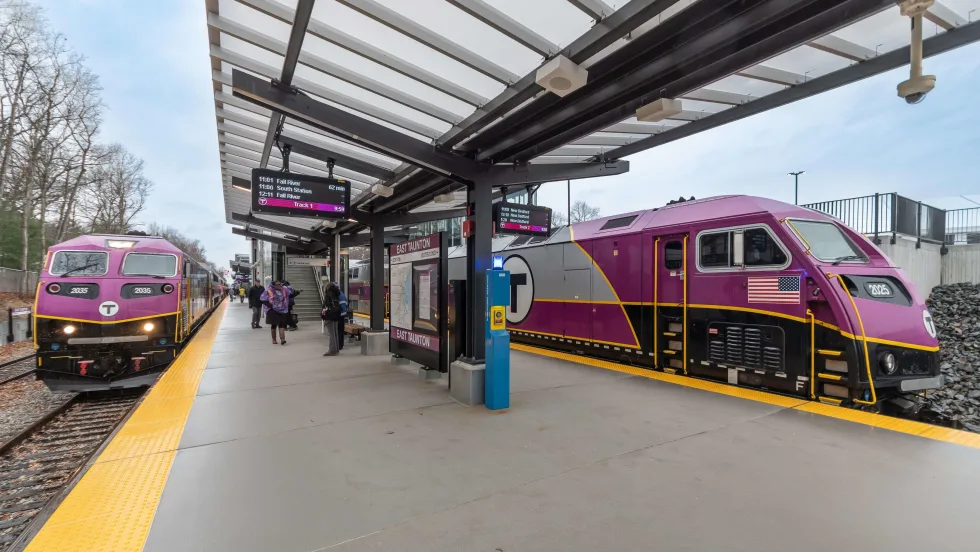
FTA Ends Direct Oversight of MBTA Safety Actions
The federal agency closed its remaining special directive to the Massachusetts Department of Public Utilities following a safety review that began in 2022.
Read More →
Report: Transit Bus Manufacturing Supports 34,100 Jobs, $5.1B in GDP
The “Buses Mean Business” report examines the transit bus manufacturing industry’s economic footprint, supply chain, and rising demand for vehicle replacements.
Read More →
LIT Marks 10-Year Milestone at Annual Summit
Hosted by the COTA from September 10 to 13, the Summit carried the theme “Celebrating 10 Years of Excellence, Leadership, and Impact,” with every part of the program honoring the people, agencies, and partners who built LIT over its first decade.
Read More →
People Movement: Dan Dipert Coaches Adds Third-Generation Leader, Keolis Names New Valley Metro VP/GM, and More
In this edition, we also cover recent appointments and announcements at the Wabtec, SilverRide, HNTB, and more, showcasing the individuals helping to shape the future of transportation.
Read More →