



Crash sparks push-pull controversy
Rail operators take a closer look at safety concerns with push-pull trains after January's commuter crash in Glendale, Calif.
The January commuter rail crash in Glendale, Calif., that killed 11 people and left 180 others injured has prompted a closer look at safety concerns, especially when push-pull trains are running with a passenger car in front.
In the Jan. 26 accident, a Metrolink train plowed into a Jeep Grand Cherokee that was parked on the tracks. The impact caused the train to derail and jackknife. It then collided with a Metrolink train traveling in the opposite direction, as well as a parked freight train on a third set of tracks.
In the wake of the accident, Metrolink officials implemented a new policy prohibiting passengers from sitting in the first 11 seats in the front car when the train is running in the push mode. “We took this action out of an abundance of caution,” David Solow, CEO of Metrolink, told the media.
Key to whether the prohibition will be extended or made permanent will be the results of an investigation by the National Transportation Safety Board, which is analyzing the crash.
More vulnerable to damage?
Some rail experts believe that pushed trains are more vulnerable to damage and have a higher likelihood of being derailed than train configurations with the locomotive in front.
In the January accident, the train that slammed into the Jeep was being pushed by a 140-ton locomotive. The lead passenger car, known as the cab car, weighed 56 tons. The much lighter cab car, safety experts say, is exposed to higher risk in the event of a crash, so much so that some refer to the first car as the “coffin car.”
“For years, I have thought that using engines to push trains was going to end in a disaster,” Loren Joplin, an accident and safety official for the Atchison, Topeka & Santa Fe Railway in the 1970s, told the Los Angeles Times. “Had there been a locomotive on the front end, this would not have happened in Glendale.”
Even if Joplin is correct, the nation’s 20 or so commuter rail operators are unlikely to stop using push-pull trains in the push mode.
Like most operators in the commuter rail industry, the Trinity Railway Express (TRE) in the Dallas-Fort Worth area also uses a push-pull configuration. “While we’ll look closely at the results of the investigation into the Metrolink crash, there are no immediate plans to change this operating practice,” said TRE spokesman Morgan Lyons. In addition to operating push-pull trains, TRE also operates self-propelled diesel-powered railcars.
Efficiencies are considerable
Push-pull trains are viewed as part of an efficient and practical method of running a commuter rail system because operators don’t have to buy additional locomotives and use turn-arounds to move the locomotive from one end to the other when the train reaches the end of the line.
And the safety record of commuter rail trains running in the push mode is exceptional. One industry expert who preferred not to be identified characterized the Glendale crash as a “freak accident” with so many variables that it’s hard to draw a definitive conclusion. “Other road crossing accidents have occurred around the country in the same train configuration, and results were minimal in comparison,” he said.
Arthur Lake, president of Lake Traffic Solutions, said this lack of similarly catastrophic accidents in the push mode could provide lawyers for Metrolink with their best defense. “I would circle the wagons and defend to the last lawsuit our operating practice as safe and time-proven and hope for the best in court,” he said.
Lake added, however, that juries may not be as concerned with historical safety records as with what appears to be common sense. “It stands to reason that a railroad passenger car with no mass, no weight and no density compared to a locomotive will react far differently than a 100-ton locomotive,” he said. “It may ride up on debris and derail; it may collapse, crash columns notwithstanding, telescope and kill and maim occupants.”
More Management

COTA Launches First Customer Experience Action Plan to Improve Transit Service
The new plan outlines improvements to service reliability, accessibility, communication, and the overall rider experience across Central Ohio's transit system.
Read More →
LA Metro September Ridership Climbs 3.9%, Led by Rail Growth
The agency recorded more than 27.2 million boardings, with rail ridership increasing 12.4% year over year and the D Line posting the largest gains.
Read More →
Utilimarc Launches SmartReplace to Optimize Fleet Replacement Decisions
AI-powered SmartReplace helps fleets prioritize vehicle replacements, model budget scenarios, and build more defensible long-term strategies.
Read More →
APTA Honors 2026 Award Winners, Hall of Fame Inductees at TRANSform & EXPO
Innovations in autonomous and zero-emission transportation, standout transit systems, and industry leadership took center stage among this year's honorees.
Read More →
7 Ways to Build a Better Transit Internship Program
Lessons from DRPA/PATCO’s approach to creating a meaningful internship experience—and developing the next generation of transportation professionals.
Read More →
Scenes from APTA TRANSform & EXPO 2026
Transit leaders, manufacturers, and industry professionals gathered in Chicago to explore new technologies, share ideas, and discuss the future of public transportation.
Read More →
Building Stronger Leaders, More Resilient Transit Teams
Dr. Carol Parker Walsh discusses leadership development, employee retention, workplace culture, and preparing transit’s workforce for AI and automation.
Read More →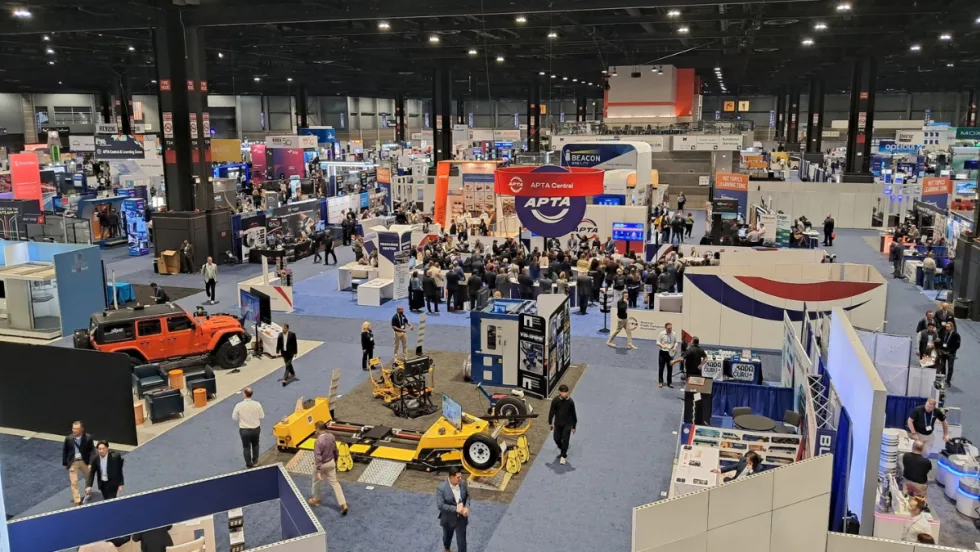
APTA 2026 TRANSform & EXPO Kicks Off in Chicago
After 45 years, APTA returns to Chicago with a focus on next-generation fleets, AI, connected transit networks, and the funding strategies shaping public transportation’s future.
Read More →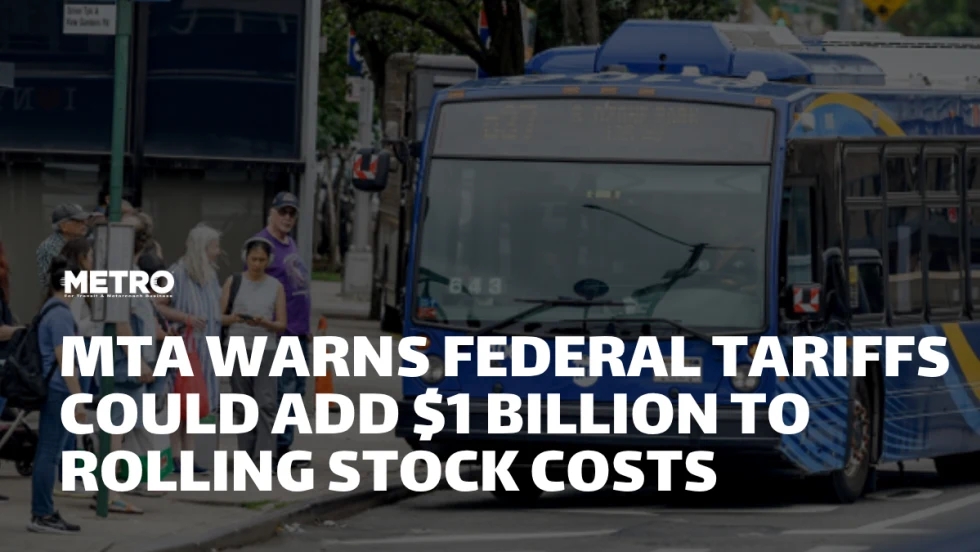
New York MTA Warns Federal Tariffs Could Add $1 Billion to Rolling Stock Costs
The agency said tariffs on specialized imported components could reduce the purchasing power of its $23 billion investment in new subway cars, railcars, and buses.
Read More →
From the Show Floor: What Happened at APTA TRANSform & EXPO 2026
See the latest product launches, partnerships, technology updates, and transit industry announcements from APTA TRANSform & EXPO in Chicago.
Read More →