



Developing Effective Transit Boards
While assembling a diverse group of individuals with a variety of skill sets is essential, educating members on the workings of the transit agency is also beneficial in developing a board that will help the agency meet customers' needs.
Whether large or small, appointed or elected, transit board members all work together with their respective agencies to carry out a similar mission — meeting the needs of the community. To do this in an effective and efficient manner, board members must be well-versed in the workings of the agency and other relevant facets of the transportation industry.
The education of board members is one of the fundamental steps to developing a more effective board.
Education is key
Education is the key difference between a board that simply rubber stamps initiatives and one that makes informed decisions and helps develop long-term goals. Like formal training for any new hire, newly appointed board members merit the same investment. Board members need to learn what their job duties are and how they relate to the agency. Some agencies give new board members an on-site orientation/training program, which may involve a one- to two-day session. Others go one step further and send their members to specialized training seminars such as those put on by the City University of New York, School of Professional Studies (CUNY-SPS).
Board members serving in the state of New York are actually required by law to attend board-specific training courses. Public authorities are big business in New York, with a total of 292 entities. In recent years, these authorities came under close scrutiny in the wake of scandals, which led to numerous reform proposals. The resulting legislation, the Public Authority Accountability Act of 2005, requires board members to attend training. To fulfill these new requirements, CUNY-SPS organized a one-day course, which covers board and fiduciary responsibilities in the first half of the session, with the second half focusing on specifics of budgeting and financial issues.
“We have probably trained 400 or 500 board members,” says Robert Paaswell, director of the University Transportation Research Center at the City College of New York. He is charged with training attendees on board member responsibilities during these sessions. “Board members are first and foremost responsible for the mission of their agencies,” he says. “Secondly, they have fiduciary and ethical responsibilities, and thirdly, they have legal responsibilities.”
Paaswell says these fundamentals need to be “hammered home” in the context of becoming a better board member. Other session topics include how boards should be constituted, what qualities board members should have, how they can learn to think strategically and how they can deal with board leadership.
While much of a board member’s work centers around decision-making, the CUNY-SPS training emphasizes the importance of setting goals, staying within the mission, staying informed, being clear and decisive, and promoting a culture of respect and trust.
In addition to formal training programs, board members can learn on the job by immersing themselves in the various board functions.
“Early on I realized that much of the real board work happened at the committee level, which prompted me to attend as many meetings as was reasonable,” says David Ruchman, first vice-chairman for Denver’s Regional Transportation District (RTD) executive committee. “It proved a great way to educate myself.”
Alternative ‘learning’
Newer board members can also obtain supplemental “education” by attending industry conferences and developing industry contacts. “It allows [board members] to have a network out there that they can turn to for either validation of what their thoughts are, or to maybe find out somebody else’s experiences that can be shared,” says Ray Jurkowski, general manager of Lake County, Ohio-based Laketran. “An educated board that is very proactive and reaches out [to industry contacts] becomes a very effective board.”
Unless they understand the basic principles of how the transportation industry operates, board members may find themselves at a disadvantage. In addition to the general workings of the transit operation, board member orientations should include information about federal rules, regulations and procurement procedures.
“With new board members, especially if they are elected officials, they are trying to promote the economic development of the area or state, so when it comes to awarding contracts, they don’t understand the federal laws,” says Jurkowski. “That’s one of the challenges I’ve run up against, so it helps if they are acclimated with the rules up front.”
Board members must be proactive in their ongoing education by staying informed as to the needs of the agency and its customers. Information should be gleaned from a variety of sources, including the executive director and staff, board meetings, trade publications and the Internet. Resources include industry associations and specialized consultants who offer board member education and training tools.
Strength in diversity
Besides education, diversity is another key aspect of an effective transit board. Assembling members with different backgrounds and skills strengthens the board’s ability to reach out to various members of the community and make informed decisions in the best interest of the agency and community. “Hopefully the collective experience of the board members will add to the variety of experiences that makes a good board,” says Paaswell of CUNY-SPS.
Laketran’s county commissioners, the appointing body for its board members, strive to maintain the board’s diversity by appointing members from various ethnic backgrounds represented in the community, as well as members with disabilities who are dependent on the transit system, Jurkowski says.
“Our most recent appointment has been a person from the planning commission, because there’s lots of anticipated development that is going to happen in the next five to 10 years,” Jurkowski says. “And he’s going to be a wonderful resource in keeping us tuned in with that.”
It is also typical for transit boards to appoint members with financial backgrounds, such as CPAs, attorneys and elected officials, to stay in touch with legal or political elements.
“It’s part of the CEO’s job to try to understand the talent that a board member brings, much like a coach on a football team,” says Jurkowski. “People come with skills and you want to develop enough relationship with those people so there is trust, so you can collaborate with them on things where they have a particular expertise.”
Some board members take to specializing in specific aspects of the transit agency’s operation or services to aid in their decision-making processes. “A couple of people on our board have focused on paratransit work; they either use the service, or know people who do, and they have taken the lead on the topic,” says Ruchman. “Another member has focused on alternative fuels. They work in a directly related area, and give us leadership in this area.”
Open communication
Opening the lines of communication between the board and its executive staff can bolster the effectiveness of the board and help achieve the agency’s mission. Some agencies use outside retreats as a tool to foster more effective relationships with boards.
“We decided to go on a board retreat to undergo an analysis of our strengths, weaknesses, opportunities and our threats to help develop the priorities for the upcoming 2007 budget,” says Jurkowski. “Our board allows senior executives to participate in the retreat, which I commend them for because it was a very effective bonding activity.”
Laketran’s board members also attend community functions and events with members of the agency’s executive staff, which allows them to talk to customers and relay that information to other board members.
Communication is also enhanced by the development of structured agendas for the agency’s board meetings and the presentation of briefings before each meeting. “This consistent communication has helped the board develop a level of confidence in the senior executives and has made senior executives more comfortable in dealing with the board,” Jurkowski says.
Meeting challenges
There are many challenges faced by board members in relation to their responsibilities. Carving out sufficient time to devote to board member duties can be the greatest challenge for many, as it is a part-time undertaking, usually in an addition to a member’s “regular” job. “To really understand a system as complex as RTD, with a $700 million capital and operating budget, there is no substitute for putting in the time,” Ruchman says. “One difficult balance is how responsive you are to your communities and constituents, versus going to board committee meetings and learning more about the system.”
As a six-year board member, Ruchman has learned how make the most of his time over the years. By participating on the committee level, “I got an early view of issues I would later have to wrestle with formally at monthly board sessions, so I had more time to reflect.”
Term limits also hamper the amount of time members can ultimately devote to long-term projects and goals. This in turn deprives the board of more experienced members who are familiar with the needs of the operation and its community. “In [Denver’s] case, [board members] are termed out, so we don’t have the luxury of growing for, perhaps a couple of decades, with the system,” Ruchman says.
Committed to serve
While they may be seen by some as simply an oversight committee of sorts, transit boards play an integral role in the operation of a transit agency by providing support to achieve the goals and realize the ultimate mission of the agency.
“We serve as diplomats to members of the public who, in a Sunbelt city like Denver, are often largely oblivious to RTD’s work as they speed around in their SUVs,” says Ruchman. “We try to raise awareness and support for public transportation.”
It is this type of commitment that serves as inspiration to other board members and creates a more dynamic entity, which no amount of training can replace. “Unless the people [on the board] are motivated and caring professionals,” says Laketran Board President Dale Chample. “It’s not going to work.”
In keeping with this philosophy of commitment, Laketran’s board members host golf tournaments and holiday parties to pay for campaign materials to support the upcoming levy. “The board takes an active interest in not only the day-to-day running of the organization, but in the long-term political aspects,” says Jurkowski.
More Paratransit
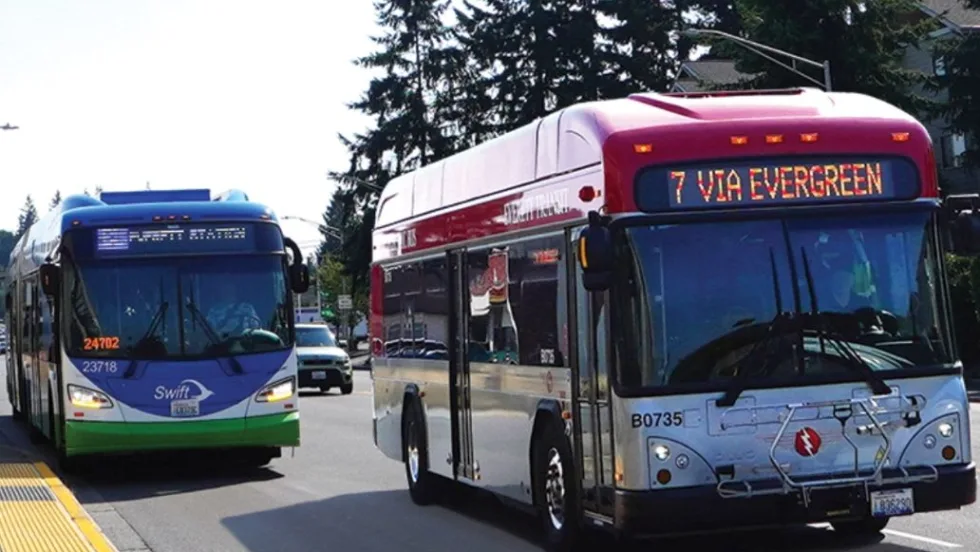
Everett Transit, Community Transit Outline Consolidation Agreement
The proposed agreement calls for a 50% increase in bus service in Everett, a new microtransit zone, continued paratransit service, and the transfer of Everett Transit operations to Community Transit.
Read More →
Driving Smarter Paratransit
John Hanlon shares how AlphaRoute is leveraging AI-powered technology to help paratransit providers optimize operations, support frontline staff, and enhance the rider experience.
Read More →
People Movement: Dan Dipert Coaches Adds Third-Generation Leader, Keolis Names New Valley Metro VP/GM, and More
In this edition, we also cover recent appointments and announcements at the Wabtec, SilverRide, HNTB, and more, showcasing the individuals helping to shape the future of transportation.
Read More →
Biz Briefs: RIPTA Unveils New Frontrunners, Clevland RTA Adds New Siemens, and More
In METRO's latest installment, we take a look at recent news from Siemens, Prevost, Dodge, and more partnerships making headlines across the transportation sector.
Read More →
King County Metro Makes ADA Paratransit Easier to Navigate
METRO's Innovative Solutions Award winner replaces complex service-area descriptions with an accessible, interactive map that puts paratransit information directly in customers’ hands.
Read More →
Jacksonville’s NAVI Project Charts a New Course for Autonomous Public Transportation
Through its NAVI program, JTA is showing how autonomous vehicles, intelligent infrastructure, and coordinated operations can work together to deliver everyday public transportation.
Read More →
Driving Smarter Paratransit
John Hanlon shares how AlphaRoute is leveraging AI-powered technology to help paratransit providers optimize operations, support frontline staff, and enhance the rider experience.
Read More →
METRO Magazine Announces 2026 Innovative Solutions Awards Winners
Projects Recognized for Advancing Mobility Through Technology, Accessibility, Workforce Innovation, and Operational Excellence
Read More →
Biz Briefs: STV teams with Amtrak, Motorcoach Operators Boost Fleet and Land Contracts, and More
From manufacturers and suppliers to transit agencies and motorcoach operators, these updates offer a snapshot of the projects, partnerships and business moves driving the industry forward.
Read More →
Biz Briefs: Masabi Teams with St. Louis Metro and More
In METRO's latest installment, we take a look at recent news from Transdev, Hitachi, and more partnerships making headlines across the transportation sector.
Read More →