



Discussing Long-Term Growth, Transit Trends With HDR’s Waldron
Tom Waldron, global transit director for HDR, is one of several top executives METRO spoke with for a consultant roundtable in the July issue.

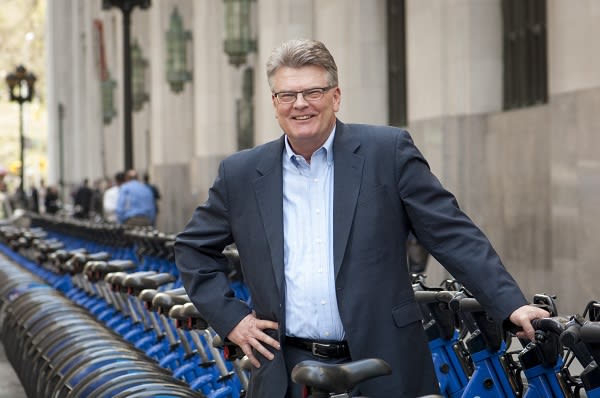
Tom Waldron is global transit director for HDR.
As cities, states, and provinces throughout the U.S. and Canada slowly begin to reopen, there is no doubt there will be a new normal not only in the way people commute, but in the way capital projects are planned and executed.
Tom Waldron, global transit director for HDR, is one of several top executives METRO spoke with for a consultant roundtable in the July issue to discuss what may lie ahead for transit service planning, capital projects, workforce development, and much more.
It is a given there has been stagnation during the pandemic, but do you feel the last year-plus will impact transit’s growth in the long-term?
As the world emerges from the pandemic, I believe the great reshuffling that is going on now in so many aspects of our lives — where we live, how we get to where we are going, and where, how, and when we work — will gradually become less intense as the population acts on these fundamental life choices prompted by the health crisis. The data is starting to indicate we will see a return to pre-COVID transit ridership levels in major markets sooner than initially projected when we were in the grips of 70%-plus patronage drops. Factors influencing these statistics include fewer disruptive effects in our economy, stabilizing employment, stronger residential and commercial real estate patterns, and clarity on employee/employer preferences on where work is performed. Once the industry achieves its break-even rebound, signs are positive that transit will go through a lengthy period of sustained investment in modernization of facilities and equipment and capital expansion programs to address anticipated growth.
The financial capacity to underwrite this transformation is gradually taking form. Transit generally continues to perform well across the U.S. with voter-approved local funding measures, and we should not lose sight that transit has been central to the narrative in Washington regarding the American Jobs Plan infrastructure bill, the transportation bill re-authorization, and the previously enacted American Rescue Plan and CARES Act COVID relief bills, all directing an unprecedented infusion of federal funding to transit.
Worldwide, are there regions that HDR works in that are recovering any quicker than here in the states? If so, what are some of the lessons learned that could be applied as we continue to ramp up?
I have seen the pace of recovery vary among the regions around the world where HDR works on transit projects, and significant variation from region to region here in the U.S. Internationally, however, I don’t see that any one region or country has recovered at a significantly quicker pace than the U.S. as a whole. One thing that we have observed globally is that those countries and regions that have consistently followed the science and been guided by the infection metrics in determining their collective response to the pandemic are the ones that have emerged from the health crisis and its corresponding disruptive impacts sooner and in relatively better economic shape.
With the large change of members in Congress, how have you/your company reached out to those representatives to communicate the importance of what you do?
In our transportation sectors, HDR traditionally works through our partnerships with industry associations to connect with influential members of Congress to communicate the importance of investment in infrastructure and other issues affecting the diverse markets we serve. In transit, HDR is very involved with the advocacy initiatives of the American Public Transportation Association (APTA), the industry’s preeminent voice for 1,500 public and private sector member organizations. We also connect with the advocacy missions of other representative organizations such as AASHTO, ARTBA, COMTO, Commuter Rail Coalition, and WTS. In addition, as a trusted advisor to our clients, HDR staff is privileged to participate in conversations with congressional delegations and staff to inform them of the status of programs in their states or districts, and on projects of particular significance coming before their committees.
What lessons did you learn, personally, through the last year that we have lived through the pandemic?
Public and private sector transit service providers and professionals at every level have demonstrated enormous resilience, resourcefulness, dedication, and selflessness. This was confirmed for me through a period of adversity, the scale of which my generation and succeeding generations have not witnessed.
How the industry responded under duress has been extraordinary:
Keeping systems operating for essential workers.
Keeping stations, systems, and vehicles in a state of readiness for the eventual return of full patronage.
Planners, environmentalists, economists, engineers, and program managers keeping service expansion projects in a state of good repair and forging ahead.
Construction industry teams working around a depleted labor supply and supply chain disruptions to keep contracts mobilized.
Let’s not forget that while their amazing work continued to be rolled out, the people involved were contending with the impositions of COVID-19 in their personal lives, as well. It makes the whole scenario even more remarkable, to my thinking.
What current and/or emerging trends are you seeing in transit and other sectors and what should we be doing to prepare?
The COVID-19 pandemic has been the great accelerator for many societal and industry trends that were starting to take hold pre-COVID. Perhaps the most obvious is the sudden, tidal wave shift to virtual learning and virtual work environments once the scale of the pandemic became clear in March 2020. The efficacy of virtual learning compared to traditional norms is yet to be determined, but the virtual work environment is here to stay. Impacts on productivity, service/product quality, organizational culture, and innovation brought about by a greater reliance on the virtual work model will be studied closely until we achieve an acceptable balance between them. Further, the exodus of jobs and inhabitants that we have seen from many of our city centers during the height of the pandemic — largely enabled by the proliferation of virtual work — is already being countered in some urban areas, such as Austin, Texas, with a mass influx to downtown. These migration trends will take a while to stabilize, but as they do, agencies will adjust their service patterns accordingly, rationalize their fleets, and right-size their facilities and workforce to address the overall ‘mobility-as-a-service’ needs of the communities they serve. A relatively recent movement supported by some transit leaders to measure transit effectiveness based on mobility provided, rather than solely on patronage, could be another trend that takes on steam as we respond to the extensive upheaval we have witnessed during COVID-19.
More Management

METRO Opens Submissions for 2026 Motorcoach Awards
Nominations are now being accepted for METRO Magazine’s Operator of the Year and Innovative Operator of the Year awards.
Read More →
New York MTA Advances Final Contract for Second Avenue Subway Expansion
Contract Four is the largest in the Second Avenue Subway Phase 2 project and includes construction of station infrastructure, tracks, and signals for the subway expansion, MTA officials said. Work on Contract Four will begin in 2027.
Read More →
Transit Agencies Highlight Safety Gains at National Summit
Leaders from 15 major transit systems shared crime-reduction results and safety initiatives while discussing the role of continued federal support.
Read More →

NITA Names New Leadership, Expands Reduced-Fare Program at First Board Meeting
The new regional transit authority appointed its first board chair and interim executive director while extending reduced fares across CTA, Metra, and Pace for eligible riders.
Read More →
Beyond the Checklist: A Structured Approach to Transit Maintenance
Reliability-Centered Maintenance helps transit agencies move beyond routine checklists to focus limited resources on the assets and failures that have the greatest impact on safety, reliability, and service.
Read More →
APTA 2026 Nominating Committee Selects Leadership Slate, Names Chair and Vice Chair Nominees
Leadership changes will help shape the association’s priorities and its representation of the transportation industry during the 2026–2027 term.
Read More →
DART Launches Major Security, Fare Enforcement Initiative
The 90-day demonstration will deploy coordinated security teams at five light rail stations while testing controlled access and gathering data to guide future investments.
Read More →
Advancing Fare Collection Through Technology and Innovation
Learn about delivering 1300 gates at 91 stations while managing fare evasion. Explore the large scale deployment, solution customization and real-world results that affect the region. Prepare for deployment in your region now.
Read More →
Game Day in Motion: Moving Millions During the 2026 World Cup
Between packed transit stations and team motorcoaches, see how agencies and operators across North America tackled the transportation demands of the 2026 FIFA World Cup.
Read More →
Surface Transportation Extension Averts Shutdown, Leaves Transit Funding Gap
The stopgap keeps federal transportation programs moving, but missing advance funding could complicate the transit and rail projects agencies are planning next.
Read More →