




Happening Now: U. of Pennsylvania Taps WeDriveU for On-Demand Campus Shuttles
DRT, Spare Labs, Transit Increase Mobility Options in Canada
In 2017, Durham Region launched its On Demand pilot project, which put the agency on the path to a high-quality and cost-effective transit program for rural residents.
October 10, 2022
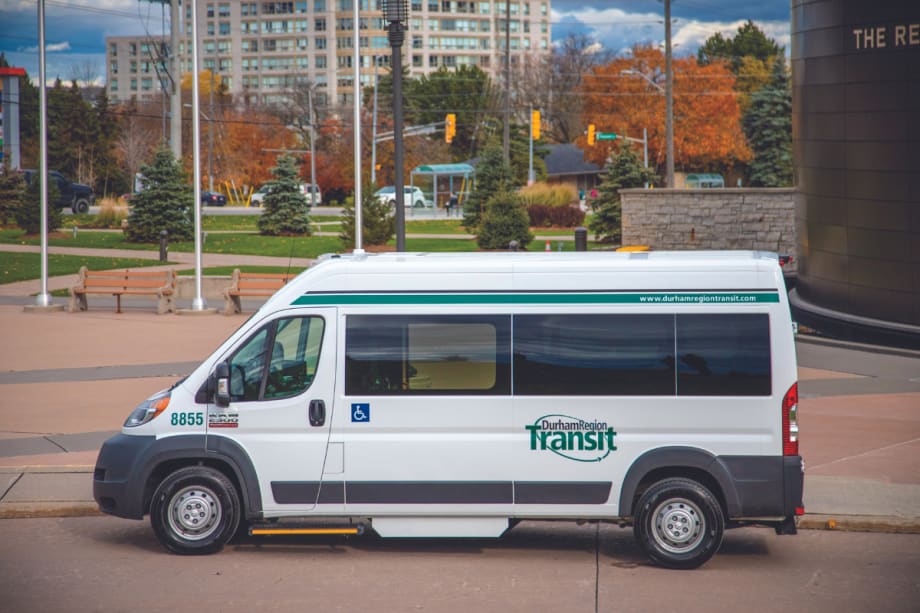
In 2020, when the pandemic forced people to stay at home and transit ridership fell across Canada, DRT recognized that scaling up its on-demand services would benefit residents and essential workers, as well as mitigate operational pressures.
Photo: DRT
4 min to read
Whitby, Ontario, Canada’s Durham Region Transit (DRT) has a clear vision for the future of transit; one that is convenient and meets the needs of residents in the region.
In 2017, Durham Region launched its On Demand pilot project, which put the agency on the path to a high-quality and cost-effective transit program for rural residents.
In 2020, when the pandemic forced people to stay at home and transit ridership fell across Canada, DRT recognized that scaling up its on-demand services would benefit residents and essential workers, as well as mitigate operational pressures.
“The program was fast-tracked; in just four months DRT went from offering On Demand in the northern, rural parts of the region to having it available everywhere in Durham Region,” explains DRT's Christopher Norris, PE, deputy GM, operations. “Transit customers were used to scheduled bus services and needed a modern and seamless method for scheduling on-demand rides. To facilitate an easy process for scheduling, DRT partnered with Transit App to integrate on-demand services into their trip planning app, and with Spare Labs to manage the back end of the trip booking system.”
The result of the partnership between DRT, Spare Labs, and Transit is that the agency now operates one of the largest on-demand systems in Canada, providing public transit in low-demand areas where scheduled bus service isn’t cost effective.
In the first month of On Demand service, 5,844 trips were completed, with 90% of users reporting a positive experience. As the program scaled, ridership grew as well. In 2021, 116,374 trips were taken within low demand urban and rural areas of the region, providing transit service to more than 124,000 customers who wouldn’t have had access to traditional transit. Removing the requirement to book trips in advance and providing multiple ways to book On Demand rides have provided customers with a modern and seamless travel experience.
With an average 10-minute wait time, the service will meet riders at the closest bus stop in urban areas, or directly at their home in rural areas of the region. The program utilizes a personal, flexible service delivery model, which provides customers in low-demand and rural areas with public transit options based on their trip needs: whether it’s travelling stop-to-stop, making connections to frequent routes, or getting to the local commuter rail station or bus terminal.
“The strategic decisions [we have made along the way] have enabled DRT to operate effectively with less reliance on provincial pandemic transit relief funding,” says Norris. “The cost-effectiveness of On Demand has enabled DRT to invest in scheduled service in main corridors to increase frequency and decrease wait times, making public transit more appealing.
The launch of new scheduled service in growing communities enables the reinvestment of resources to other On Demand service areas, supporting the continued growth of public transit ridership across the region.”
Norris points to the transition from On Demand to scheduled service in North Bowmanville as a successful example of right-sizing service delivery to match demand. On Demand ridership in Bowmanville experienced rapid growth in 2021 and 2022, reaching approximately 130 passengers per day, or 32% of all urban On Demand ridership. As demand continued to increase, it triggered DRT’s service design guidelines to implement scheduled service.
In April 2022, DRT introduced Route 502, a new service with routing specifically designed to follow popular On Demand travel patterns. This approach provides connections to commercial areas, frequent scheduled service, and a more competitive travel time for customers, tailored to their needs. The new service has also allowed DRT to develop new travel markets, enabling direct travel to Bowmanville’s three secondary schools.
The benefits of On Demand in a large geographic region like Durham are substantial. With communities expanding along with the growing inequities in where people live and work, the system provides customers a level of service that wouldn’t be possible without including On Demand as part of the DRT service options — 24 hours a day, 365 days a year.
“At DRT, we understand the importance of designing services that meet the needs of our residents and customers. It’s what drives us,” says Norris. “On Demand is just one example of our dedication to innovative thinking which allows us to support customers and residents with a seamless and convenient transit experience.”
Subscribe to Our Newsletter
More New Mobility

From Hardware to Digital Partner: Luminator Charts Its Next Chapter
CEO Magnus Friberg discusses Luminator’s shift toward becoming a digital partner, the growing importance of software and interoperability, and how AI can help agencies improve operations and passenger experience.
Read More →
Biz Briefs: Alstom Lands Canadian Contract, LYT to Supply California TSP, and More
In METRO's latest installment, we take a look at recent news from Complete Coach Works, Beep, FlixBus, and more partnerships making headlines across the transportation sector.
Read More →
CharterUP’s Armir Harris on Technology, AI, and the Future of Group Mobility
In a recent episode of METROspectives, CharterUP Founder/CEO Armir Harris discussed the company’s evolution from an online charter bus marketplace into a technology platform supporting public- and private-sector mobility and much more.
Read More →
Jacksonville’s NAVI Project Charts a New Course for Autonomous Public Transportation
Through its NAVI program, JTA is showing how autonomous vehicles, intelligent infrastructure, and coordinated operations can work together to deliver everyday public transportation.
Read More →
Biz Briefs: Luminator Marks Milestone and More
From manufacturers and suppliers to transit agencies and motorcoach operators, these updates offer a snapshot of the projects, partnerships and business moves driving the industry forward.
Read More →
New Tricks for Old Bureaucracies: Joshua Schank on Making Transit Innovation Stick
Former LA Metro Chief Innovation Officer Joshua Schank discusses why good ideas aren't enough, how transit agencies can overcome resistance to change, and why today's challenges demand more innovation.
Read More →
How DART's GoPass Is Redefining Regional Mobility
Serving 14 transit agencies, GoPass simplifies multimodal travel by allowing riders to plan, pay for, and manage an entire trip through one app.
Read More →
Biz Briefs: OCTA Taps Clean Energy for Hydrogen Station, Stadler to Supply Via Rail Vehicles, and More
From manufacturers and suppliers to transit agencies and motorcoach operators, these updates offer a snapshot of the projects, partnerships and business moves driving the industry forward.
Read More →CharterUP Expands Into New Mobility and Autonomous Transportation
Vice President of New Mobility Stephen Joos discusses how CharterUP is leveraging its nationwide transportation network, technology platform, and autonomous vehicle partnerships to expand into workforce mobility, campus shuttles, and transit solutions.
Read More →
METRO Magazine Announces 2026 Innovative Solutions Awards Winners
Projects Recognized for Advancing Mobility Through Technology, Accessibility, Workforce Innovation, and Operational Excellence
Read More →