



Ecuador to expand busway to Guayaquil, Cuenca
Ecuador is turning the success of its current bus rapid transit (BRT) system in Quito to similar busways in other cities.

Ecuador is turning the success of its current bus rapid transit (BRT) system in Quito to similar busways in other cities. There are plans for BRT service in Guayaquil, Ecuador’s largest city, and Cuenca, the third-largest city. Service in Quito began in 1996 with a fleet of 54 trolleybuses (El Trole) built by Hispano Carrocera SA in Zaragosa, Spain. An Adtranz electrical propulsion system and Kiepe current collection equipment are also part of the system. The estimated cost of the system was $57 million. Trolleybuses were selected because, at the time, emissions from diesel engines were not fully controlled and pollution in the area was increasing. The seven-mile route extends from the north at Estacion Nord to the Estacion Sur. Most of the route is operated in a reserved section of Avenida 10 de Agosto and there are 39 high-platform stations. Headways for the service are two minutes, and the fare is 20 cents. In June 2000, an extension of the busway was completed from Estacion Sur to Moran Val Verde, a distance of 3.7 miles. An additional 59 Hispano-bodied Mercedes-Benz trolleybuses were acquired. An expansion to the north is planned. Because of the success of El Trole in the Avenida 10 de Agosto corridor, plans for additional busways were discussed. Early in 2002, construction began on a five-mile busway in Ecovia. Prior to the delivery of 42 Marcopolo/Volvo articulated diesel buses for the service, some of the diesel trolleybuses were used. Officials in Quito feel the newer diesel engines meet the strict emissions standards and therefore chose the new diesel buses for the Ecovia. The Ecovia route has its stations in the middle of the two lanes, meaning the buses have their platform doors on the left side of each vehicle. Like the trolleybus system, the Ecovia route has a large terminal, but only on the north end. The combined traffic on the El Trole and Ecovia busways is 240,000 boardings per day. Another busway will be established in early 2004 and will require 70 articulated buses. This busway will be on the Avenida America to the west of the El Trole busway. It is expected to cost $12 million, or less than $1 million per kilometer. This integrated transportation system also involves connections to three other routes. — BILL LUKE
More Management
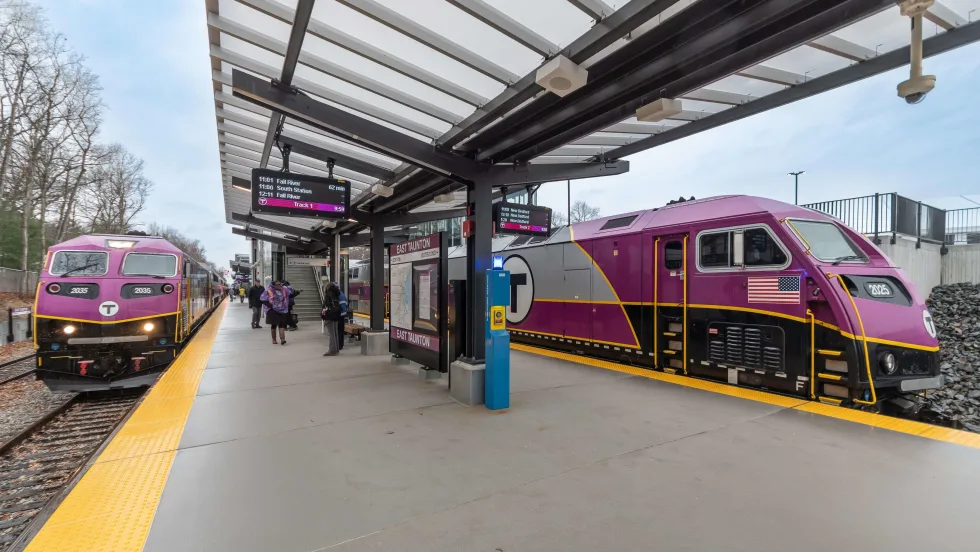
FTA Ends Direct Oversight of MBTA Safety Actions
The federal agency closed its remaining special directive to the Massachusetts Department of Public Utilities following a safety review that began in 2022.
Read More →
Report: Transit Bus Manufacturing Supports 34,100 Jobs, $5.1B in GDP
The “Buses Mean Business” report examines the transit bus manufacturing industry’s economic footprint, supply chain, and rising demand for vehicle replacements.
Read More →
LIT Marks 10-Year Milestone at Annual Summit
Hosted by the COTA from September 10 to 13, the Summit carried the theme “Celebrating 10 Years of Excellence, Leadership, and Impact,” with every part of the program honoring the people, agencies, and partners who built LIT over its first decade.
Read More →

People Movement: Dan Dipert Coaches Adds Third-Generation Leader, Keolis Names New Valley Metro VP/GM, and More
In this edition, we also cover recent appointments and announcements at the Wabtec, SilverRide, HNTB, and more, showcasing the individuals helping to shape the future of transportation.
Read More →
METRO Opens Submissions for 2026 Motorcoach Awards
Nominations are now being accepted for METRO Magazine’s Operator of the Year and Innovative Operator of the Year awards.
Read More →
New York MTA Advances Final Contract for Second Avenue Subway Expansion
Contract Four is the largest in the Second Avenue Subway Phase 2 project and includes construction of station infrastructure, tracks, and signals for the subway expansion, MTA officials said. Work on Contract Four will begin in 2027.
Read More →
Transit Agencies Highlight Safety Gains at National Summit
Leaders from 15 major transit systems shared crime-reduction results and safety initiatives while discussing the role of continued federal support.
Read More →
NITA Names New Leadership, Expands Reduced-Fare Program at First Board Meeting
The new regional transit authority appointed its first board chair and interim executive director while extending reduced fares across CTA, Metra, and Pace for eligible riders.
Read More →
Beyond the Checklist: A Structured Approach to Transit Maintenance
Reliability-Centered Maintenance helps transit agencies move beyond routine checklists to focus limited resources on the assets and failures that have the greatest impact on safety, reliability, and service.
Read More →
APTA 2026 Nominating Committee Selects Leadership Slate, Names Chair and Vice Chair Nominees
Leadership changes will help shape the association’s priorities and its representation of the transportation industry during the 2026–2027 term.
Read More →