



Feds Look to Increase Motorcoach Safety
New programs and proposed rulemaking, such as the FMCSA's CSA program and NHTSA's seat belt rule, are putting the pressure on carriers to take a long, hard look at improving an already safe industry over the next several years.
AP Photo/David Karp
AP Photo/David Karp
Transporting approximately 750 million passengers per year, motorcoach travel in the U.S. has historically been viewed as a very safe mode of highway transportation. Still, over the past 10 years, motorcoach crashes have resulted in an average of 19 motorcoach occupant fatalities per year, which doesn't include the fatalities of pedestrians, drivers and passengers of other vehicles also involved, according to the U.S. Department of Transportation's (U.S. DOT) National Highway Traffic Safety Administration (NHTSA).
While the number of fatalities may be considered low, the industry as a whole recognizes that one is simply too many.
"Just because we are the safest [mode of highway travel] doesn't mean we rest on our laurels if we want to make it safer than it is," says American Bus Association (ABA) President/CEO Peter J. Pantuso. "Any time you're serving the public, you want to make sure you do it perfectly every time and, for the most part, the industry does that, but sometimes mistakes are made."
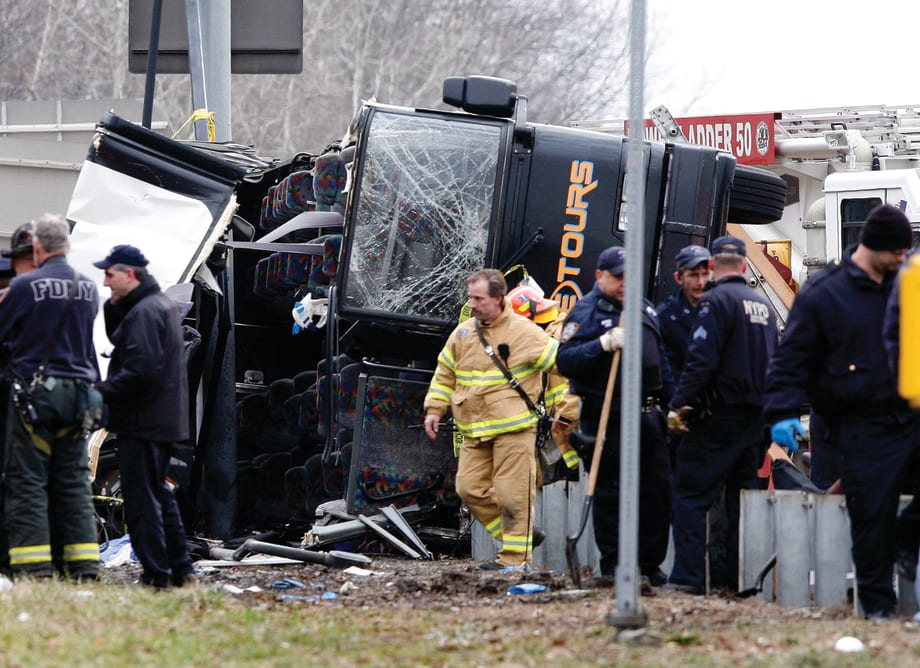
One of those "mistakes" happened in March when 15 passengers died after the driver of their tour bus lost control of the vehicle and struck two sign poles, one located directly behind the other, on I-95 in the Bronx, (N.Y.).
In 2009 and 2010, the carrier, World Wide Travel, had been involved in two crashes, resulting in one injury, and was cited five times for fatigued driving between December 2009 and October 2010, according to Federal Motor Carrier Safety Administration (FMCSA) records.
The driver himself is also being investigated by the New York State Department of Motor Vehicles for possibly filling out driver license applications containing false statements about the status of his license and whether he did so to conceal the fact that he had been using multiple names and had a suspension under one of those names, according to AP.
At press time, the driver was also being sued by at least one surviving passenger who claims that the accident was caused by him "negligently falling asleep" at the wheel, according to a New York Times report.
The questionable history of the operation and the possibility of driver error seem to fit the profile of many of the motorcoach accidents that have gained notoriety over the past few years. The recent accident in New York also further exposes the absolute necessity to get unsafe or "rogue" motorcoach carriers and drivers off the road quickly to save the lives of the traveling public.
To help better identify these carriers and drivers, the FMCSA introduced the Compliance Safety Accountability (CSA) program in December 2010. The goal of the program is to allow the FMCSA to reach more carriers earlier and deploy a range of corrective interventions to address a carrier's specific safety problems before crashes can occur.
"The concept of CSA is to really ferret out those companies or drivers that are problematic or potentially problematic, which really makes a lot of sense," says United Motorcoach Association (UMA) President/CEO Victor Parra.
What is CSA?
CSA builds on the FMCSA's former processes for assessing and improving the safety performance of motor carriers and drivers, including an enhanced compliance review (CR) and more focused and efficient interventions tailored to address specific problems. The centerpiece of CSA is the Safety Measurement System (SMS), which will analyze all safety-based violations from inspections and crash data to determine a commercial motor carrier's on-road performance.
The program also establishes a new enforcement and compliance operational model, which will utilize both the FMCSA and its state enforcement partners more efficiently and effectively, and includes a website (http://ai.fmcsa.dot.gov/sms/) that enables operators, drivers and the public to view safety data in a user-friendly format.
"CSA is an important new tool that will help reduce commercial vehicle-related crashes and save lives," says Federal Motor Carrier Safety Administrator Anne Ferro. "As a federal agency, we continue to strive to do our jobs better and that includes refining the tools we use to identify high risk carriers, therefore, trending risky carriers and drivers is part of what we need to be doing."
The FMCSA carefully planned and developed CSA over the past few years. The first step involved a thorough review of the agency's compliance review process, followed by the development of the SMS and a process change piece.
In addition, the CSA model includes a change to the Safety Fitness Determination (SFD) — the rulemaking for which is due later this year — that is also tied to SMS results.
"When I came on board, the plans were fairly well structured, in terms of deploying the program," explains Ferro. "It was really in the early months that I was on board that we looked at it and could see that we needed to deploy this thing in components, starting with the SMS and, then, moving on to the process change piece and the Safety Fitness Determination Rule itself."
The new CSA model attempts to improve the FMCSA's former CR program, which was resource-intensive and reached only a small percentage of motor carriers. Onsite CRs to determine a motor carrier's safety fitness required an average of three to four days to complete, with FMCSA only able to perform CRs on a small number of the 700,000 active interstate motor carriers because of the relatively small size of its staff, according to the agency.
"CSA recognizes that problem drivers are the principal safety issue. Eighty-five percent of commercial vehicle accidents are not vehicle or highway based, they are caused by the drivers actions, behaviors, skill or performance lapses" says Joseph Osterman, the former managing director of the National Safety Transportation Board (NTSB) and now president of J S Eastman Enterprises LLC. "CSA is a system that focuses on drivers, takes driver data, sorts it, measures it and catalogs it so that the worst drivers can be identified. It then brings attention to those drivers and the companies they are working for, that's where the big payoff will be."
The program also replaces the FMCSA's former system performance measurement system, SafeStat, which was effective but grouped safety problems together to identify carriers for a one-size-fits-all CR. Moreover, it did not focus on the behaviors known to cause crashes, according to the FMCSA.
"CSA has implemented a renewed effort to encourage motorcoach operators to pay attention to its safety ratings and scores. Even the discussion about the program has made operators better because we are talking about safety and taking actions to make sure that the information recorded in CSA is true and accurate," says Jared Stancil, vice president of Anchor Trailways & Tours in Nashville, Tenn. "The potential to identify and address unsafe motorcoach operators and drivers is very positive and good for the industry."
[PAGEBREAK]
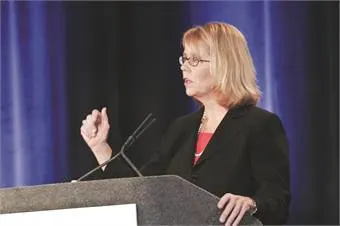
In January, Federal Motor Carrier Safety Administrator Anne Ferro spoke to UMA Expo attendees about the CSA program and the importance of improved safety in the industry. Photo courtesy: Photo courtesy David Braun Photography, Las Vegas
Measurement System
The SMS uses seven Behavior Analysis and Safety Improvement Categories (BASICs) to examine a carrier's on-road performance and potential crash risk:
Unsafe Driving
Fatigued Driving (Hours-of-Service)
Driver Fitness
Controlled Substances/Alcohol
Vehicle Maintenance
Cargo-Related
Crash Indicator
Under SafeStat, carrier performance was assessed in only four broad categories.
A carrier's measurement for each BASIC category depends on the number of adverse safety events, the severity of violations or crashes and when the adverse safety events occurred, with more recent events weighted more heavily.
After a measurement is determined, the carrier is then placed in a peer group with other operators that have similar numbers of inspections. Percentiles from 0 to 100 are then determined by comparing the BASIC measurements of the carrier to the measurements of other carriers in the peer group. A percentile 100 indicates the worst performance.
By looking at a carrier's safety violations in each SMS category, the FMCSA and state law enforcement will, ideally, be better able to identify those with patterns of high-risk behaviors and apply interventions that will provide them with the information necessary to change unsafe practices early on.
The agency will continue to conduct onsite comprehensive compliance reviews for operations with safety issues across multiple BASICs. If an operation has not taken the appropriate corrective action, the FMCSA will invoke strong civil penalties.
"I think you'll see drivers take a keener interest in their pre-trip inspections, making sure that everything is operating properly. If something goes wrong on the road, they will probably want it to be fixed because it will count against their record as well as the operators," says Parra.
Process of Change
Following the implementation of the FMCSA's SMS, Ferro explains that the next step to the program is a process change.
"We already began [the process change] last year and now, going through this entire calendar year, we are training our employees and our state law enforcement partners across the country in the different intervention techniques that the FMCSA gives us, including the opportunity to do focused compliance reviews instead of strictly the onsite full compliance review," Ferro says.
The FMCSA is also training and enabling its employees and state partners to work with operators to understand the SMS data and use it to identify where they have a problem, as well as how to follow trending to understand not only what is wrong but why it is wrong, so they can more properly address the issues they may have, Ferro adds.
The interventions under CSA are categorized into early contact, investigation and follow-on:
Early Contact
Warning Letter - Correspondence sent to a carrier that specifically identifies an alerted BASIC and outlines possible consequences of continued safety problems. The warning letter provides instructions for accessing safety data and measurement as well as a point-of-contact.
Carrier Access to Safety Data and Measurement - Carriers have access to their BASICs scores as well as the inspection reports and violations that went into those results. With this information, they can chart a course of self-improvement, monitor the data for accuracy and challenge it as necessary through FMCSA's DataQs system.
Targeted Roadside Inspection - CSA provides roadside inspectors with data that identifies a carrier's specific safety problems, by BASIC, based on the new measurement system. Targeted roadside inspections occur at permanent and temporary roadside inspection locations where connectivity to the SMS information is available. As Commercial Vehicle Information Systems and Networks (CVISN) technologies evolve, they will be incorporated into the roadside inspections, according to the FMCSA.
Investigation
Offsite Investigation - A carrier is required to submit documents to FMCSA or a state partner. These documents are used to evaluate the safety problems identified through the SMS and to determine their root causes. Types of documents requested may include third-party documents such as toll receipts, border crossing records or drug testing records.
Onsite Focused Investigation - The purpose of this intervention is to evaluate the safety problems identified through the SMS and their root causes. An onsite focused investigation may be selected when alerts in one or two BASICs exist. Onsite "focused" investigations target specific problem areas, such as maintenance records, while onsite "comprehensive" investigations address all aspects of the operation.
Onsite Comprehensive Investigation - This intervention is similar to a CR and takes place at the carrier's place of business. It is used when the operator exhibits broad and complex safety problems through continually alerted BASICs, worsening multiple BASICs (three or more) or a fatal crash or complaint.
Follow-on
Cooperative Safety Plan (CSP) - Implemented by the carrier, this safety improvement plan is voluntary. The carrier and FMCSA collaboratively create a plan based on a standard template to address the underlying problems resulting from the operator's substandard safety performance.
Notice of Violation (NOV) - The NOV is a formal notice of safety alerts that requires a response from the carrier. It is used when the regulatory violations discovered are severe enough to warrant formal action but not a civil penalty. It is also used in cases where the violation is immediately correctable and the level of or, desire for, cooperation is high. To avoid further intervention, including fines, the carrier must provide evidence of corrective action or initiate a successful challenge to the violation.
Notice of Claim (NOC) - An NOC is issued in cases where the regulatory violations are severe enough to warrant assessment and issuance of civil penalties.
Operations Out-of-Service Order (OOS) - An OOS order is an order requiring the carrier to cease all motor vehicle operations.
The Warning Letter is a new tool the FMCSA has not used before. During this initial process, the FMCSA mailed out letters to 23,000 operators over a nine-week period to those who have one or more alerts on their SMS data. Ferro says that once the warning letter becomes a routine process, the FMCSA assumes it will be sending out for fewer letters on a monthly basis.
The last piece of the program — Safety Fitness Determination (SFD) — is slated to be introduced via rulemaking later this year. The FMCSA developed an SFD methodology to replace the older system that was solely dependent on the onsite compliance review results. The SFD will expand the use of on-road performance as calculated in the SMS and include results of all investigations. It will also allow the FMCSA to determine safety fitness on a larger segment of the industry.
"The goal is to provide an analysis of the violation data that helps everybody get better and helps the FMCSA be sure that we are identifying the folks that shouldn't be on the road, need to pay closer attention or need some remedial action to be able to fix their problems to be safe," says Ferro.
[PAGEBREAK]Will it work?
With the new system finally in place and some additions still in the pipeline, it seems as if it will take a while to see what its results may be.
"Unless we've had some experience with the program, it's hard to say whether it's working or if it's going to be effective or not," says Parra. "I think we'll need maybe six months to a year, at least, to see if the program is working. It's a multi-step process, so we'll have to see how the operator will respond and if he does so in a timely manner."
Beginning in February 2008, the FMCSA piloted the new SMS and interventions toolbox in Colorado, Georgia, Missouri and New Jersey and, in 2009, expanded its testing to add Delaware, Kansas, Maryland, Minnesota and Montana. Ferro says those pilot projects are already showing some quantifiable results, which will soon be demonstrated in a report that analyzed the nine-state pilot program that wrapped last summer.
"That report, which is being done by the University of Michigan Transportation Research Institute, has done a very specific assessment to identify both the accuracy of the BASICs in being predictors of crash risk as well as the improved tools we can use to improve the efficiency and effectiveness of our safety audit and intervention processes," she says. "So, that will be a preliminary update on how this program is doing, and we'll continue with additional analyses after it's been out for 12 months or so. In the meantime, we've seen a change anecdotally; carriers and others have reported to us that safety is now part of the boardroom discussion. I even saw one industry quote that said 'safety is the new rock star,' and that is phenomenal, when safety takes a front seat on a company's competitiveness, that's where we need to be."
Some kinks still need to be worked out of the CSA program, however, as the industry's two major associations — ABA and UMA — have expressed concerns about specific facets, especially with regard to the parameters of the program being the same for both commercial bus and truck drivers.
"One example would be how the CSA looks at the number of injuries that take place in a crash. In a typical commercial vehicle crash, you are talking about a truck or truck driver maybe being injured. In the case of buses, when you're looking at injuries you are looking at slip and falls and other injuries that can be very minor, but they still get recorded in the same way they would if a significant single occupant truck accident would take place," explains the ABA's Pantuso. "In fact, we wrote a letter to the FMCSA that said, while we generally support CSA, there are some things we don't necessarily agree with, and we think that buses should be looked at differently than trucks. Certainly, there is a lot of good data that is collected but, again, there is some data that isn't consistent across the board."
"What we've asked for is that immediately next to [the accident being reported] there be an indication as to whether or not there was a citation issued, so at least this way the consumer could see it and say 'OK there was no citation issued, so it may or may not have been the operator's fault,'" adds the UMA's Parra. "Now, I understand the FMCSA's concern in that fault is sometimes determined much later by the courts and not by the FMCSA, so there is somewhat of a gray area. But, hopefully at some point, we can resolve this because we are concerned about how consumers may view something like an accident that is not the fault of the operator."
Ferro explains that the industry feedback has indeed been helpful and is being looked at very carefully by the FMCSA.
"The motorcoach industry did a good job of bringing to our attention their concerns and, in part from their concerns as well as the concerns of other carriers, we masked the crash indicator until we have a clearer understanding and process in place to accurately and fairly use that as a public indicator," she says. "We will iron this issue out in the Proposed Rulemaking for Safety Fitness Determination or, perhaps, sooner. Until then, we will continue to grab information from the industry and listen to any additional concerns that they identify."
For now, Ferro says the best way to for operators to prepare for CSA is to visit the website and view their information.
"Start by looking at your own data and identifying it as a reflection of your company's operation, then start working through that data with your safety director," she explains. "Next, start talking to drivers about the important role they play in insuring your company is viewed as a safe carrier. It's really about getting ahead of the discussion and getting the drivers to understand what this data is all about."
More Motorcoach

METRO Opens Submissions for 2026 Motorcoach Awards
Nominations are now being accepted for METRO Magazine’s Operator of the Year and Innovative Operator of the Year awards.
Read More →
Biz Briefs: Alstom Lands Canadian Contract, LYT to Supply California TSP, and More
In METRO's latest installment, we take a look at recent news from Complete Coach Works, Beep, FlixBus, and more partnerships making headlines across the transportation sector.
Read More →
Biz Briefs: RIPTA Unveils New Frontrunners, Clevland RTA Adds New Siemens, and More
In METRO's latest installment, we take a look at recent news from Siemens, Prevost, Dodge, and more partnerships making headlines across the transportation sector.
Read More →
People Movement: Holly Arnold Joins Transdev and More
In this edition, we also cover recent appointments and announcements at Pace, CamTran, MCI, and more, showcasing the individuals helping to shape the future of transportation.
Read More →
ABA Report: Motorcoach Travel Generates $161.6B Economic Impact
The 2025 analysis finds motorcoach travel supported nearly 900,000 jobs and generated $28 billion in federal, state, and local taxes.
Read More →
CharterUP’s Armir Harris on Technology, AI, and the Future of Group Mobility
In a recent episode of METROspectives, CharterUP Founder/CEO Armir Harris discussed the company’s evolution from an online charter bus marketplace into a technology platform supporting public- and private-sector mobility and much more.
Read More →
People Movement: ABC Names John Walsh as Chief Commercial Officer
In this edition, METRO also covers recent appointments and announcements at the DART, STV, and more, showcasing the individuals helping to shape the future of transportation.
Read More →
From Surviving to Thriving: Building Stronger Transportation Organizations
Bus Business Consultants founder Brian Dickson shares lessons on leadership, organizational health, and creating options for long-term success in a changing transportation industry.
Read More →
Biz Briefs: Luminator Marks Milestone and More
From manufacturers and suppliers to transit agencies and motorcoach operators, these updates offer a snapshot of the projects, partnerships and business moves driving the industry forward.
Read More →
ABAF Study Reveals Growing Insurance Crisis for Motorcoach Operators
Preliminary findings show 98% of operators faced premium increases over the past five years, while shrinking insurer participation is putting added pressure on businesses and customers.
Read More →