



Fleet Management Software Provides Operation-wide Benefits for Bus Fleets
A lot goes into providing communities with safe, reliable transportation. Bus and transport fleet managers are increasingly turning to fleet management software to help improve fleet operations, reduce downtime and operating costs, and increase asset ROI.
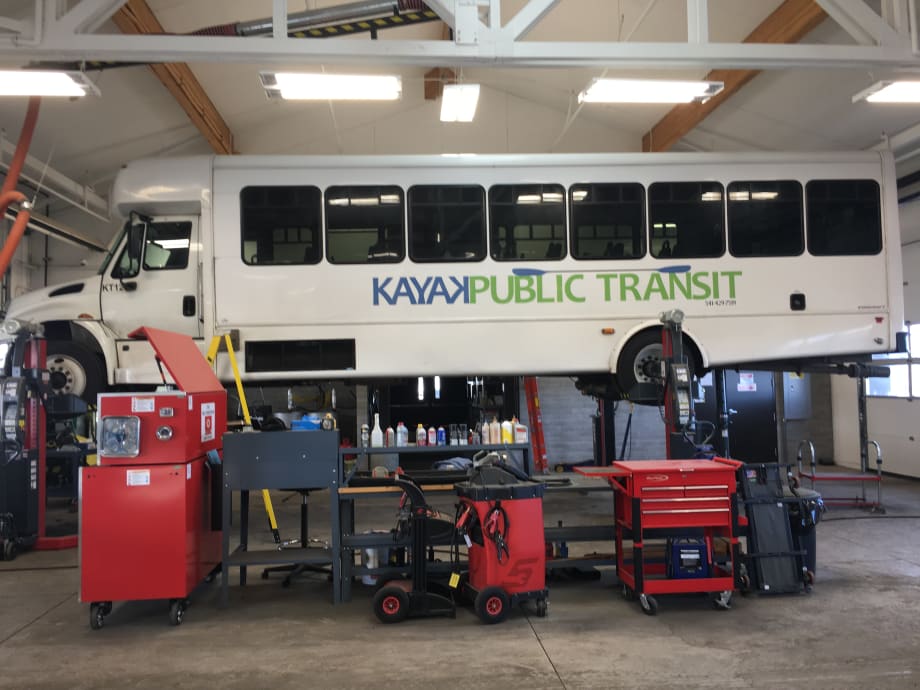
For bus and transit fleets, keeping assets in optimal condition is a primary concern, as a downed asset negatively affects the community members who rely on it for transportation.
Photos courtesy Fleetio
Fleet managers are often tasked with meeting numerous and challenging goals, from staying within budget and on top of compliance adherence to ensuring fleet-wide safety and asset reliability, making it crucial to have the proper management system in place. While paper-based management systems have historically been a staple for fleets, this method of management is antiquated and doesn’t allow for data consolidation, causing increased downtime and information bottlenecks.
With a plethora of offerings on the market providing an assortment of features and functionalities, many bus fleets are leveraging fleet management software to better manage their fleets. One such fleet is Pendleton, Ore.'s Kayak Public Transit. “Before [fleet management software], everything was done manually,” says Robert Johnson, fleet maintenance & safety manager at Kayak Public Transit. “It was spreadsheets and handwritten work orders. We now have the flexibility to efficiently record, track, and report on vehicle maintenance and operating activities.”
Fleet management software consolidates all your fleet’s data onto a single platform, allowing it to aggregate and report on key fleet metrics. Reports are configurable, ensuring you get the information you need to make data-driven decisions. Fleet management software also automates tasks and tracks asset data in real-time. For Kayak, these benefits have translated to an increase in on-time maintenance compliance to nearly 90%.
For bus and transit fleets, keeping assets in optimal condition is a primary concern, as a downed asset negatively affects the community members who rely on it for transportation.
Staying Ahead of Issues
The best way to keep your fleet assets in optimal condition is to stay proactive in maintenance and asset monitoring. If you are closely tracking your assets and performing preventive maintenance (PM), you can maximize vehicle lifespan and reduce unnecessary spending. Creating a PM schedule for your buses is a great way to take a proactive stance on maintenance to maximize uptime, verify the safety of your buses, and to keep your fleet on the road.
With fleet management software, you can set service reminders based on meter and time intervals so your buses never miss a service. Fleet management software also allows you to create mobile work orders to plan, schedule, and carry out maintenance tasks while automatically updating vehicle statuses and efficiently tracking service line items.
Digital inspections, which drivers can complete on a mobile app, are also a great way to stay proactive with maintenance. Digital inspections are submitted in real time, and failed inspection items trigger a notification to the fleet manager, automating the service workflow. The team at Kayak Public Transit uses pre- and post-trip inspections to stay on top of any issues so they can quickly fix them.
To get even more insight into your fleet’s overall health, you can integrate your telematics data into fleet management software. This allows you to more easily track GPS location data and view odometer readings, diagnostic trouble codes (DTCs), and driver behavior alerts, so you can remain proactive in your maintenance plan and keep your drivers accountable on the road.
The more proactive you are with fleet maintenance, the more money you’ll save in the long term, effectively helping you stay within budget. Additionally, by maximizing the lifespan of your fleet assets, you’re also increasing asset return on investment (ROI).
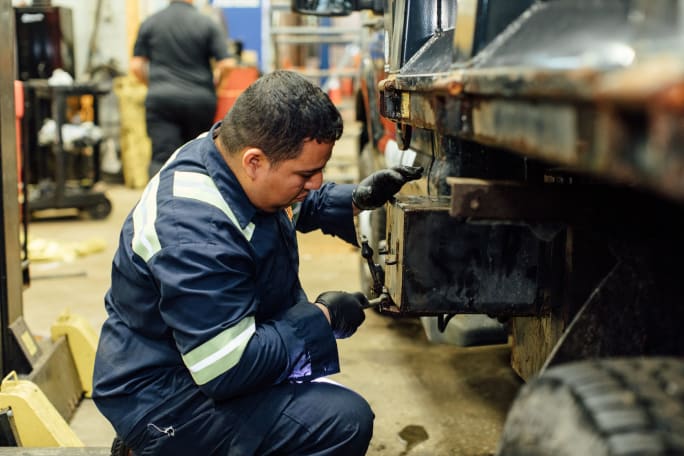
Fleet management software consolidates all your fleet’s data onto a single platform, allowing it to aggregate and report on key fleet metrics.
Photos courtesy Fleetio
Fuel for Thought
Monitoring fuel use and tracking related data — cost per unit, units pumped, miles per unit, etc. — is another way to curb unnecessary spending and stay ahead of maintenance issues. Furthermore, through fuel monitoring, you can determine average cost-per-mile and predict future fuel expenses to help budget appropriately. However, managing fuel cost and performance is one of the largest ongoing challenges for bus fleets.
Tracking fuel performance through fleet management software provides you with insight into fuel efficiency by simplifying data collection. Drivers can log fuel entries at the pump, eliminating the need to keep track of paper receipts, and fleet managers can easily view and measure fuel data. You can also integrate fuel cards into fleet management software, allowing for automated population of odometer readings and automated notifications, including fuel capacity and missing GPS location alerts. While the alerts help to minimize fuel misuse/theft, the odometer readings help keep your fleet in line with PM schedules. Fleet management software will even flag incorrect odometer inputs, so you can quickly address issues and catch mistakes before they ruin your data.
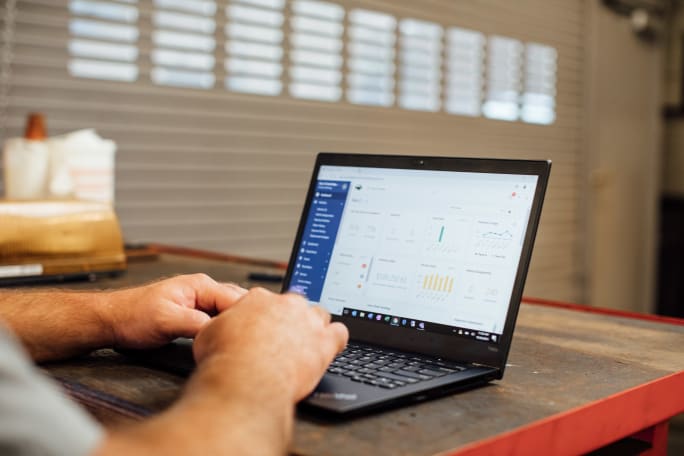
If you are closely tracking your assets and performing preventive maintenance, you canmaximize vehicle lifespan and reduce unnecessary spending.
Photos courtesy Fleetio
Calculating True Cost
A key metric in fleet management is total cost of ownership (TCO). Calculating your fleet’s TCO allows you to manage and maintain your bottom line by showing how much each vehicle in your fleet is costing you. By calculating costs associated with capital, fuel, maintenance, depreciation, licensing, and so on, you can determine a fleet asset’s cost, estimated lifespan, and optimal replacement window. With fleet management software, TCO is automatically calculated for you, improving accuracy and freeing you up to focus on other aspects of your fleet.
Managing assets with fleet management software allows you to track operating costs and optimize utilization in an all-in-one platform. Create custom reports that break down overall fleet expenses to help identify areas of concern in your fleet and help you improve daily operations. Easily track asset performance and make data-driven decisions to help reduce your bottom line, increase uptime, and maximize asset ROI.
Rachael Plant is a content marketing specialist for Fleetio, a fleet management software company that helps organizations track, analyze, and improve their fleet operations.
More Technology

From Hardware to Digital Partner: Luminator Charts Its Next Chapter
CEO Magnus Friberg discusses Luminator’s shift toward becoming a digital partner, the growing importance of software and interoperability, and how AI can help agencies improve operations and passenger experience.
Read More →
Beyond the Checklist: A Structured Approach to Transit Maintenance
Reliability-Centered Maintenance helps transit agencies move beyond routine checklists to focus limited resources on the assets and failures that have the greatest impact on safety, reliability, and service.
Read More →
NJ TRANSIT Advances Bus Technology Upgrades Across Statewide Fleet
More than 1,500 buses now feature upgraded technology designed to improve arrival predictions and provide free Wi-Fi, with deployment expected to reach nearly 2,000 buses by the end of 2026.
Read More →

Building a Flexible Path to Transit Electrification
John Hroncich discusses BAE Systems’ modular and scalable approach, lessons learned from decades of real-world operations, and how agencies can identify electrification strategies that fit their fleets.
Read More →
Biz Briefs: Alstom Lands Canadian Contract, LYT to Supply California TSP, and More
In METRO's latest installment, we take a look at recent news from Complete Coach Works, Beep, FlixBus, and more partnerships making headlines across the transportation sector.
Read More →
From Legacy Silos to Conversational Intelligence
What if transit leaders could ask any operational question and get a trusted answer in seconds? Conversational AI is transforming how agencies use their data.
Read More →
USDOT Announces Rail Vehicle Replacement Grants, Chattanooga AV Shuttle Funding
More than $191 million in federal funding will help three transit agencies replace aging rail vehicles and support a new autonomous shuttle service in Chattanooga.
Read More →
Bus Tech Talk: Keeping Transit Technicians Ahead of the Technology Curve
LA Metro’s Obed Mejia discusses technician training, evolving maintenance technology, fleet replacement, and strategies for getting the most out of today’s transit fleets.
Read More →
Biz Briefs: RIPTA Unveils New Frontrunners, Clevland RTA Adds New Siemens, and More
In METRO's latest installment, we take a look at recent news from Siemens, Prevost, Dodge, and more partnerships making headlines across the transportation sector.
Read More →
Why Simulating Pedestrian Movement Has Become Essential for Modern Rail Stations
Pedestrian microsimulation is helping rail planners identify bottlenecks, test station designs, and prepare complex transit hubs for growing passenger volumes.
Read More →