



FlixMobility Goes and Grows Post-Greyhound Acquisition
The European company is swiftly increasing its footprint in the US and endeavors to become a household name.
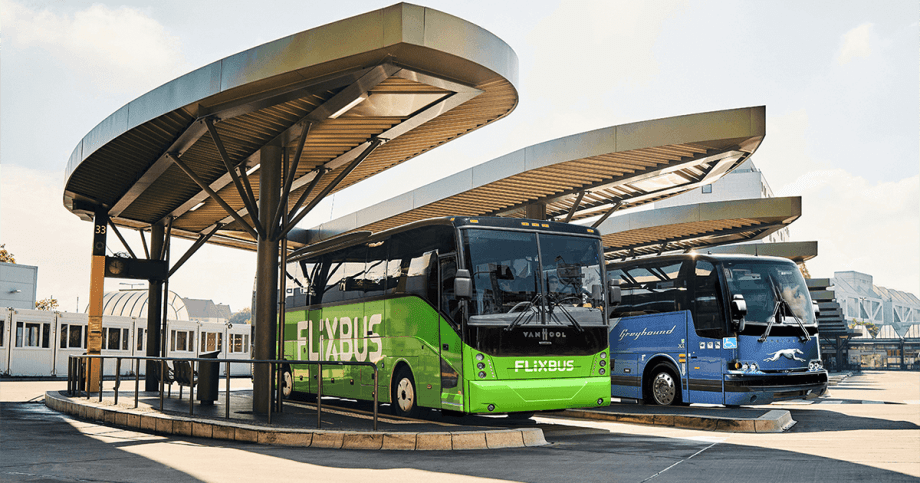
The FlixMobility network serves over 2,500 destinations in 36 countries outside of the U.S. with 400,000 daily connections. Greyhound currently connects approximately 2,400 destinations across North America with nearly 16 million passengers each year.
FlixBus
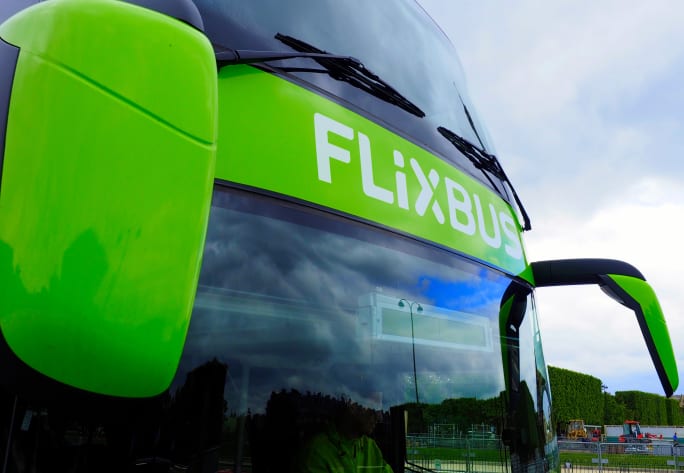
FlixMobility has taken a technology-driven business approach and is working to
deliver on its vision to provide easy-to-use, sustainable travel for passengers.
FlixBus
Already well-known throughout Europe, FlixMobility is about to become an even more recognizable brand in the U.S. The company acquired Greyhound Lines Inc. in October 2021 and is set on continuing its expansion throughout the states.
METRO asked André Schwämmlein, founder and CEO of FlixMobility, to discuss a bit about expansion strategies, staying strong through the pandemic, and what’s on the horizon.
Why Greyhound?
Global expansion, including expansion in North America, has always been a top priority for FlixMobility.
“This was a strategic move for us, and we’ve believed intercity bus service could be successful in the US since we first began offering services there in 2018,” Schwämmlein said. “We have a long-term vision to change the face of transportation across the world, and through the acquisition of Greyhound, we can introduce more customers to our safe, affordable, and environmentally-friendly transportation mode once we have managed through the pandemic.”
The FlixMobility network serves over 2,500 destinations in 36 countries outside of the U.S. with 400,000 daily connections. Greyhound currently connects approximately 2,400 destinations across North America with nearly 16 million passengers each year.
According to Schwämmlein, everything remains the same for now. The two companies will continue to operate separately and work hard to thrive through the ongoing pandemic. FlixMobility has started analyzing and exploring with the teams how to best combine the two businesses.
Becoming a Stronger Competitor
FlixMobility has taken a technology-driven business approach and is working to deliver on its vision to provide easy-to-use, sustainable travel for passengers.
Schwämmlein stated the company leverages technology and data for network optimization, operations, and marketing & sales to construct its large intercity bus network across Europe, growing the industry and its number of yearly passengers.
“This demonstrates our success — we provide our customers with attractive prices and extremely high safety and quality standards throughout their journey in already 37 countries across the world. In the past eight years, we’ve grown to become a leading global intercity bus network, helping more than 62 million people reach their destinations in 2019 alone.”
Europe vs. US
No matter where you go, there will be people who need to go places. FlixMobility noted this general need for hassle-free transportation and seeks to make it happen, regardless of the country or continent.
The company’s customer-centered business approach has resulted in an increase in first-time passengers — in fact, over 40% of its customers have never taken an intercity bus, according to Schwämmlein.
“Consumers across North America are increasingly seeking comfortable, smart transportation solutions. In the long run, we envision a great opportunity in drawing more travelers away from private cars to shared intercity bus travel,” he explained.
A big difference between the US and Europe, stated Schwämmlein, is the absence of a nationwide rail offering. This makes the role of intercity bus travel as an environmentally-friendly means of transport even more vital.
“The accessibility of smaller and midsized cities across the U.S. plays a crucial part — only intercity buses can ensure this, inside and outside of pandemic times,” he elaborated.
Powering Through a Pandemic
The COVID-19 pandemic has been an enormous challenge for the entire transportation industry. FlixMobility had to constantly react to the fluid conditions of the pandemic, and, like many other companies, saw a significant drop in revenue.
However, 2021 has already brought a modest rebound, and travel has built up throughout mid-summer due to vaccines and seasonal travel demand. Nevertheless, it remains below 2019 levels.
“The fact we were able to raise significant funds from our investors while this pandemic is ongoing underscores our investors’ confidence in our strategy and future prospects,” Schwämmlein said.
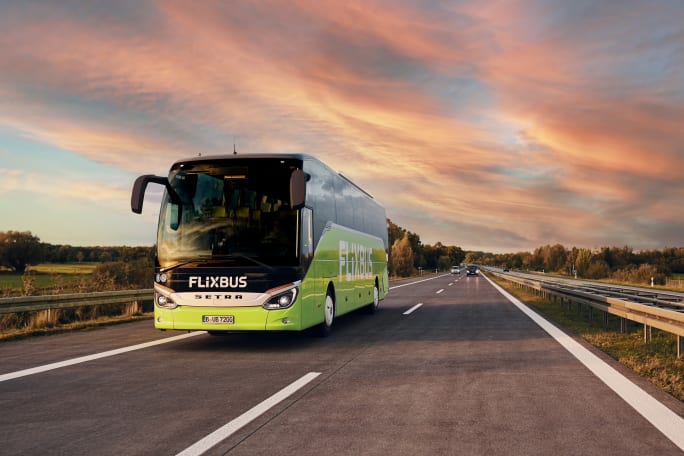
The company’s customer-centered business approach has resulted in an increase in first-time passengers - in fact, over 40% of its customers have never before taken an intercity bus, according to Schwämmlein.
FlixBus
An Alt-Fuel Future
Shared transportation modes, especially intercity buses, are already the most sustainable way to travel per person and miles traveled, according to the company. It has conducted pilot projects with electric long-distance buses in Germany, France, and the US, and is planning to launch more of these soon.
Unfortunately, the range and availability of e-buses have not increased significantly yet, so the business can’t use these vehicles on a wider scale just yet.
FlixMobility has started pilots with other alternative fuels as well. In late 2019, it announced a collaboration with German technology company Freudenberg and is planning to build the first long-distance hydrogen bus.
In the summer of 2021, it launched international biogas-powered buses between Amsterdam and Brussels, and between Stockholm and Oslo. The bus between the Netherlands and Belgium is powered by compressed natural gas (Bio-CNG), and the one running between Sweden and Norway is powered by liquified biogas (LBG).
Moving Forward
For now, the company’s number one priority is to learn about Greyhound’s business and see how to best combine the two businesses. Given the size of the company, this will take a while.
At the same time, the world is still in the middle of a pandemic with depressed demand — it’s important to tread lightly and manage thoroughly and carefully through it.
FlixMobility’s long-term goal is to grow the market and provide even more passengers with accessible, environmentally-friendly, and inexpensive means of transportation.
“We are confident that the combination of Greyhound and Flixbus will allow us to expand the provision of intercity bus service across this country. Most importantly, we believe in the immense potential of intercity bus service in the US. Greyhound is an iconic American brand and is synonymous with intercity bus travel in North America; now, it is part of a global network across 37 countries and will benefit from FlixBus’ technology and power of innovation. Together, we will secure accessibility to regions and cities by providing a leading intercity bus service,” Schwämmlein said.
More Motorcoach

METRO Opens Submissions for 2026 Motorcoach Awards
Nominations are now being accepted for METRO Magazine’s Operator of the Year and Innovative Operator of the Year awards.
Read More →
Biz Briefs: Alstom Lands Canadian Contract, LYT to Supply California TSP, and More
In METRO's latest installment, we take a look at recent news from Complete Coach Works, Beep, FlixBus, and more partnerships making headlines across the transportation sector.
Read More →
Biz Briefs: RIPTA Unveils New Frontrunners, Clevland RTA Adds New Siemens, and More
In METRO's latest installment, we take a look at recent news from Siemens, Prevost, Dodge, and more partnerships making headlines across the transportation sector.
Read More →
People Movement: Holly Arnold Joins Transdev and More
In this edition, we also cover recent appointments and announcements at Pace, CamTran, MCI, and more, showcasing the individuals helping to shape the future of transportation.
Read More →
ABA Report: Motorcoach Travel Generates $161.6B Economic Impact
The 2025 analysis finds motorcoach travel supported nearly 900,000 jobs and generated $28 billion in federal, state, and local taxes.
Read More →
CharterUP’s Armir Harris on Technology, AI, and the Future of Group Mobility
In a recent episode of METROspectives, CharterUP Founder/CEO Armir Harris discussed the company’s evolution from an online charter bus marketplace into a technology platform supporting public- and private-sector mobility and much more.
Read More →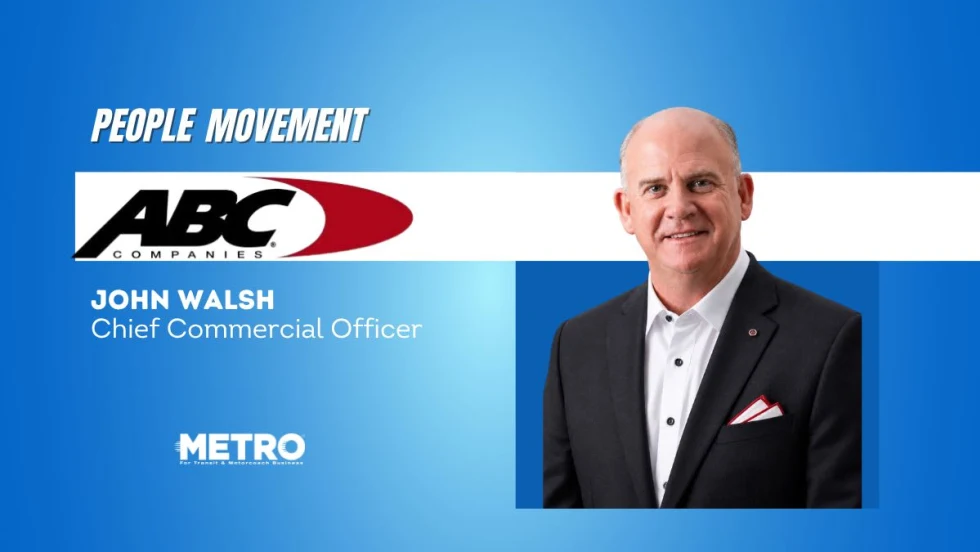
People Movement: ABC Names John Walsh as Chief Commercial Officer
In this edition, METRO also covers recent appointments and announcements at the DART, STV, and more, showcasing the individuals helping to shape the future of transportation.
Read More →
From Surviving to Thriving: Building Stronger Transportation Organizations
Bus Business Consultants founder Brian Dickson shares lessons on leadership, organizational health, and creating options for long-term success in a changing transportation industry.
Read More →
Biz Briefs: Luminator Marks Milestone and More
From manufacturers and suppliers to transit agencies and motorcoach operators, these updates offer a snapshot of the projects, partnerships and business moves driving the industry forward.
Read More →
ABAF Study Reveals Growing Insurance Crisis for Motorcoach Operators
Preliminary findings show 98% of operators faced premium increases over the past five years, while shrinking insurer participation is putting added pressure on businesses and customers.
Read More →