



For some, T-R-A-N-S-I-T does not spell relief from congestion
Congestion relief is easy to promise, but could be impossible to achieve.
As regularly as an equatorial sunrise, Google Alerts sends me transit-related news clips from around the world. Through these articles, I know that light rail is making progress in the Carolinas, transit ridership is increasing in car-mad Phoenix and congressional candidates were talking about transit on the campaign trail. Unfortunately, most of these missives from the transit field carry with them one false promise — congestion relief.
Reducing pollution, saving money and providing mobility to disadvantaged populations — these are all worthy goals, but congestion relief is a chimera, something we transit professionals simply cannot provide.
Congestion is a product of success
To begin with, congestion is a product of success. Country roads are quiet and bucolic, the exact opposite of city streets that are filled with places people want to go. There are office buildings and shopping centers, movie theaters, restaurants and gymnasiums. Cities have always been crowded places, whether with horse carts and pedestrians in ancient Athens or with bicycles fighting for space on the streets of Beijing.
In modern America, this success is manifested in an automobile-dominated streetscape. The 2001 National Household Travel Survey reported that 91.2% of trips to work were in personal vehicles. Transit captured only 4.9% of the mode share — and this number includes New York City, which accounts for roughly 30% of all transit trips in the nation. Even a 100% increase in transit use would still account for fewer than 10% of work trips. The gain in commute time caused by such an increase in transit would soon be consumed by a triple convergence, where drivers who would have otherwise traveled at a different time (time shift), on a different path (route shift) or by some other vehicle (mode shift) would take advantage of the clearer roads by driving to work during rush hour on the most direct (most heavily traveled) route.
A nasty piece of circular logic is at work here. If more people took transit to work, then more road capacity would become available, encouraging more people to drive to work. This is the fallacy of congestion relief. It assumes that some drivers will opt to take transit to work so that other drivers will have an easier time driving to work. There are many great reasons to use transit, but altruism is low on the list.
Transit’s effects tough to quantify
Another reason to shy away from singing the praises of traffic relief is that there is no statistical relationship between transit ridership and congestion. Looking at the 65 most populated cities in the U.S. (excluding New York as an outlier), the Texas Transportation Institute ranks Los Angeles as the most congested, with 93 hours of annual delay per driver. Indeed, L.A. also has the most passenger trips in the data set. The second highest number of passenger trips occur in Chicago, ranked seventh in delay, followed by Philadelphia, 23rd in delay, and Washington, D.C., ranked third in delay. Accounting for population, Philadelphia has the highest number of passenger trips per capita, with Honolulu coming in second (ranked 43rd in delay). L.A. is 12th in per-capita passenger trips. This utter lack of consistency means that the effect transit has on congestion cannot be measured. There is no evidence to support the claim that transit relieves congestion, a notion on which countless transit projects are based.
By touting congestion relief, transit providers are handing our severest critics potent ammunition to use against us. To wit, a certain anti-rail crusader has used a comparison between Atlanta and Portland as strong evidence against light rail. In 1999, he wrote that since 1982, congestion in Portland increased 33% (despite the development of light rail lines) compared to 36% for Atlanta. What he failed to mention is that Atlanta’s congestion increased three percentage points more than Portland’s despite Atlanta’s insistence on building roads and Portland’s reluctance, but what he said was true. As congestion worsens, transit will not provide relief.
Bad, good transit
While there is not a relationship between transit and congestion relief, there is between congestion and transit use. This is intuitive; where traffic is bad and transit is good, people will choose transit. Congestion is actually good for transit because transit provides that most valued of commodities in America: choice.
Transit professionals should push for more and better transit not to relieve congestion but rather to enjoy the relief of not having to sit in it.
More Management

ENC Lands MATA Contract and More in Biz Briefs
In this edition of Biz Briefs, we spotlight the latest developments shaping the future of mobility.
Read More →
From Surviving to Thriving: Building Stronger Transportation Organizations
Bus Business Consultants founder Brian Dickson shares lessons on leadership, organizational health, and creating options for long-term success in a changing transportation industry.
Read More →
Everett Transit, Community Transit Outline Consolidation Agreement
The proposed agreement calls for a 50% increase in bus service in Everett, a new microtransit zone, continued paratransit service, and the transfer of Everett Transit operations to Community Transit.
Read More →

Strada360’s Steve Lassey on Turning Transit Data Into Better Decisions
From breaking down data silos to preparing for AI, Strada360 CEO Steve Lassey discusses how transit agencies can use technology to improve operations, customer information, and long-term decision-making.
Read More →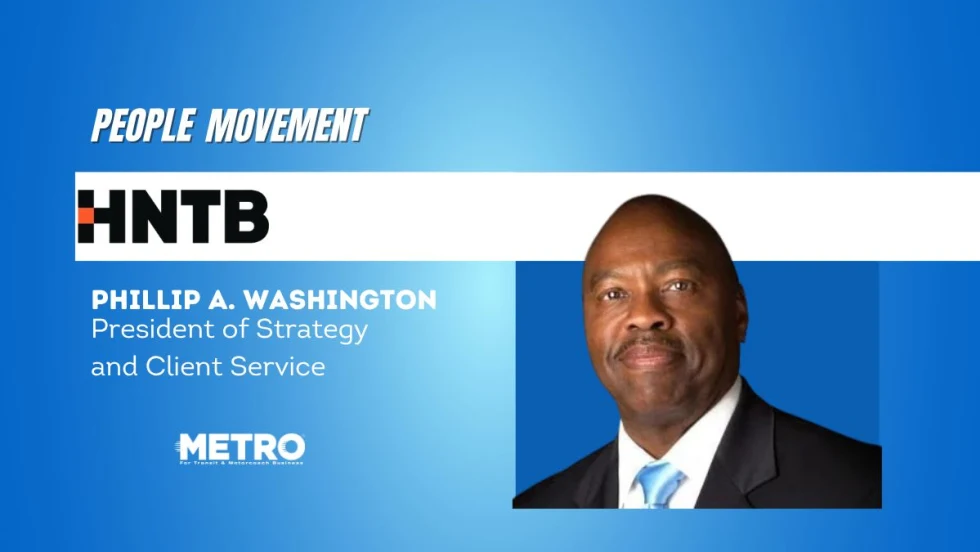
People Movement: Phil Washington Joins HNTB, Denver RTD Launches CEO Search, and More
In this edition, we also spotlight recent personnel moves at STV, the Eno Center for Transportation, and more, highlighting the people taking on new roles across the transportation industry.
Read More →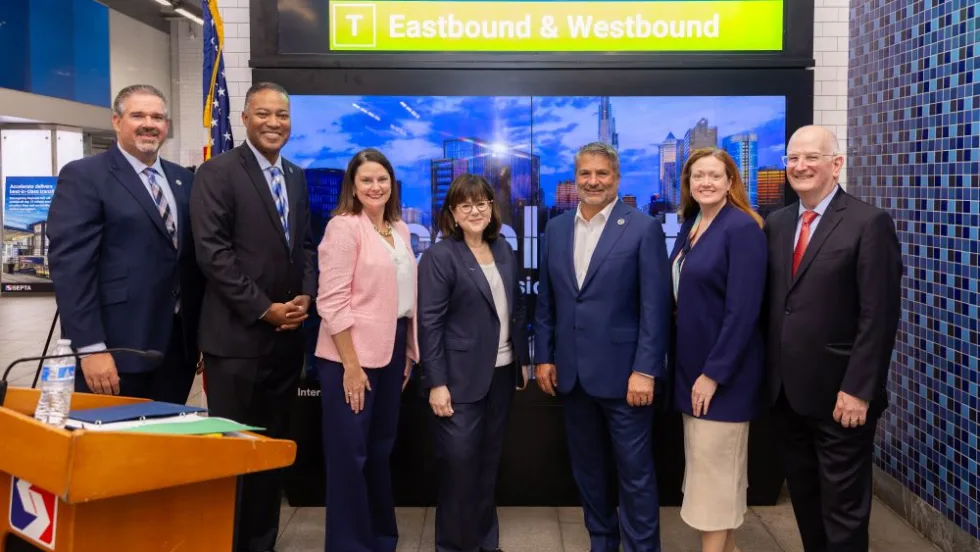
SEPTA Details Accelerate Vision for Transit System
The plan outlines investments in trolley modernization, new Metro and Regional Rail vehicles, accessible stations, and more frequent bus and rail service.
Read More →
FTA Ends Direct Oversight of MBTA Safety Actions
The federal agency closed its remaining special directive to the Massachusetts Department of Public Utilities following a safety review that began in 2022.
Read More →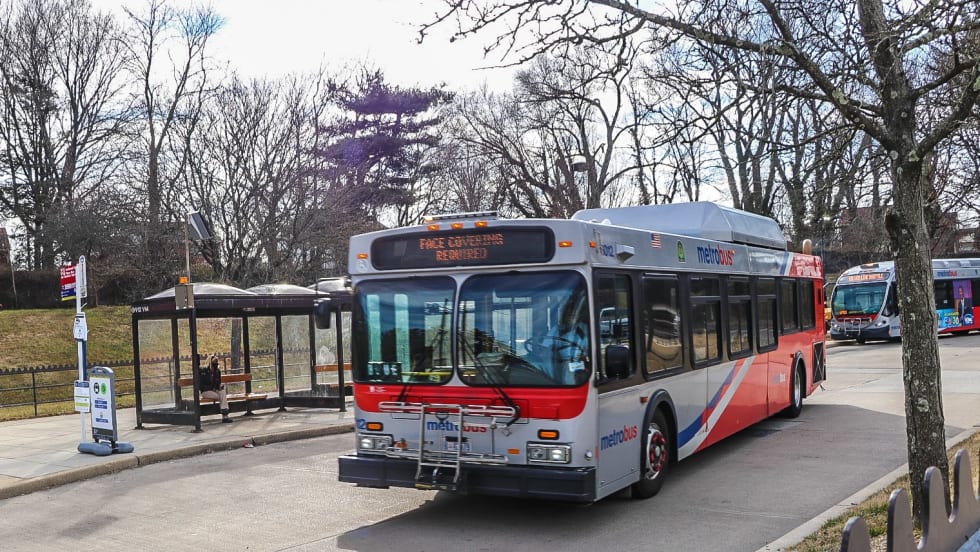
Report: Transit Bus Manufacturing Supports 34,100 Jobs, $5.1B in GDP
The “Buses Mean Business” report examines the transit bus manufacturing industry’s economic footprint, supply chain, and rising demand for vehicle replacements.
Read More →
LIT Marks 10-Year Milestone at Annual Summit
Hosted by the COTA from September 10 to 13, the Summit carried the theme “Celebrating 10 Years of Excellence, Leadership, and Impact,” with every part of the program honoring the people, agencies, and partners who built LIT over its first decade.
Read More →
People Movement: Dan Dipert Coaches Adds Third-Generation Leader, Keolis Names New Valley Metro VP/GM, and More
In this edition, we also cover recent appointments and announcements at the Wabtec, SilverRide, HNTB, and more, showcasing the individuals helping to shape the future of transportation.
Read More →