



Fortunes Change: Norm Mineta Returns to Transport
Republican George W. Bush’s new Democratic Secretary of Transportation has a distinguished record of bridging party differences to make public transport investments happen.
Norm Mineta is a walking example of how life’s path brings with it changing fates and fortunes. To say he has had ups and downs is to add insult upon the injuries that thousands like him faced in his lifetime. More to the point, however, Mineta’s example is one of ignoring triumph or setback, no matter how high or low, to get results for things higher than self. Those who know America’s new transportation secretary predict that his experiences will be signposts in how he will meet the key challenges in his new job—and how he will surpass the expectations of most for his new department. “Meet the new secretary of transportation,” a friend once introduced him at a Washington reception nearly a decade ago now. It was mostly a light-hearted remark, trying to cheer a friend who knew that Mineta was smarting from the then-recent 1994 election that saw Republicans sweep Democrats out of House power for the first time in 40 years. That disappointment prompted Mineta to leave his cherished House a few months later, in 1995. That was bitter stuff for a man who was among the brighter lights of the distinguished “Watergate babies” congressional class of 1974. As fate would have it, the friend’s remark was prescient. He was off only by one secretary. Rare breed of public servant A distinguished public servant for four decades, Secretary Mineta is the first Asian Pacific American to serve not only in a presidential Cabinet but in two, having served former President Bill Clinton as his secretary of commerce for the last six months of his tenure. As such, Mineta is one of only a select few in history to serve in the Cabinets of presidents of both parties. Throughout his career, Mineta accomplished many other breakthroughs. In 1967, he became the first Asian American member of the San Jose (Calif.) City Council. Just four years later, he was elected his hometown’s mayor. Again, he broke through a barrier accorded Asian Americans in big-city politics. While serving in the Congress in the 1970s, Mineta founded the Congressional Asian Pacific American Caucus and served as its first chair. Again, that was no small feat for its time: Mineta well remembers reading the excerpts of the White House tapes recording former President Richard Nixon referring to his Senate colleague, Daniel Inouye of Hawaii, who served on the Senate Watergate Committee, as “that Jap.” (Inouye was a highly decorated World War II hero, horribly wounded during the Allies’ Italian campaign.) “This was a sick time,” recalled former Wyoming Senator Alan Simpson, Mineta’s boyhood friend, in an interview with the Washington Post. How the two met offers poignant lessons about lifelong friendships under tragic circumstances and how personal loyalties transcend partisan political differences. In 1942, when Mineta was 11, he and his family were sent to the Heart Mountain internment camp for residents and U.S. citizens of at least 1/16th Japanese ancestry. Simpson, who was 12, was part of a Boy Scout troop who paid a visit to the camp, near his hometown of Cody, Wyo. He and his troopmates discovered a group of boys who were also scouts, Mineta among them. The two struck up a friendship around the usual boyhood things. They lost track of each other until Simpson read that Mineta had just become mayor of San Jose, so he dropped his old chum a line. They haven’t lost track of each other since, despite Mineta’s and Simpson’s almost diametrically opposite political allegiances. In fact, Mineta and Simpson worked together many times in their congressional careers. Mineta helped Simpson when the senator co-authored the landmark immigration bill in 1986. Simpson helped Mineta see his bill apologizing and giving reparations to Japanese Americans for the forced relocation during World War II become law. For all of his many legislative accomplishments, Mineta calls that legislation his proudest achievement. Has long pro-transit record The new transportation secretary is a very old friend of transit, starting with his days in local politics. During that part of his career, Mineta championed light rail, efforts that resulted in San Jose’s becoming one of the first cities to build and operate a new light rail line in the 1980s. Once chairman of the powerful House Public Works and Transportation Committee (now called the Transportation & Infrastructure Committee), Mineta was also one of the chief architects of the Intermodal Surface Transportation Efficiency Act of 1991. ISTEA was landmark legislation, committing the nation to a more seamless, integrated transportation system and a more balanced policy. It meant a significant jump in spending on public transport during the past decade. Although he left politics in 1995 to take a senior position with Lockheed Martin, he did not leave public life, and transportation issues continued to have a grip on Mineta’s career. For example, in 1999, then-Secretary of Transportation Rodney Slater asked him to conduct a 90-day review of motor carrier safety policy in the wake of several fatal crashes during the previous year. Many of those recommendations became the foundation of the department’s new safety policies announced late last year and this year. In the summer of 2000 Clinton appointed him secretary of commerce. It was a good fit; throughout his career, Mineta played a key role in settling the semiconductor chip dispute with Japan, focused on protecting intellectual property rights and worked to make the research and development tax credit permanent, a priority of the new George W. Bush administration. Clinton said of him, “He brings an in-depth understanding of American business and a strong sense of the needs of our high-tech economy. But he also has a deep concern for people, for the people in places who are not yet fully participating in this economy.” He was known for his dedication to the people of his district, for consensus building among his colleagues and for forging public-private partnerships. All those he will bring to bear on obtaining progress on transportation issues. Most observers are confident he will get results. After all, he forged such a reputation during much more contentious times. Imagine what he can do now that the spirit of bipartisanship is in vogue. A recent meeting with Asian American students at Harvard University is illustrative of his temperament. He told the students, many of whom were militantly outspoken in their criticism of the U.S. history of poor treatment of those with his ethnic background: You can protest and raise a hue and cry. But then your message becomes about you and does not advance your agenda. Focus on working with people to get results. Simpson, who now teaches at Harvard and who was his host that day, shook his head and thought: He’s at it again—this man who has seen terrible injustice but remains an unquestioned patriot, always willing to work for his principles. Mineta says it comes from his heritage: “Be patient. Fortunes change.”
More Management

Bus Tech Talk: Keeping Transit Technicians Ahead of the Technology Curve
In this episode of Bus Tech Talk, Complete Coach Works’ Business Development Manager Mark Hollenbeck and METRO’s Executive Editor Alex Roman sit down with Obed Mejia, Senior Technical Trainer for Bus Maintenance, at LA Metro to discuss how rapidly evolving bus technology is changing the maintenance shop — and the skills technicians need to keep pace.
Read More →
Michael Schneider Joins Paslay Group to Expand Transportation Practice
The longtime transportation executive will help Paslay Group grow its advisory and program management work across transit, highway, and other infrastructure sectors.
Read More →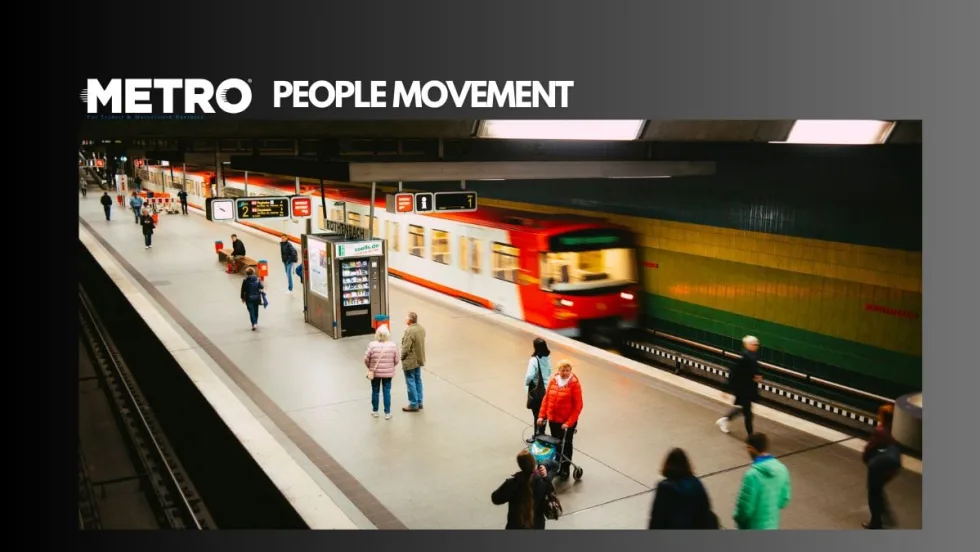
People Movement: Connectpoint Expands Leadership Team, Stadler Names New Group CEO, and More
In this edition, we also spotlight recent personnel moves at Burns, UZURV, and more, highlighting the people taking on new roles across the transportation industry.
Read More →
More Than a Summer Job: Building the Next Generation of Transit Talent
The Delaware River Port Authority and PATCO have transformed their internship program into a hands-on professional development experience that introduces students to the breadth of transportation careers — and creates a pipeline for future employees.
Read More →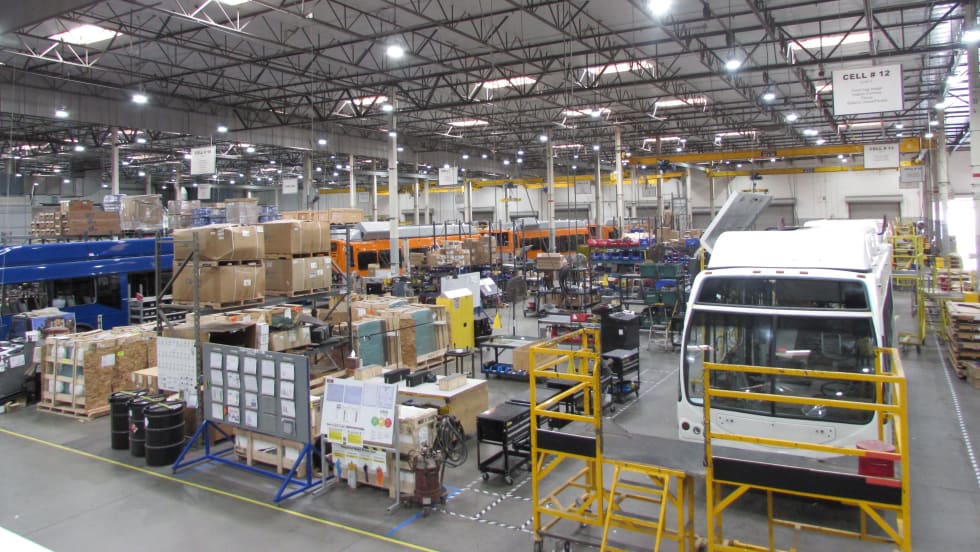
LA Metro Board Awards 220 Battery-Electric Bus Contract to ENC
The contract, which is the largest base award of battery-electric buses by a U.S. transit agency, will be built in Southern California, sustaining good jobs as LA prepares to welcome the world in 2028
Read More →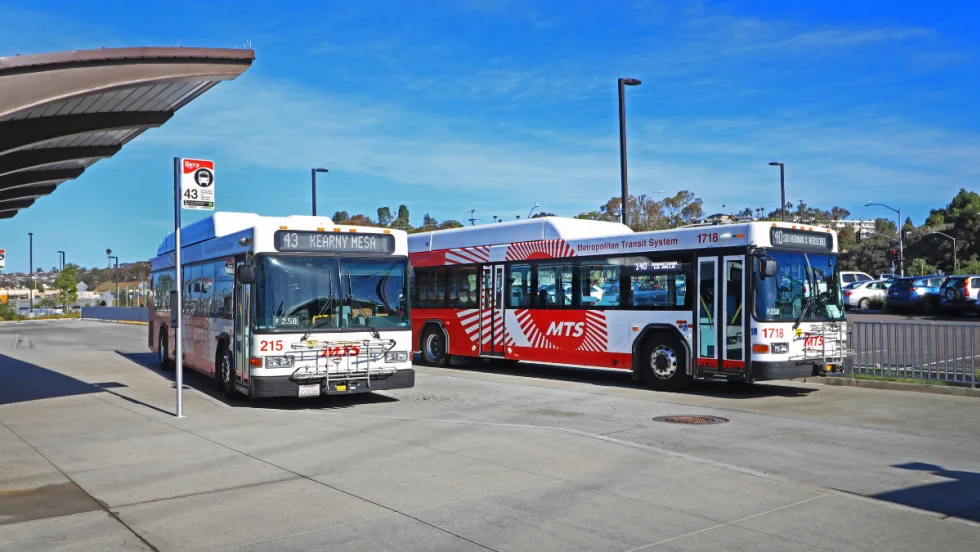
What’s Behind San Diego MTS’s Award-Winning Transit Strategy
Named one of APTA’s 2026 Outstanding Public Transportation Systems with 50 million or more annual passenger trips, California’s San Diego Metropolitan Transit System points to gains in ridership, safety, technology, and reliability as foundations of its success.
Read More →
Public Transit Conference Returning to GFX in 2027, Call for Papers Now Open
The Call for Papers is now open, allowing transit agency professionals and industry experts to help shape the PTC educational program by submitting session ideas for consideration.
Read More →
Indian River Transit’s Community-Focused Approach Earns National Recognition
Named APTA’s 2026 Outstanding Public Transportation System in its size category, Florida’s Indian River County transit system continues to grow ridership through fare-free service and a focus on evolving community needs.
Read More →
ENC Lands MATA Contract and More in Biz Briefs
In this edition of Biz Briefs, we spotlight the latest developments shaping the future of mobility.
Read More →From Surviving to Thriving: Building Stronger Transportation Organizations
Bus Business Consultants founder Brian Dickson shares lessons on leadership, organizational health, and creating options for long-term success in a changing transportation industry.
Read More →