



FTA charter negotiations end
Negotiations yield many positive results, however, fail to solve some key questions.

The FTA-sponsored negotiated rulemaking to determine a new standard for conducting charter operations reached agreement on the many outstanding issues before it.
The negotiation, which concluded Dec. 7 after seven months of meetings, failed, however, to reach agreements on a few critical issues, including the foundational issue of exactly what trips and services constitute charter operations.
The negotiation team, comprising members and representatives of both public and private entities and associations, had been meeting regularly in an attempt to arrive at an agreement. In the end, the complexity of the issues and existing federal mandates, as well as the specific demands of each group, led to the less-than-hoped-for result.
“Yes, we didn’t reach agreement on the definition of charter as well as a few other important provisions, but I think we did find a fair amount of common ground,” said Vic Parra, president of the United Motorcoach Association.
Parra said the proceedings also helped to increase awareness and improve understanding of existing charter regulations. “For example, Brian Scott in Largo, Fla., recently received a call from his local transit authority sending charter work his way,” he says. “This was a first.”
The meetings also helped to educate the FTA of the private sector’s concerns about transit systems unfairly competing with them for charter work, Parra added.
At the final meeting, the FTA and both teams of negotiators made vigorous attempts to reach agreement, but in the end, time expired without a complete resolution. Under the rules of the proceedings, unanimous consent was required for agreement.
The negotiations led to agreements on many issues, including the adoption of procedures for creating advisory opinions to examine potential charter trips to assure adherence to the regulations, the nature of groups that could be included for exempt trips and a simple, online procedure for private-sector operators to register for notification of charter opportunities.
While successes were several, they were overshadowed in the end by the issues that did not reach a resolution. In addition to the failure of the group to define “charter operations,” the negotiations also failed to come to an agreement on whether to use administrative law judges to hear violation disputes, how to create a procedure to make records of exempt and thus permitted charter trips conducted by transit agencies available for scrutiny to avoid unnecessary complaints, and the final nature of many of those special exemptions.
Costs, as expected, also formed the basis of several unresolved issues, with the public representatives seeking flexibility in offering specific charitable service and the private sector arguing that services needed to be priced using fully allocated costs.
The agreed-upon portions of the regulations emanating from the negotiation will form a partial basis for the FTA to now complete the creation of a proposed set of charter rules. The process of reaching a final set of clear and comprehensive charter rules is anticipated to be resolved in mid- to late-2007.
More Management

ENC Lands MATA Contract and More in Biz Briefs
In this edition of Biz Briefs, we spotlight the latest developments shaping the future of mobility.
Read More →
From Surviving to Thriving: Building Stronger Transportation Organizations
Bus Business Consultants founder Brian Dickson shares lessons on leadership, organizational health, and creating options for long-term success in a changing transportation industry.
Read More →
Everett Transit, Community Transit Outline Consolidation Agreement
The proposed agreement calls for a 50% increase in bus service in Everett, a new microtransit zone, continued paratransit service, and the transfer of Everett Transit operations to Community Transit.
Read More →

Strada360’s Steve Lassey on Turning Transit Data Into Better Decisions
From breaking down data silos to preparing for AI, Strada360 CEO Steve Lassey discusses how transit agencies can use technology to improve operations, customer information, and long-term decision-making.
Read More →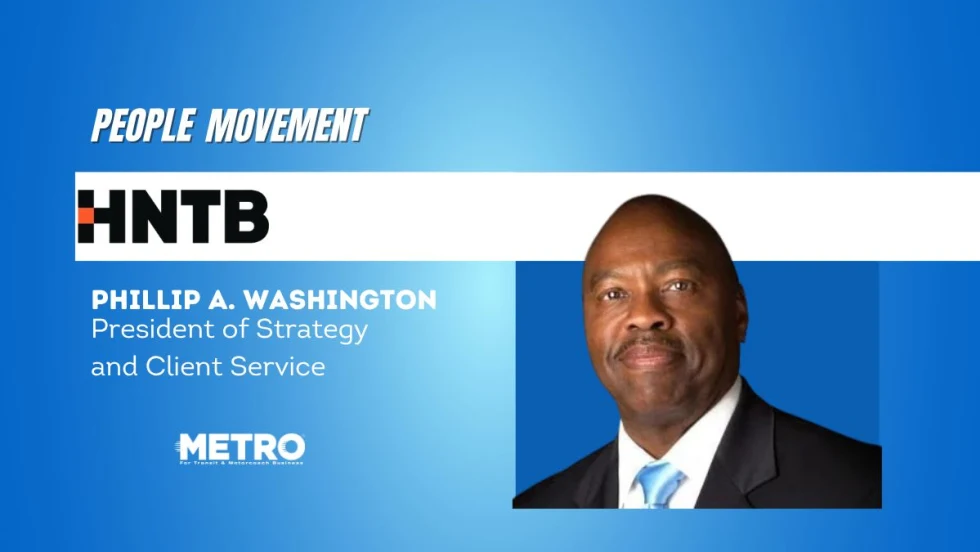
People Movement: Phil Washington Joins HNTB, Denver RTD Launches CEO Search, and More
In this edition, we also spotlight recent personnel moves at STV, the Eno Center for Transportation, and more, highlighting the people taking on new roles across the transportation industry.
Read More →
SEPTA Details Accelerate Vision for Transit System
The plan outlines investments in trolley modernization, new Metro and Regional Rail vehicles, accessible stations, and more frequent bus and rail service.
Read More →
FTA Ends Direct Oversight of MBTA Safety Actions
The federal agency closed its remaining special directive to the Massachusetts Department of Public Utilities following a safety review that began in 2022.
Read More →
Report: Transit Bus Manufacturing Supports 34,100 Jobs, $5.1B in GDP
The “Buses Mean Business” report examines the transit bus manufacturing industry’s economic footprint, supply chain, and rising demand for vehicle replacements.
Read More →
LIT Marks 10-Year Milestone at Annual Summit
Hosted by the COTA from September 10 to 13, the Summit carried the theme “Celebrating 10 Years of Excellence, Leadership, and Impact,” with every part of the program honoring the people, agencies, and partners who built LIT over its first decade.
Read More →
People Movement: Dan Dipert Coaches Adds Third-Generation Leader, Keolis Names New Valley Metro VP/GM, and More
In this edition, we also cover recent appointments and announcements at the Wabtec, SilverRide, HNTB, and more, showcasing the individuals helping to shape the future of transportation.
Read More →