



Future Bus Engine Now in Politicians’ Hands, Says Koci
Vice chairman and CEO of Detroit Diesel looks at world trends in bus propulsion.

Much has happened in the world of engines. First, air pollution authorities on several continents are mandating much stricter controls on engine emissions—mandates that would eventually put diesel engines on par with those that burn natural gas. Second, major strategic alignments and consolidations among builders of road vehicles and their suppliers, buses and motorcoaches included, have taken place in response to regulations and other changing market conditions. METRO Associate Publisher/Editor Cliff Henke discussed all that with Lud Koci, vice chairman and CEO of Detroit Diesel Corp. (DDC). Since DaimlerChrysler’s acquisition of DDC last year, Koci now also heads DaimlerChrysler’s on-highway worldwide commercial engine business. Given the breakthroughs in clean diesel technology, do you see a future for natural gas? Objectively—and what I mean by that is strictly looking at technical data and how diesel will meet the Environmental Protection Agency (EPA) and EURO emission standards currently issued for this decade—the data seems to indicate there should not be a great deal of interest in natural gas engines, given their higher operating costs and lower state of development and some degree of lower reliability. However, I cannot answer the question with certainty because there is a good-size cadre of people who say natural gas is cleaner, no matter what the data says. So, it’s not clear how this will come out because of these political pressures. One of the arguments natural gas proponents use is that clean diesel technologies are unproven. Do you foresee any technological complications with compliance to upcoming EPA, California Air Resources Board and EURO emissions standards? Are the technologies as “unproven” as some gas advocates charge? Absolutely. Many of these technologies particularly those envisioned to meet the EPA’s 2007 rules and the recently issued California levels, are beyond what anyone knows how to do right now. Everyone is effectively “betting on the come,” expecting technological breakthroughs to be made. In the medium term (2004 to 2007), ignoring for a moment the very low CARB requirements recently proposed, under the EPA’s preferences among the possible technology solutions, the required reductions in oxides of nitrogen (NOx) cannot be made with anything proven today. Certain laboratory developments have shown some promise but they would be very expensive and require more space on vehicles. In Europe, upcoming mandates will be met with technologies closer to being called proven but they require the introduction of a third substance. NOx converters use reductants such as urea or ammonia. So far, the EPA’s position is that it will not accept the addition of such third substances. It is concerned about how manufacturers can effectively assure that substance is being added as designed. The addition of those reductants is a significant expense and the EPA is concerned that end users will not add the urea or ammonia in practice. There are other approaches but they also have limitations. There were successful laboratory-only demonstrations of NOx absorbers but they are also expensive and space consuming. Although it’s true that those technologies remain unproven, diesel advocates can say that the reliability and durability of gas engines are also unproven. Both are far short of what today’s diesel engine represents. Please understand that DDC supplies more transit bus natural gas engines than anyone and we are happy to supply whichever engine the customer wants, so we have no commercial reason to argue one way or the other. Yet, if it were your money, so to speak, which fuel path has a better chance at powering future bus engines? If the breakthroughs are realized and there is sufficient time to commercialize these new technologies, it would then become very hard to continue betting on natural gas. Beyond 2007, there is some discussion of requiring even lower emissions levels below the existing mandates. However, I am concerned about whether the levels talked about are supportable on the basis of scientific data—not only the industry’s ability to feasibly comply with the proposed mandates but also their scientific justification. Hopefully, those issues will be resolved well before we get there. What must those favoring clean diesel do to restore balance to the emissions debate? Or do you see diesel on a sufficiently level political playing field to overtake natural gas as a solution? Based on the things I read and hear, unfortunately there is not a very objective playing field when it comes to the consideration of diesel. Many think of diesel as inherently “dirty.” Even in a recent government publication there was a reference to “soot-spewing diesel.” The truth is that it has been a dozen years since one could find a product made by our competitors or us that could legitimately be called soot-spewing. Of course, it’s not at all unusual to find buses and trucks still in the field that have visible levels of exhaust smoke. Those of us in the industry know that unless they are older than 12 years—and too many still are—engines are not being properly maintained and/or they are in need of service. It’s therefore very hard to overcome that impression in the public’s mind. Of course, there can be other things emitted from internal combustion engines that are not visible to the naked eye, such as aldehydes and methane, that make it hard to certify natural gas engines in other countries but are not regulated in the United States. Generally speaking, in most people’s minds the most important thing regulated on diesel engines is what the general public can see, which are unburned hydrocarbons. What is needed is a public relations campaign that clearly communicates the message that diesel engines, if properly maintained, are very clean engines. That is going to take a concerted effort on the part of all stakeholders in the transit industry at all levels of the industry. How do you assess the worldwide differences in the transit bus and coach engine marketplace from region to region? Or will diesel or natural gas dominate everywhere? Based on everything we have said above, diesel continues to be the dominant engine used worldwide. There might be parts of the world where we’ll see other fuels used more—perhaps hybrids, perhaps natural gas or even propane. In Europe, the upcoming standards governing aldehydes and methane will make it difficult to certify natural gas engines. Today and into the foreseeable future, the differences in various markets around the world will not be determined by technological differences because technologies travel fast in today’s world. Rather, the differences will be determined by policy choices. Do you think the future will ultimately move to a hybrid solution? How many years will it take to get there? For buses, hybrids powered by diesel engines are becoming more and more proven in the marketplace. Hybrids also make buses more fuel efficient and have lower emissions, whether the engine generating the electricity is powered by diesel or natural gas. The only remaining challenge is whether the industry can provide those systems at a price that can commercially justify the huge amount of engineering investment that has been and will continue to be needed to develop that technology for the market. In my view, with the stop-and-go duty cycles of transit, the technology makes perfect sense. However, it does not for the fairly steady-state cycles in intercity motorcoach and linehaul truck applications. What do you think of the prospects for fuel cells or flywheel energy as a viable power application in transit buses? In my view, fuel cells have to be at a point where they are commonplace in stationary applications before they become commercially viable in mobile applications. Flywheels are really a form of hybrid propulsion, and for hybrids in mobile applications, batteries seem farthest along. Finally, what will and won’t change for your customers in the motorcoach and transit bus industries since the acquisition of DDC by DaimlerChrysler? The deal is a good strategic fit because of our mutual histories of technological leadership and good customer relationships. Because of those shared values, and the fact that we serve many of the same industries, there are opportunities for sharing technologies and workload to make more cost-effective and better products. Regarding technology sharing, there are opportunities for transfers that can take place both ways across the Atlantic. Because of the political differences of position on the third material additive issue mentioned above, manufacturers in Europe are ahead in aftertreatment technologies relative to the U.S. and we can learn from that. Conversely, it seems to be less expensive to do durability testing in the U.S. than in Europe because of the lower cost of fuel. In addition, U.S. customers tend to demand that engine controls do more than control engines. With our engine control technology we provide fleet data, like braking and speed data, to customers so, for example, we can help transfer that to European markets, where such customer interest has tended to be less. Down the road, we are already looking together at whether it would make sense to design new engines with common platforms like blocks, heads and crankshafts, similar to the way some vehicle manufacturers do. The platforms would be shared among product lines we would market for all major regions of the world. What will definitely remain the same is the name Detroit Diesel. DaimlerChrysler could have bought an empty plant if they were just interested in expanding in North America. It was obviously interested in our name, customer support, distribution systems, technologies and our people.
More Management

Bus Tech Talk: Keeping Transit Technicians Ahead of the Technology Curve
In this episode of Bus Tech Talk, Complete Coach Works’ Business Development Manager Mark Hollenbeck and METRO’s Executive Editor Alex Roman sit down with Obed Mejia, Senior Technical Trainer for Bus Maintenance, at LA Metro to discuss how rapidly evolving bus technology is changing the maintenance shop — and the skills technicians need to keep pace.
Read More →
Michael Schneider Joins Paslay Group to Expand Transportation Practice
The longtime transportation executive will help Paslay Group grow its advisory and program management work across transit, highway, and other infrastructure sectors.
Read More →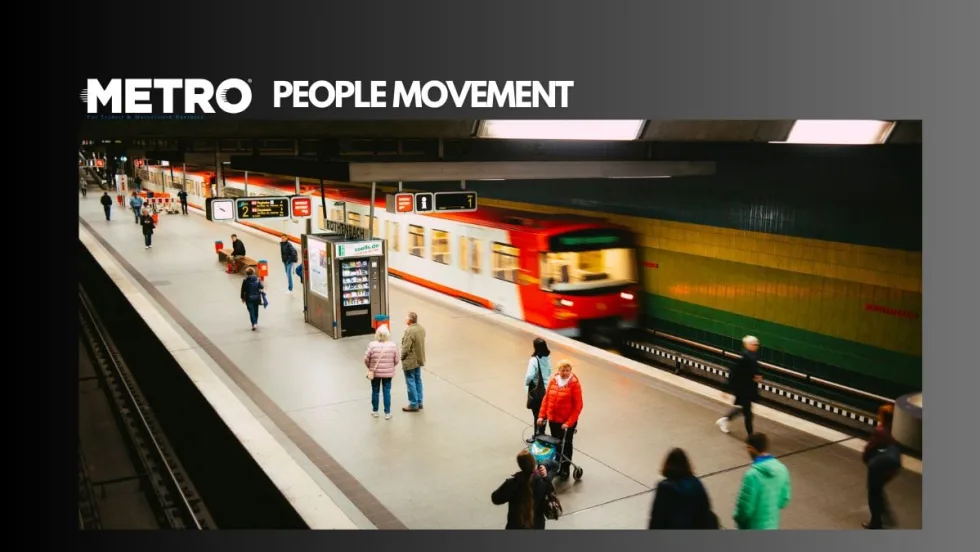
People Movement: Connectpoint Expands Leadership Team, Stadler Names New Group CEO, and More
In this edition, we also spotlight recent personnel moves at Burns, UZURV, and more, highlighting the people taking on new roles across the transportation industry.
Read More →
More Than a Summer Job: Building the Next Generation of Transit Talent
The Delaware River Port Authority and PATCO have transformed their internship program into a hands-on professional development experience that introduces students to the breadth of transportation careers — and creates a pipeline for future employees.
Read More →
LA Metro Board Awards 220 Battery-Electric Bus Contract to ENC
The contract, which is the largest base award of battery-electric buses by a U.S. transit agency, will be built in Southern California, sustaining good jobs as LA prepares to welcome the world in 2028
Read More →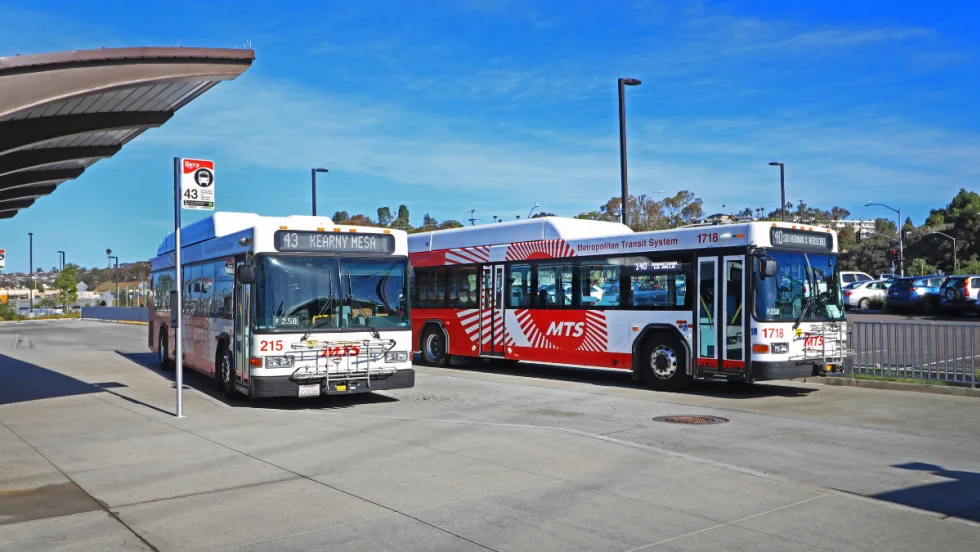
What’s Behind San Diego MTS’s Award-Winning Transit Strategy
Named one of APTA’s 2026 Outstanding Public Transportation Systems with 50 million or more annual passenger trips, California’s San Diego Metropolitan Transit System points to gains in ridership, safety, technology, and reliability as foundations of its success.
Read More →
Public Transit Conference Returning to GFX in 2027, Call for Papers Now Open
The Call for Papers is now open, allowing transit agency professionals and industry experts to help shape the PTC educational program by submitting session ideas for consideration.
Read More →
Indian River Transit’s Community-Focused Approach Earns National Recognition
Named APTA’s 2026 Outstanding Public Transportation System in its size category, Florida’s Indian River County transit system continues to grow ridership through fare-free service and a focus on evolving community needs.
Read More →
ENC Lands MATA Contract and More in Biz Briefs
In this edition of Biz Briefs, we spotlight the latest developments shaping the future of mobility.
Read More →From Surviving to Thriving: Building Stronger Transportation Organizations
Bus Business Consultants founder Brian Dickson shares lessons on leadership, organizational health, and creating options for long-term success in a changing transportation industry.
Read More →