



Indian River Transit’s Community-Focused Approach Earns National Recognition
Named APTA’s 2026 Outstanding Public Transportation System in its size category, Florida’s Indian River County transit system continues to grow ridership through fare-free service and a focus on evolving community needs.

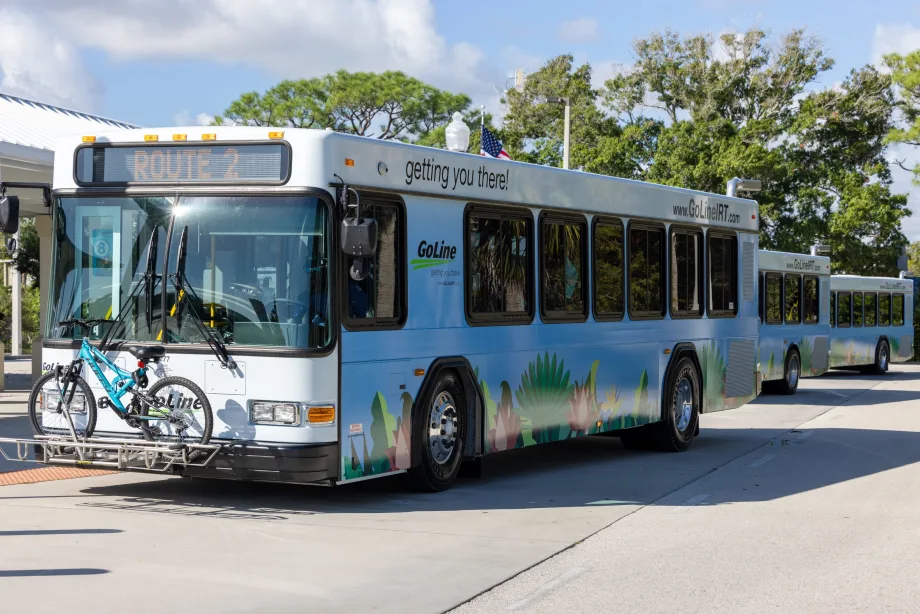
Named APTA’s 2026 Outstanding Public Transportation System in its size category, Indian River Transit continues to evaluate routes, service hours, connections, and mobility options as travel needs change across the county.
Indian River Transit
- Indian River County transit system in Florida has been awarded APTA’s 2026 Outstanding Public Transportation System in its size category.
- The transit system’s strategy includes offering fare-free service to increase ridership.
- A focus on meeting the evolving needs of the community has been central to the system's success and recognition.
*Summarized by AI
Florida’s Indian River Transit, operating as GoLine, was named the American Public Transportation Association’s (APTA) 2026 Outstanding Public Transportation System in the category for systems providing fewer than three million annual passenger trips, marking the agency’s first national APTA award. The agency will be honored at APTA’s TRANSform & EXPO in Chicago in October.
Operated by the nonprofit Senior Resource Association (SRA) under contract with Indian River County, GoLine is a zero-fare fixed-route system serving Vero Beach, Sebastian, and communities throughout the county. Its 14 routes connect riders with employment, schools, medical care, shopping, beaches, and other destinations. SRA also operates Community Coach, which provides door-to-door transportation services.
The recognition comes amid continued ridership growth. GoLine provided 1.59 million passenger trips during fiscal year 2024-25, a 17.2% increase from the previous year and its largest annual ridership gain since fiscal year 2011-12.
The APTA honor follows several state-level awards for GoLine, including the Florida Public Transportation Association’s Outstanding System of the Year recognition in 2017, 2022, and 2025.
“National recognition from APTA tells our employees, our County, and our community that what we are doing here in Indian River County is something special,” said Karen Deigl, president and CEO of Indian River Transit. “We have been fortunate to receive recognition in Florida over the years, but being named the outstanding public transportation system in the country in our size category is something we will always be proud of.”
A Unique Service Continuing to Adapt
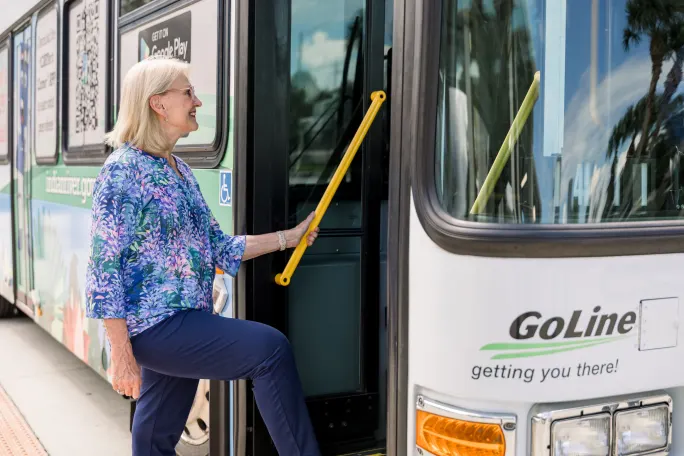
GoLine provided approximately 1.59 million passenger trips during fiscal year 2024-25, a 17.2% increase from the previous year and its largest annual ridership gain since fiscal year 2011-12.
Indian River Transit
With growing urbanized areas, smaller communities, retirement populations, working families, tourists, and significant rural areas all within the same county, Indian River is an interesting place to operate public transportation because it is a community of contrasts, Deigl explained.
“Our system is built around the idea that public transportation should be simple, dependable, timely, and accessible,” she said. “GoLine provides fare-free fixed-route transportation throughout Indian River County, while Community Coach provides paratransit and other demand-response transportation.”
Deigl added that what makes the system unique is that it has tried to build a transit system around the community rather than expecting the community to adapt to it.
“We listen closely to our passengers, our drivers, employers, and community partners,” she said. “Some of our best service improvements have come directly from those conversations.”
Growth in the region has changed both where people need to travel and when they need transportation.
Transportation needs in Indian River County extend well beyond the traditional weekday commute. Residents travel at all hours for work, healthcare, and other essential trips. At the same time, employees in industries such as retail and hospitality often need reliable transportation early in the morning, at night, and on weekends.
“We have responded by expanding service hours, evaluating routes and timepoints, improving connections, and continually looking at where development is occurring and where our passengers are trying to go,” said Chris Stephenson, director at Indian River Transit.
He added that one of Indian River’s biggest challenges is that transit service has to anticipate growth, not simply react to it.
“When new housing, medical facilities, shopping areas, and employment centers are developed, transportation becomes part of the infrastructure needed to support that growth,” Stephenson said. “We want public transportation to be part of those conversations early.”
Building Ridership through a Fare-Free Service
Indian River Transit has operated GoLine as a fare-free system since its inception.
In addition to providing more value to the community and removing barriers to usage, being fare-free has also created value for the transit agency.
“Fare collection is not free — fareboxes, equipment, cash handling, administration, enforcement, and the additional dwell time involved in collecting fares all add costs,” said Deigl. “For a system like ours, we have to weigh the revenue generated against those costs and the barrier a fare can create for passengers.”
GoLine’s fare-free model also removes many of the barriers that can complicate transit use. Riders don’t need to apply for service, meet eligibility requirements, purchase a pass, or navigate a fare structure. If a route serves their destination, they can board.
That approach has helped make the system more accessible while supporting ridership growth. It also reinforces GoLine’s role as a communitywide transportation option — not a service intended for a specific group of riders, but one available to anyone who needs it.
Perhaps the clearest sign of the agency’s growth is how many people use the system.
GoLine provided approximately 1.59 million passenger trips last year and is expected to surpass 1.6 million this year. More significantly, ridership has increased in 15 of the past 16 years.
The growth also reflects the variety of ways the community uses the system. GoLine serves a broad mix of trips, connecting riders to jobs, medical appointments, schools, shopping, social services, and recreational destinations.
That diversity of trips reflects GoLine’s evolution into an everyday transportation option. Rather than serving primarily as a last resort, the system has become part of many riders' daily routine throughout Indian River County.
“Ridership numbers tell you how many trips we provided, but they don’t tell you what those trips meant,” said Stephenson. “One trip might mean someone got to dialysis. Another might mean someone got to work and kept their job. Another might mean a student got to class, a senior bought groceries, or someone with a disability maintained their independence.”
Those individual trips also have broader implications for the community. Reliable transportation helps connect employees with jobs, patients with healthcare, and customers with local businesses. For families, access to fare-free transit can also reduce the amount of household income devoted to transportation.
“When public transportation works well, most people probably don’t think about all of those individual connections. They see a bus going down the road,” said Stephenson. “But inside that bus are dozens of different reasons people need transportation, and each one represents an opportunity, an appointment, a paycheck, or a connection to the community.”
Looking Ahead
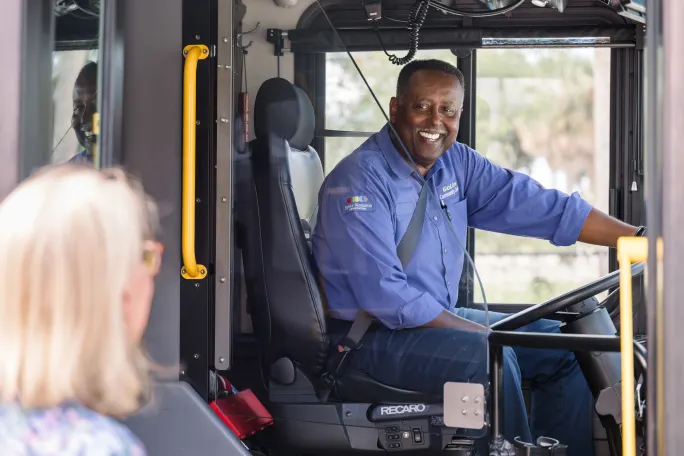
Indian River Transit’s GoLine provides fare-free fixed-route service across Indian River County, connecting riders with jobs, schools, healthcare, shopping, and other destinations.
Indian River Transit
Looking ahead, the agency’s top priority is ensuring it grows intelligently alongside Indian River County, which means continuing to evaluate routes and service hours, improving frequency where resources allow, maintaining a safe and reliable fleet, improving bus stops and passenger amenities, and ensuring we connect people to the places driving the county’s growth.
Stephenson added that Indian River also needs to keep looking beyond traditional fixed-route service.
“Some areas and travel patterns will always be better served without a large bus on a fixed route,” he said. “Technology, demand-response service, smaller vehicles, and other mobility options give transit agencies opportunities to serve those trips differently.”
While continuing to evolve, the agency said it doesn’t want to lose what has made GoLine successful — being easy to understand, dependable, welcoming, and responsive to the community.
“Our goal isn’t necessarily to build the biggest transit system. It’s to build the right transit system for Indian River County,” summarized Deigl. “If we keep listening to our passengers, employees, community partners, and County leadership, I think we are well-positioned to do so.”
Quick Answers
Indian River Transit was named the 2026 Outstanding Public Transportation System by the American Public Transportation Association (APTA) in its size category.
*Summarized by AI
More Management

ENC Lands MATA Contract and More in Biz Briefs
In this edition of Biz Briefs, we spotlight the latest developments shaping the future of mobility.
Read More →
From Surviving to Thriving: Building Stronger Transportation Organizations
Bus Business Consultants founder Brian Dickson shares lessons on leadership, organizational health, and creating options for long-term success in a changing transportation industry.
Read More →
Everett Transit, Community Transit Outline Consolidation Agreement
The proposed agreement calls for a 50% increase in bus service in Everett, a new microtransit zone, continued paratransit service, and the transfer of Everett Transit operations to Community Transit.
Read More →

Strada360’s Steve Lassey on Turning Transit Data Into Better Decisions
From breaking down data silos to preparing for AI, Strada360 CEO Steve Lassey discusses how transit agencies can use technology to improve operations, customer information, and long-term decision-making.
Read More →
People Movement: Phil Washington Joins HNTB, Denver RTD Launches CEO Search, and More
In this edition, we also spotlight recent personnel moves at STV, the Eno Center for Transportation, and more, highlighting the people taking on new roles across the transportation industry.
Read More →
SEPTA Details Accelerate Vision for Transit System
The plan outlines investments in trolley modernization, new Metro and Regional Rail vehicles, accessible stations, and more frequent bus and rail service.
Read More →
FTA Ends Direct Oversight of MBTA Safety Actions
The federal agency closed its remaining special directive to the Massachusetts Department of Public Utilities following a safety review that began in 2022.
Read More →
Report: Transit Bus Manufacturing Supports 34,100 Jobs, $5.1B in GDP
The “Buses Mean Business” report examines the transit bus manufacturing industry’s economic footprint, supply chain, and rising demand for vehicle replacements.
Read More →
LIT Marks 10-Year Milestone at Annual Summit
Hosted by the COTA from September 10 to 13, the Summit carried the theme “Celebrating 10 Years of Excellence, Leadership, and Impact,” with every part of the program honoring the people, agencies, and partners who built LIT over its first decade.
Read More →
People Movement: Dan Dipert Coaches Adds Third-Generation Leader, Keolis Names New Valley Metro VP/GM, and More
In this edition, we also cover recent appointments and announcements at the Wabtec, SilverRide, HNTB, and more, showcasing the individuals helping to shape the future of transportation.
Read More →