




Check Out: What Transit-Oriented Development Means for the Future of Public Transportation
What’s Behind San Diego MTS’s Award-Winning Transit Strategy
Named one of APTA’s 2026 Outstanding Public Transportation Systems with 50 million or more annual passenger trips, California’s San Diego Metropolitan Transit System points to gains in ridership, safety, technology, and reliability as foundations of its success.
September 30, 2026
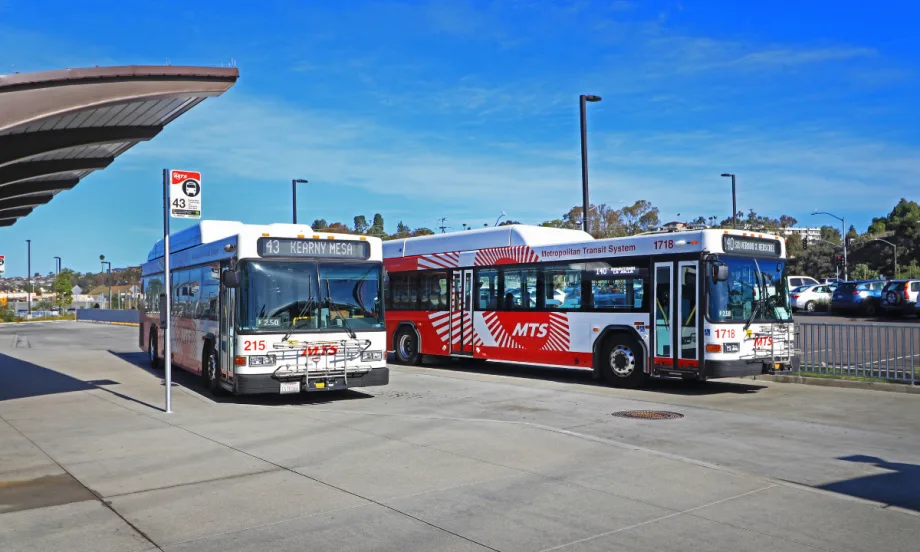
San Diego Metropolitan Transit System carried more than 81 million passenger trips in FY 2025, recovering more than 95% of its pre-pandemic ridership as the agency continued investing in service reliability and the customer experience.
Credit:
San Diego Metropolitan Transit System
6 min to read
- San Diego Metropolitan Transit System is recognized by APTA as one of the 2026 Outstanding Public Transportation Systems.
- The transit system attributes its success to enhancements in ridership, safety, technology, and reliability.
- It handles 50 million or more annual passenger trips, underscoring its significant impact.
*Summarized by AI
For the San Diego Metropolitan Transit System (MTS), earning national recognition from the American Public Transportation Association (APTA) follows several years of efforts to improve multiple parts of the transit experience at once.
MTS was named APTA’s 2026 Outstanding Public Transportation System in the category for agencies providing 50 million or more annual passenger trips. APTA divides the system achievement award into four categories based on annual passenger trips, with MTS competing in the largest.
The San Diego agency points not to a single initiative, but to a combination of ridership recovery, safety investments, technology, customer service, operational improvements, and financial stewardship behind its recent performance.
MTS carried more than 81 million passenger trips in fiscal year 2025 and recovered more than 95% of its pre-pandemic ridership, according to an MTS spokesperson. At the same time, the agency expanded safety programs, introduced new fare-payment options, and continued investing in service and infrastructure.
“This award reflects the tremendous progress MTS has made in delivering better service and greater value to the communities we serve,” said Stephen Whitburn, MTS board chair and San Diego City councilmember. “From strengthening safety and security to improving accessibility, embracing innovation, and enhancing the customer experience, our focus has been on making MTS better for the people who rely on us every day.”
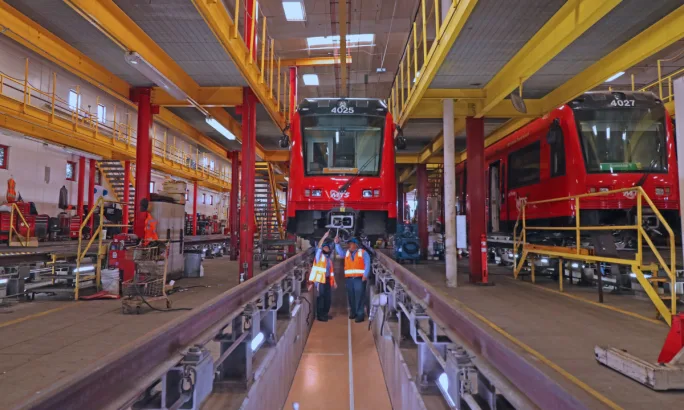
MTS technicians work on light rail vehicles at an agency maintenance facility. Agency leadership credits employees across operations and maintenance with playing a key role in the system’s recent progress.
Credit:
San Diego Metropolitan Transit System
Rebuilding Ridership by Rebuilding Rider Confidence
Like transit agencies across the country, MTS has spent the years following the pandemic navigating changing travel patterns, workforce pressures, public safety concerns, and uncertainty surrounding long-term funding.
Its ridership recovery has reinforced a relatively straightforward lesson, according to an MTS spokesperson: Customers want service that is safe, reliable, convenient, and easy to use.
MTS has worked toward those goals through investments in security and cleaner facilities, improvements to service reliability, and technology intended to simplify the passenger experience. The agency has also promoted those changes through its Now Better Transit campaign, linking system improvements to its effort to rebuild rider confidence.
The initiative helped bring ridership back to more than 95% of pre-pandemic levels by FY 2025, but MTS's approach has extended past just attracting passengers back to buses and trolleys.
The agency said its strategy has been to improve the rider experience while maintaining operational and financial discipline, like using performance data, long-term planning, and financial oversight to determine where investments can produce the greatest benefit.
One example is the Copper Line, a light rail service MTS is working to improve reliability while reducing vehicle miles and is expected to save millions of dollars in operating costs. The service is part of a group of rail infrastructure investments designed to reduce delays and improve reliability.
Expanding Safety Efforts Onboard and Behind the Wheel
Among MTS's recent investments, safety and security initiatives have had some of the most significant effects on the rider experience, according to the agency.
MTS has expanded its Homeless Outreach Team, Bus Enforcement Team, Code Compliance staffing, and use of plainclothes officers. The expansion is intended to increase the presence of safety personnel throughout the system and strengthen partnerships with community organizations.
MTS tracks the effectiveness of those efforts using both operating data and passenger feedback. During a nine-month period in 2025, reported crime fell 24%, while rider surveys indicated increasing confidence in safety across the system, according to an MTS spokesperson.
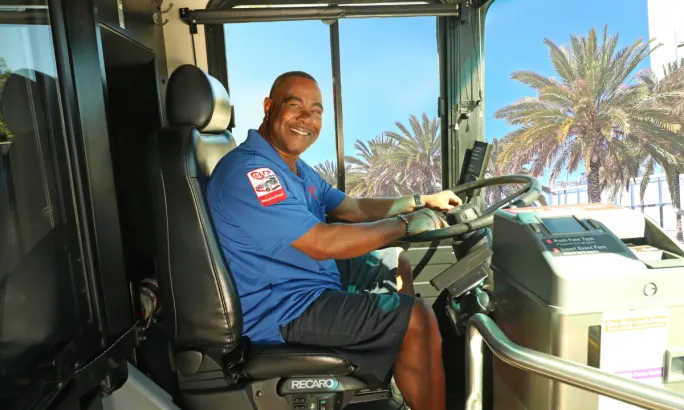
MTS credits its operators and other frontline employees with helping deliver the safe, reliable service behind the agency’s 2026 APTA Outstanding Public Transportation System recognition.
Credit:
San Diego Metropolitan Transit System
Safety efforts have also extended to the agency's workforce. In fact, the Outstanding Public Transportation System honor isn't MTS's only APTA recognition in 2026. The agency also received APTA's Gold Award for Bus Safety for systems providing more than 50 million annual passenger trips for its “Hot Spots” Bus Safety Program.
The program targets locations with recurring bus accidents and uses tools including video training, drone imagery, and operator-perspective footage to address the conditions contributing to incidents. APTA said the initiative has reduced accidents at known problem locations while helping operators prevent similar incidents elsewhere.
Removing Barriers with Contactless Fares and Better Data
Technology and data have also become a bigger part of how MTS approaches both internal operations and the passenger experience.
Internally, the agency analyzes customer feedback to identify trends, uses performance data to optimize operations, and incorporates new training tools intended to improve safety outcomes.
For passengers, one of the most visible changes has been fare payment. MTS introduced what the agency described as California's first regional contactless fare payment system and expanded online enrollment options for reduced-fare programs.
Those tools are part of an effort to remove barriers to using transit rather than deploying technology simply for technology's sake. Contactless payment and online fare enrollment sit alongside improvements to reliability, facilities, and security as ways MTS has sought to make everyday trips simpler and more dependable.
The agency's experience navigating the past several years has also changed how it approaches problems. Challenges involving ridership, staffing, safety, and funding reinforced the need to remain adaptable and use data to guide decisions, according to an MTS spokesperson. They also led to more collaboration across departments and a willingness to consider solutions beyond traditional approaches.
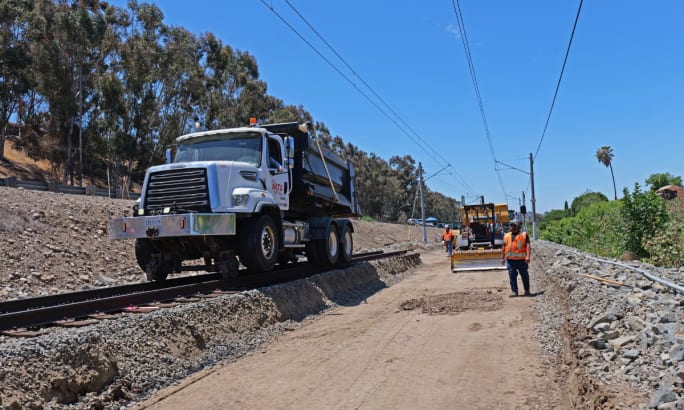
MTS continues to invest in rail infrastructure as part of its efforts to improve reliability and reduce delays, with maintaining and improving the system among the priorities following its national APTA recognition.
Credit:
San Diego Metropolitan Transit System
An Award Shared Across the Organization
MTS leadership emphasized that the improvements recognized by APTA depend on the people responsible for delivering service every day.
Operators, technicians, maintenance employees, customer service staff, security personnel, and administrative teams have all contributed to the agency's progress. MTS described its workplace culture as one built around innovation, accountability, teamwork, public service, and cross-functional collaboration.
“Receiving APTA’s Outstanding Public Transportation System Award is an incredible honor and a testament to the dedication of our employees and the trust our riders place in us every day,” said Sharon Cooney, CEO of MTS. “Over the past several years, MTS has remained focused on delivering safe, reliable, and innovative transit services. This recognition reflects the hard work of our entire organization.”
Whitburn similarly credited employees across the organization, from trolley and bus operators to mechanics, maintenance personnel, support staff, and the agency's Board of Directors, with creating a foundation for the future of public transit in San Diego.
What Comes After 81 Million Passenger Trips
For MTS, the APTA award recognizes what has already changed across the system, but the agency isn't treating it as an endpoint.
The agency’s priorities going forward include:
- Continuing to improve safety
- Maintaining reliable service
- Growing ridership
- Advancing accessibility
- Strengthening its long-term financial position
- Investing in infrastructure and technology to support mobility needs
Those priorities largely reflect the same balanced approach MTS believes contributed to the recognition in the first place. Still, for an agency completing more than 81 million passenger trips annually, the challenge is maintaining that progress at scale while continuing to adapt to what riders expect from their transit system.
As MTS moves beyond ridership recovery and into its next phase, the agency said the award validates its progress so far while underscoring that more work remains.
Subscribe to Our Newsletter
More Management

Public Transit Conference Returning to GFX in 2027, Call for Papers Now Open
The Call for Papers is now open, allowing transit agency professionals and industry experts to help shape the PTC educational program by submitting session ideas for consideration.
Read More →
Indian River Transit’s Community-Focused Approach Earns National Recognition
Named APTA’s 2026 Outstanding Public Transportation System in its size category, Florida’s Indian River County transit system continues to grow ridership through fare-free service and a focus on evolving community needs.
Read More →
ENC Lands MATA Contract and More in Biz Briefs
In this edition of Biz Briefs, we spotlight the latest developments shaping the future of mobility.
Read More →
From Surviving to Thriving: Building Stronger Transportation Organizations
Bus Business Consultants founder Brian Dickson shares lessons on leadership, organizational health, and creating options for long-term success in a changing transportation industry.
Read More →
Everett Transit, Community Transit Outline Consolidation Agreement
The proposed agreement calls for a 50% increase in bus service in Everett, a new microtransit zone, continued paratransit service, and the transfer of Everett Transit operations to Community Transit.
Read More →
Strada360’s Steve Lassey on Turning Transit Data Into Better Decisions
From breaking down data silos to preparing for AI, Strada360 CEO Steve Lassey discusses how transit agencies can use technology to improve operations, customer information, and long-term decision-making.
Read More →
People Movement: Phil Washington Joins HNTB, Denver RTD Launches CEO Search, and More
In this edition, we also spotlight recent personnel moves at STV, the Eno Center for Transportation, and more, highlighting the people taking on new roles across the transportation industry.
Read More →
SEPTA Details Accelerate Vision for Transit System
The plan outlines investments in trolley modernization, new Metro and Regional Rail vehicles, accessible stations, and more frequent bus and rail service.
Read More →
FTA Ends Direct Oversight of MBTA Safety Actions
The federal agency closed its remaining special directive to the Massachusetts Department of Public Utilities following a safety review that began in 2022.
Read More →
Report: Transit Bus Manufacturing Supports 34,100 Jobs, $5.1B in GDP
The “Buses Mean Business” report examines the transit bus manufacturing industry’s economic footprint, supply chain, and rising demand for vehicle replacements.
Read More →