



How propane is becoming an 'alternative' fuel
On average, propane autogas costs as much as 50% less per gallon than gasoline and diesel.
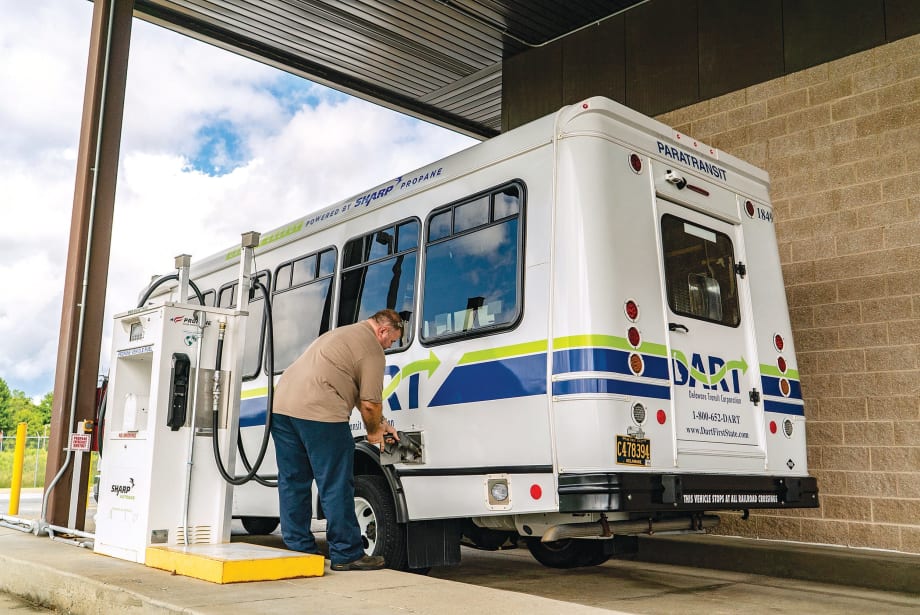
There are many alternative fuels on the market powering shuttle buses and paratransit bus fleets, all claiming to be the best option.
PERC
There are many alternative fuels on the market powering shuttle buses and paratransit bus fleets, all claiming to be the best option.
PERC
Shuttle and paratransit fleets are continuously looking for ways to provide a safe and comfortable ride for passengers. For many fleets, reaching that customer satisfaction also means providing a clean ride. With more government regulations in place encouraging fleet owners to lower emissions, many fleets are opting to use alternative fuels to reach their emissions goals and provide a safe and clean ride for their passengers.
When it comes to deciding on an alternative fuel, fleet owners need to take into account emissions reductions, overall costs, and performance. Propane autogas is regarded as the proven solution for fleets wanting to reduce emissions without sacrificing performance — all at an affordable cost.
RELATED: Fleet, route updates help San Diego MTS adapt to service demands
In fact, propane autogas offers the lowest total cost-of-ownership of any vehicle fuel. With customizable and scalable refueling options, and an emissions profile that allows fleets to surpass sustainability goals — whether mandated by federal, state, or local government regulations, or simply part of a company’s mission — fleets across the country are finding success with propane autogas for a variety of reasons.
A Proven Fuel for Decades
There are many alternative fuels on the market powering shuttle buses and paratransit bus fleets, all claiming to be the best option. But, propane autogas is the only proven fuel of the bunch. It’s a big reason why bus fleets are choosing propane autogas over other alternatives. Propane has been a proven, viable fuel source for buses for more than three decades.
Lowest Total Cost-of-Ownership
Propane autogas buses have the lowest total cost-of-ownership than comparable electric, gasoline, natural gas, and diesel-fueled buses. Combine the clean burning fuel with a disciplined maintenance program, and propane autogas engines will cost less to maintain and provide longer engine life.
On average, propane autogas costs as much as 50% less per gallon than gasoline and diesel.
A big reason propane autogas offers the lowest total cost-of-ownership of any fuel is because the cost of the fuel itself is affordable. On average, propane autogas costs as much as 50% less per gallon than gasoline and diesel. Propane autogas prices don’t fluctuate as sharply as other fuels because the wholesale cost of propane autogas falls between the price of oil and natural gas. This allows fleet owners to more easily manage fuel budgets and meet year-end objectives. In some cases, fleet managers can lock in lower prices by securing a fuel contract through their propane supplier.
Customizable, Scalable Refueling
Propane autogas offers several scalable refueling options that allow for a fleet owner to shape a refueling plan around their budget and fleet size. Fleet managers can choose from multiple propane autogas refueling solutions that allow them to create a custom-designed program that specifically fits their needs:
On-site refueling solutions are recommended for fleets, both small and large, that require a centralized refueling station. Site preparation is minimal and requires a level area for vehicle refueling, crash protection, and an electrical supply for the pump and dispensers. Fleets have the option to own fuel tanks and dispensers, or in some cases, a propane supplier may own the infrastructure and lease it to fleet owners, lowering the overall costs. These options can easily expand with the growth of a fleet.
Public or private refueling stations are another solution for propane autogas fleets with limited space. With a 24/7 card lock system, fleets can maintain records for each vehicle. A list of stations nationwide can be found here.
A fuel storage tank, pump, and dispenser mounted on a trailer provides a convenient temporary refueling solution for fleets in the process of installing permanent infrastructure, or crews working on a long-term job site.
For fleets that do not have plans to install infrastructure, mobile refueling is a viable solution. In this instance, the fleet’s propane supplier works with the customer to create a customized plan for refueling the fleet vehicles on-site with a bobtail delivery truck.
The cost of constructing a single fast-fill compressed natural gas refueling station can be 10 times higher than the cost of building a comparable propane autogas refueling station.
Compared to other alternative fuels, propane autogas offers the least-expensive refueling option for fleet owners. The cost of constructing a single fast-fill compressed natural gas refueling station can be 10 times higher than the cost of building a comparable propane autogas refueling station. Compared to electric vehicles, installing and purchasing refueling equipment for a fleet of propane autogas vehicles costs less than installing standard fast-charger equipment.
Emissions Reductions
Regardless of which alternative fuel you choose, fleet owners will see a reduction in emissions. It can be hard to know which of the alternative fuels offers the right emissions profile for your fleet. Typically, propane autogas vehicles can produce up to 22% fewer greenhouse gas emissions than gasoline throughout the full fuel cycle, and up to 36% fewer nitrogen oxide (NOx) emissions than diesel vehicles. Compared to electric vehicles, propane autogas can emit fewer emissions including up to 45% less particulate matter throughout the full fuel cycle.
These benefits are all major reasons why so many shuttle fleets are making the transition to propane autogas. n
Michael Taylor (michael.taylor@propane.com) is the director of autogas business development for the Propane Education & Research Council.
More Technology

From Hardware to Digital Partner: Luminator Charts Its Next Chapter
CEO Magnus Friberg discusses Luminator’s shift toward becoming a digital partner, the growing importance of software and interoperability, and how AI can help agencies improve operations and passenger experience.
Read More →
Beyond the Checklist: A Structured Approach to Transit Maintenance
Reliability-Centered Maintenance helps transit agencies move beyond routine checklists to focus limited resources on the assets and failures that have the greatest impact on safety, reliability, and service.
Read More →
NJ TRANSIT Advances Bus Technology Upgrades Across Statewide Fleet
More than 1,500 buses now feature upgraded technology designed to improve arrival predictions and provide free Wi-Fi, with deployment expected to reach nearly 2,000 buses by the end of 2026.
Read More →

Building a Flexible Path to Transit Electrification
John Hroncich discusses BAE Systems’ modular and scalable approach, lessons learned from decades of real-world operations, and how agencies can identify electrification strategies that fit their fleets.
Read More →
Biz Briefs: Alstom Lands Canadian Contract, LYT to Supply California TSP, and More
In METRO's latest installment, we take a look at recent news from Complete Coach Works, Beep, FlixBus, and more partnerships making headlines across the transportation sector.
Read More →
From Legacy Silos to Conversational Intelligence
What if transit leaders could ask any operational question and get a trusted answer in seconds? Conversational AI is transforming how agencies use their data.
Read More →
USDOT Announces Rail Vehicle Replacement Grants, Chattanooga AV Shuttle Funding
More than $191 million in federal funding will help three transit agencies replace aging rail vehicles and support a new autonomous shuttle service in Chattanooga.
Read More →
Bus Tech Talk: Keeping Transit Technicians Ahead of the Technology Curve
LA Metro’s Obed Mejia discusses technician training, evolving maintenance technology, fleet replacement, and strategies for getting the most out of today’s transit fleets.
Read More →
Biz Briefs: RIPTA Unveils New Frontrunners, Clevland RTA Adds New Siemens, and More
In METRO's latest installment, we take a look at recent news from Siemens, Prevost, Dodge, and more partnerships making headlines across the transportation sector.
Read More →
Why Simulating Pedestrian Movement Has Become Essential for Modern Rail Stations
Pedestrian microsimulation is helping rail planners identify bottlenecks, test station designs, and prepare complex transit hubs for growing passenger volumes.
Read More →