



How Transit Satisfies a Big Need in Small Towns
From Clarksburg, W.Va., to Mitchell, S.D., to Presque Isle, Maine, public transit fills a key transportation niche, especially for the elderly and low income. For operators, small buses are the best fit.
The term “public transportation” conjures images of big cities and masses of commuters crammed into subways or buses. Images of Manhattan and Chicago‘s Loop immediately come to mind. While urban areas rely heavily on public transit, rural areas and other places far from the maddening crowds also have their own ways of serving riders. If anything, small-town systems can be just as crucial and important as their better-known counterparts. City dwellers often live close enough to shopping and other necessities to walk or ride a bicycle to get places. Taxis, buses and other options are abundant, and many businesses offer delivery service to the home-bound. It’s an entirely different story in small-town America. Many smaller towns don’t have alternate means of travel, and stores and services can be a long distance from home. Businesses in rural areas may not be open during hours when non-drivers can catch a ride from a friend or relative. The closest shops might not have what a person has to purchase, and that can often mean a drive of 15 to 100 miles to transact needed business. Small but essential Bus and shuttle services in North America’s thinly populated regions get little media attention, but they provide a crucial service to countless passengers. “We open at 5 a.m. to get people to kidney dialysis treatment,” says Melinda Smith of the Central West Virginia Transit Authority (CWVTA) in Clarksburg, W.Va. Other riders rely on the CWVTA buses to make important trips. “A lot of people we haul don’t have cars or any other transportation,” Smith observes. “They take the bus to work, shopping, doctor’s appointments and to the courthouse. We have a Wheels to Work program and a very large ADA service.” Contrary to what some might believe, small-town transit can attract a fair number of customers. “We carry more than 200,000 passengers a year in 14 shuttle buses and three vans,” Smith reports. With fares ranging from 50 cents to $2, it’s obvious that CWVTA relies on outside sources for funding. “We get a little funding from county, state and federal grants,” Smith says. Hunting for business in S.D. Transit agencies in distant places need to be creative, according to Brenda Paradis, director of Palace Transit (named after the city’s famous Corn Palace) in Mitchell, S.D. “We’re now in the beginning of the pheasant hunting season,” Paradis says. “We make a lot of trips to the Sioux Falls airport, which is 60 miles away. For a $100 round-trip, we’ll haul a hunter, his dogs and luggage.” The bulk of Palace’s business is focused on Mitchell (population: 16,000) and smaller towns in the surrounding area. “We operate from 5:30 in the morning to 4:30 in the afternoon Monday through Friday,” Paradis says. “All of our buses are handicap accessible. The service gives choices to people who don’t drive. They can dine out, go to a movie, make a doctor’s appointment or shop at Wal-Mart. We bring people from smaller towns to Mitchell to shop.” A reliable bus service can replace a second car, even in rural areas. “Our community is kind of poor, and there are a lot of one-car families in town,” Paradis says. “We take a lot of people to their jobs. Others park their cars in the winter and ride the bus. United Way funding offsets fares for those who can’t afford it.” Palace Transit also receives funding from the city of Mitchell, state and federal grants and private donations. Nearly 95,000 rides were taken on the fleet’s eight 16-passenger transit buses in 2002. Spreading out in Maine Rural buses can rack up a large number of miles, according to Dan Donovan of the Aroostook Regional Transportation System (ARTS) in Presque Isle, Maine. “We cover all of Aroostook County, which is 6,600 square miles,” he says. “The Canadian border is north, west and east of us. We cover every town in the county at least one day a week.” Riders can’t beat the price of the ARTS bus. A 48-mile round trip from Ashland to Presque Isle (population: 11,000) is just $2.30 for passengers under 60 years of age and $1.15 for senior citizens. That price includes being picked up and dropped off at home. “We get Section 18 funds, Maine Care funding and have local contracts with a variety of agencies,” Donovan says. “Our 11 buses hold 16 passengers plus two wheelchairs. People are still driving when they’re 65. It’s people in their 70s who use us for the first time.” Weekday bus service is an important lifeline in northern Maine, an area with low average incomes and long distances between towns. “It’s a poor county,” Donovan says. “People with car problems use us occasionally. We probably get 15% more business in the winter. Our schedule brings people from a 30-mile radius to shop in Presque Isle.” Undaunted by snow The Sweetwater County Transportation Authority (SCTA) serves Rock Springs, Wyo., and the surrounding area. “A lot of people think we deal only with the handicapped and elderly,” says authority spokeswoman Katie Clemens. “We’re trying to change that perception.” Passengers from the outlying villages of Farson, Green River and Point of Rocks can ride the bus to Rock Springs, the largest town in southwestern Wyoming. “We get lots of snow, and people don’t like to drive in it,” Clemens says. “We take senior citizens shopping, and we’re there for their medical needs. People really appreciate it.” State grants help keep the SCTA in business. Even one-bus services can make a difference in the quality of life in rural areas such as Waushara County, Wis. (population: 20,000), where a vehicle is used by several local non-profit agencies. “We pick up people in Wautoma [the county seat] and other towns in the county,” says Debbie Paavola, who directs the county’s bus operations. “When I moved here, I was surprised to find out there was no taxi service.” With a capacity of eight passengers (including one wheelchair), the Waushara modified minibus racks up plenty of miles. Regular trips to larger towns such as Stevens Point (55 miles away) and Berlin (20 miles) give riders access to medical specialists and other services that aren’t available locally. “It’s $3 for local trips and $5 to go outside the county,” Paavola reports. “We’re funded with two grants, including a state grant for public transportation in rural areas that helps pay for new vehicles.” Charlottetown is the only city of any size (population: 38,000) on Prince Edward Island, Canada’s smallest province. Popular demand means the one-vehicle City Bus fleet could soon grow, according to director Pat McDonald. “The city is looking at expanding to four or five buses,” McDonald says. “This is the only transit bus on the island. Our routes are limited, and we could go to Stratford and Cornwall with more buses.” At $1.50 Canadian, the bus is an affordable way to get around Charlottetown. “For some, it’s their only means of transportation,” McDonald says.
More Management

LA Metro Board Awards 220 Battery-Electric Bus Contract to ENC
The contract, which is the largest base award of battery-electric buses by a U.S. transit agency, will be built in Southern California, sustaining good jobs as LA prepares to welcome the world in 2028
Read More →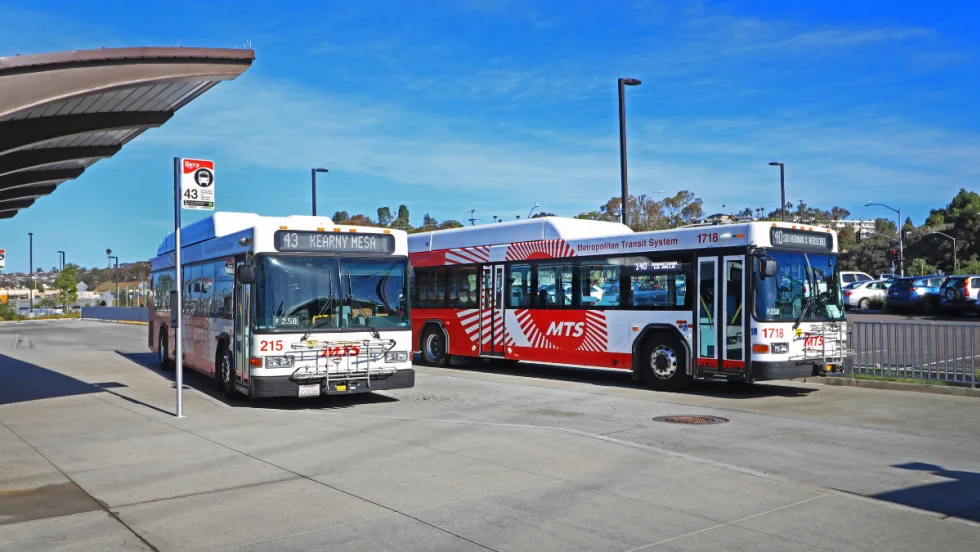
What’s Behind San Diego MTS’s Award-Winning Transit Strategy
Named one of APTA’s 2026 Outstanding Public Transportation Systems with 50 million or more annual passenger trips, California’s San Diego Metropolitan Transit System points to gains in ridership, safety, technology, and reliability as foundations of its success.
Read More →
Public Transit Conference Returning to GFX in 2027, Call for Papers Now Open
The Call for Papers is now open, allowing transit agency professionals and industry experts to help shape the PTC educational program by submitting session ideas for consideration.
Read More →
Indian River Transit’s Community-Focused Approach Earns National Recognition
Named APTA’s 2026 Outstanding Public Transportation System in its size category, Florida’s Indian River County transit system continues to grow ridership through fare-free service and a focus on evolving community needs.
Read More →
ENC Lands MATA Contract and More in Biz Briefs
In this edition of Biz Briefs, we spotlight the latest developments shaping the future of mobility.
Read More →
From Surviving to Thriving: Building Stronger Transportation Organizations
Bus Business Consultants founder Brian Dickson shares lessons on leadership, organizational health, and creating options for long-term success in a changing transportation industry.
Read More →
Everett Transit, Community Transit Outline Consolidation Agreement
The proposed agreement calls for a 50% increase in bus service in Everett, a new microtransit zone, continued paratransit service, and the transfer of Everett Transit operations to Community Transit.
Read More →
Strada360’s Steve Lassey on Turning Transit Data Into Better Decisions
From breaking down data silos to preparing for AI, Strada360 CEO Steve Lassey discusses how transit agencies can use technology to improve operations, customer information, and long-term decision-making.
Read More →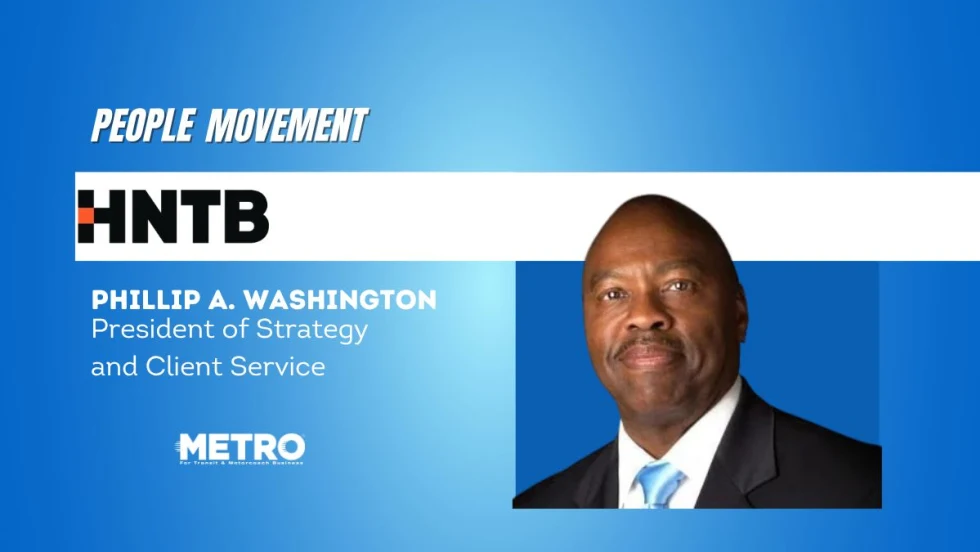
People Movement: Phil Washington Joins HNTB, Denver RTD Launches CEO Search, and More
In this edition, we also spotlight recent personnel moves at STV, the Eno Center for Transportation, and more, highlighting the people taking on new roles across the transportation industry.
Read More →
SEPTA Details Accelerate Vision for Transit System
The plan outlines investments in trolley modernization, new Metro and Regional Rail vehicles, accessible stations, and more frequent bus and rail service.
Read More →