



How Two Transit Agencies Are Using Tech to Put Riders First
Now recognized with METRO’s Innovative Solutions Awards for Technology and On-Demand Transportation, respectively, Auburn Transit and GCTD are demonstrating to the industry how artificial intelligence and flexible, rider-centric transit systems can not only address existing problems but also lay the foundation for the future of mobility.

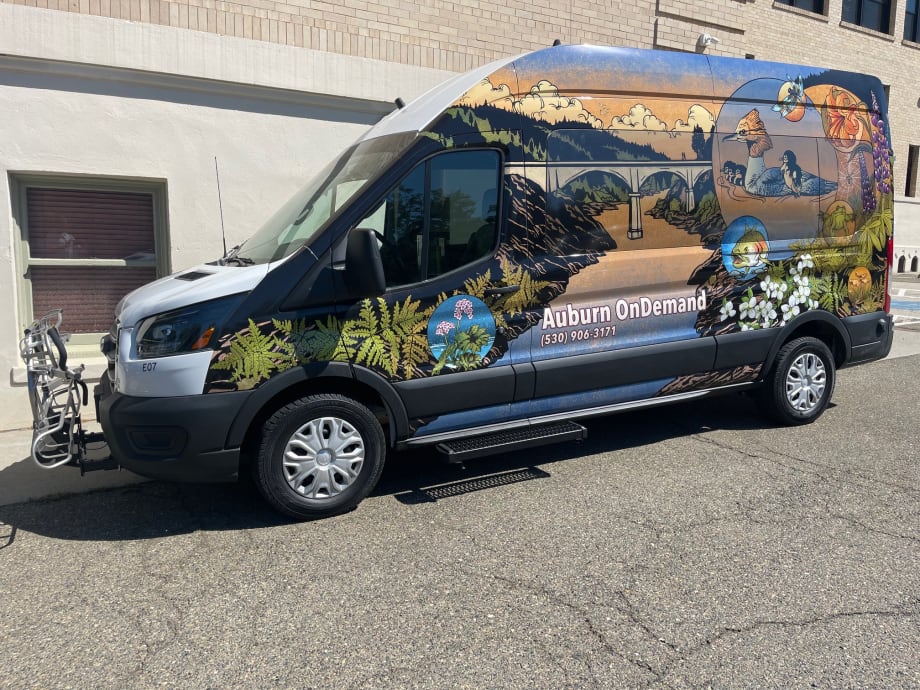
Budget limitations forced Auburn Transit to eliminate its dispatcher position — a role critical to booking and managing rides for its passengers, many of whom rely on phone-based trip planning.
Photo: Auburn Transit
- Auburn Transit and GCTD have been awarded for innovation in technology and on-demand transportation.
- These transit agencies are using artificial intelligence to enhance and personalize rider experiences.
- The agencies' initiatives aim to solve current transportation challenges and pave the way for future mobility solutions.
*Summarized by AI
Across the U.S., public transit agencies are grappling with challenges that range from staffing shortages and budget constraints to shifting rider expectations and outdated systems.
Yet amid these pressures, two transit agencies — Auburn Transit in California and the Gulf Coast Transit District (GCTD) in Texas — have emerged as pioneers of modern mobility. Through bold decisions and strategic partnerships with the transportation technology firm Spare, both agencies have implemented groundbreaking solutions that are transforming how public transit works, feels, and performs.
Now recognized with METRO’s Innovative Solutions Awards for Technology and On-Demand Transportation, respectively, Auburn Transit and GCTD are demonstrating to the industry how artificial intelligence and flexible, rider-centric transit systems can not only address existing problems but also lay the foundation for the future of mobility.
Auburn Transit: Bringing AI to the Heart of Rider Service
In Auburn, a small but forward-thinking city in Northern California, the local transit agency found itself at a crossroads.
Budget limitations forced Auburn Transit to eliminate its dispatcher position — a role critical to booking and managing rides for its passengers, many of whom rely on phone-based trip planning.
Rather than allowing this setback to degrade service quality, the agency partnered with Spare to introduce Spare Voice. This AI-powered voice assistant could take over routine call center operations. The results were swift and transformative.
Within just three months, the AI assistant had handled more than 3,500 calls. It managed the majority of rider inquiries, including bookings, cancellations, and real-time updates, without requiring human staff.
More than one-third of those calls resulted in successful ride bookings, and only about 30% required escalation to a human for assistance.
Perhaps most notably, Spare Voice enabled Auburn Transit to offer 24/7 rider support for the first time in its history — a feat previously impossible due to limited staffing.
Transit Manager Greg Bowen said the decision to adopt Spare Voice was grounded in the agency’s long-held “rider-first” philosophy.
“We were able to reduce the budget and fill an open job while assisting the department in balancing a tight budget. It has also freed up management to complete other necessary jobs by automating routine tasks and answering the calls that the dispatchers previously took,” he explained. “Most importantly, it has given the rider better customer service as they can now schedule their rides anytime and from anywhere.
Initial reactions from riders were mixed, especially among those who had developed strong relationships with the agency’s former dispatcher, Bowen added.
However, over time, as users became familiar with the system and with some phone coaching and support, confidence in the AI tool increased. Riders who once depended solely on human assistance discovered they could manage their trips quickly and independently.
Bowen emphasized that the move was more than just a technological upgrade — it reshaped the agency’s capacity to serve its clients. By automating the bulk of standard calls, Spare Voice freed up staff to focus on more complex rider needs and operational priorities, allowing Auburn Transit to do more with less without sacrificing its commitment to accessibility.
“We at Auburn Transit are humbled and grateful to be considered for this award, let alone selected as a winner,” said Bowen. “It is a testament to the City of Auburn’s commitment and dedication to the transit community.”
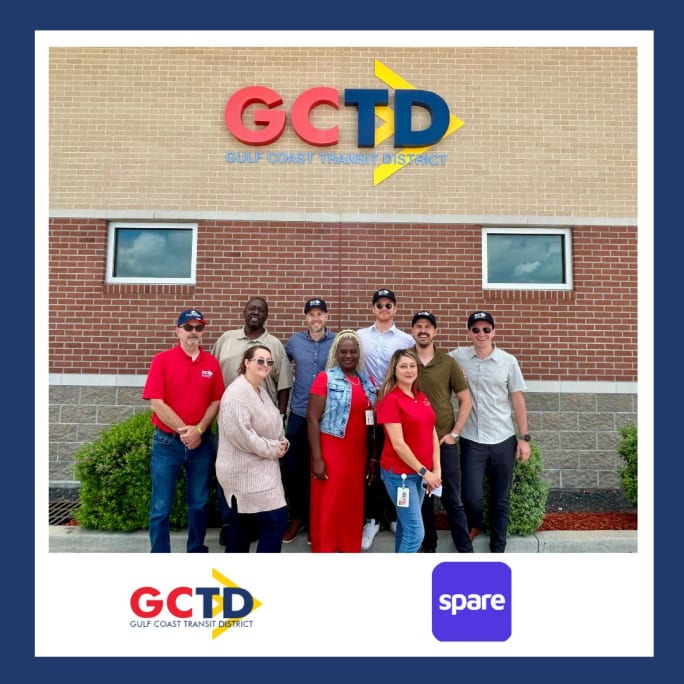
GCTD discovered that giving riders time to adjust, while continuing to offer traditional options, was key to success.
Photo: GCTD
GCTD: Rethinking the Transit Model with Microtransit Integration
On the Gulf Coast of Texas, the Gulf Coast Transit District was facing a different challenge — how to serve a sprawling, diverse region with a transit system built for another era.
Fixed-route buses and a fragmented paratransit network were struggling to meet the evolving demands of communities across Southern Brazoria and Galveston counties. Many residents lived too far from bus stops or had no access at all.
Determined to modernize its approach, GCTD partnered with Spare to design and implement a comprehensive micro-transit platform that could adapt to community needs in real time.
The transition allowed the agency to consolidate its previously siloed services under a single, cloud-based system that supported dynamic scheduling, automated fare collection, centralized dispatch, and seamless rider engagement through mobile, web, and phone channels.
According to GCTD, the platform’s flexibility became immediately apparent when expanding services into new areas, such as Surfside and Damon. Rather than requiring costly overhauls or extended downtime, the agency could reconfigure service zones, hours, and staffing from a central dashboard and launch new services in a matter of days.
However, the platform's impact was felt most acutely by riders themselves, particularly seniors, individuals with disabilities, and those residing in underserved rural communities.
Under the old system, many had no reliable way to reach a fixed bus stop, either due to distance, physical barriers, or a lack of sidewalks. With microtransit, GCTD eliminated that obstacle. Riders could now book trips directly from their doorstep, enjoying door-to-door mobility that felt more like ride-hailing than traditional public transportation.
“Spare’s microtransit platform changed everything by eliminating the need for physical bus stops altogether,” said Ted Ross, executive director of GCTD. “Now, riders anywhere in our service area, whether in a partner city or not, can book on-demand pickups from their doorstep.”
The transition wasn’t without its hurdles.
Shifting to a fully on-demand model required rethinking operations, retraining staff, and educating the public. Many riders, particularly older adults, preferred booking by phone, so GCTD bolstered its dispatch team and invested in training staff to provide high-quality support for manual trip requests.
The agency also diversified its vehicle fleet to navigate tight neighborhoods better and accommodate a range of rider needs, from wheelchair access to smaller, more maneuverable vehicles.
Perhaps the most significant learning came in realizing that no technology, no matter how smart, works without empathy.
GCTD discovered that giving riders time to adjust, while continuing to offer traditional options, was key to success. Community outreach, hands-on training, and simplified booking tools all helped ensure that no one was left behind in the transition.
“This award reflects the dedication of our team, our innovative partners, and the community we serve,” said Ross. “Transitioning to an integrated microtransit model was a bold step, and this validation motivates us to continue pushing for equitable, efficient mobility solutions."
Transforming Transit Through Partnership and Purpose
For both Auburn Transit and GCTD, their success stories share common themes: the courage to try something new, the wisdom to implement it thoughtfully, and a commitment to serving riders better.
Their respective partnerships with Spare were not simply about adopting new tools; they were about co-creating solutions that matched the unique challenges of their communities.
Whether through AI-driven call handling or fully integrated microtransit platforms, these agencies have shown that innovation in public transit isn’t about flashy tech; it’s about meeting people where they are.
Quick Answers
Auburn Transit and GCTD have been recognized with METRO’s Innovative Solutions Awards for Technology and On-Demand Transportation, respectively.
*Summarized by AI
More Technology

From Hardware to Digital Partner: Luminator Charts Its Next Chapter
CEO Magnus Friberg discusses Luminator’s shift toward becoming a digital partner, the growing importance of software and interoperability, and how AI can help agencies improve operations and passenger experience.
Read More →
Beyond the Checklist: A Structured Approach to Transit Maintenance
Reliability-Centered Maintenance helps transit agencies move beyond routine checklists to focus limited resources on the assets and failures that have the greatest impact on safety, reliability, and service.
Read More →
NJ TRANSIT Advances Bus Technology Upgrades Across Statewide Fleet
More than 1,500 buses now feature upgraded technology designed to improve arrival predictions and provide free Wi-Fi, with deployment expected to reach nearly 2,000 buses by the end of 2026.
Read More →

Building a Flexible Path to Transit Electrification
John Hroncich discusses BAE Systems’ modular and scalable approach, lessons learned from decades of real-world operations, and how agencies can identify electrification strategies that fit their fleets.
Read More →
Biz Briefs: Alstom Lands Canadian Contract, LYT to Supply California TSP, and More
In METRO's latest installment, we take a look at recent news from Complete Coach Works, Beep, FlixBus, and more partnerships making headlines across the transportation sector.
Read More →
From Legacy Silos to Conversational Intelligence
What if transit leaders could ask any operational question and get a trusted answer in seconds? Conversational AI is transforming how agencies use their data.
Read More →
USDOT Announces Rail Vehicle Replacement Grants, Chattanooga AV Shuttle Funding
More than $191 million in federal funding will help three transit agencies replace aging rail vehicles and support a new autonomous shuttle service in Chattanooga.
Read More →
Bus Tech Talk: Keeping Transit Technicians Ahead of the Technology Curve
LA Metro’s Obed Mejia discusses technician training, evolving maintenance technology, fleet replacement, and strategies for getting the most out of today’s transit fleets.
Read More →
Biz Briefs: RIPTA Unveils New Frontrunners, Clevland RTA Adds New Siemens, and More
In METRO's latest installment, we take a look at recent news from Siemens, Prevost, Dodge, and more partnerships making headlines across the transportation sector.
Read More →
Why Simulating Pedestrian Movement Has Become Essential for Modern Rail Stations
Pedestrian microsimulation is helping rail planners identify bottlenecks, test station designs, and prepare complex transit hubs for growing passenger volumes.
Read More →