




Keep Reading: Today’s Regional Transit Strategies Require a Multimodal Approach
Modernizing Rural Transit: Arrowhead Transit's RideSmart 2025 Overhaul
Community input, new tech, and smarter routes drive Arrowhead Transit's system changes, reshaping rural mobility in Minnesota.
July 24, 2025
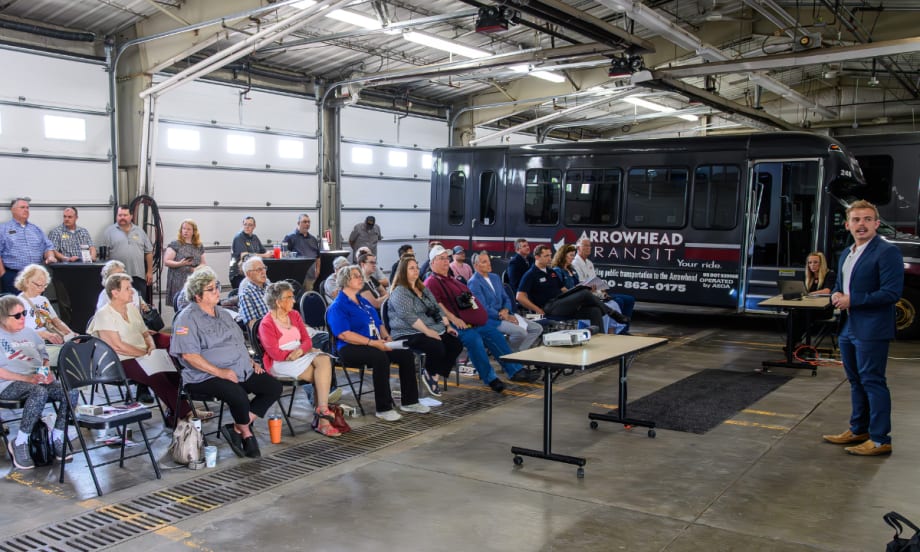
Arrowhead Transit's recent work resulted in RideSmart 2025, a sweeping overhaul officially launched on June 2 to improve reliability, access, and the rider experience for rural users.
Photo: Arrowhead Transit
4 min to read
- Arrowhead Transit is modernizing its rural transit system in Minnesota through the RideSmart 2025 initiative.
- The overhaul integrates community feedback, advanced technologies, and redesigned routing to enhance mobility.
- The project focuses on creating a more efficient and responsive transportation network for rural populations.
*Summarized by AI
When Arrowhead Transit first set out to redesign public transportation in two Minnesota counties, it wasn't just about tweaking bus routes. The agency began rethinking how rural transit should work in the modern era.
The agency's work resulted in RideSmart 2025, a comprehensive overhaul officially launched on June 2, aimed at improving reliability, access, and the rider experience. According to Sandra Wheelecor, assistant director, operations, at Arrowhead Transit, community input was critical in shaping the final redesign.
"From the very beginning, RideSmart 2025 was built around one question: What do our riders need?" said Wheelecor. "What we heard was clear — more reliability, clearer schedules, expanded service areas, and better connections to jobs, schools, and medical care."
Many riders were asking for more "predictability" and "structure", pushing the agency to build consistent loops and simplify transfers instead of relying only on demand-response rides.
One insight stood out. Even in rural areas, riders overwhelmingly favored reliable timing over flexibility.
"In a rural area, that surprised us, but it informed how we built the routes," said Dominick Olivanti, Arrowhead Transit's marketing and public relations manager.
Mapping a Smarter Ride: New Routes and Connections
That community feedback resulted in a redesigned network featuring expanded commuter routes in cities like Cambridge, North Branch, Wyoming, Braham, Isanti, and Chisago Lakes.
New loop routes with timed transfers have been introduced to make the system more predictable, with early morning and late afternoon service windows accommodating workers and students.
Dial-a-Ride, Arrowhead Transit's flexible on-demand service, has also been refined. Defined boundaries in Cambridge and North Branch, along with extended operating hours, help balance the desire for flexibility with the need for consistent service.
These changes ensure that key inner-city destinations remain accessible to riders across the region. The redesign also strengthens connections to Transit Link, the Twin Cities' regional Dial-a-Ride service, seamlessly bridging urban and rural transit.
Technology Brings New Tools to Rural Riders
Beyond routing and schedules, RideSmart 2025 introduces a new era of digital tools for riders through the development of a tech platform that will fundamentally transform how rural passengers interact with public transportation.
"The new tech is still in development," Olivanti explained. "The idea is to give riders tools that make using transit easier and more straightforward."
Through the upcoming app, riders will be able to check when the next bus is coming, receive alerts about delays or changes, and view detailed route maps.
For services that still require reservations, such as Dial-a-Ride, the app will eventually enable riders to book trips directly from their phones.
Looking ahead, Arrowhead Transit is exploring the possibility of integrating fare payments into the platform.
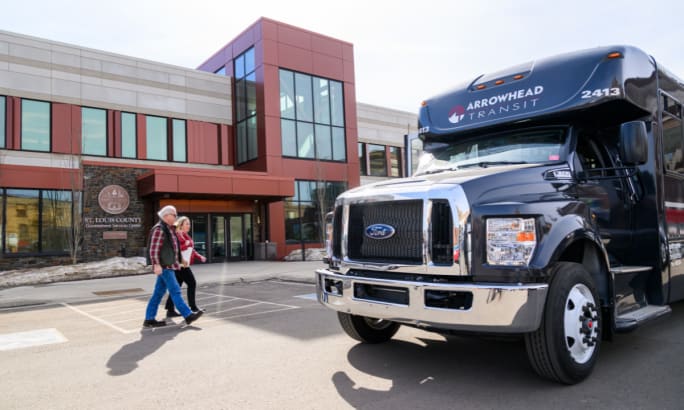
Arrowhead Transit's route changes ensure that key inner-city destinations remain within reach for riders across the region.
Photo: Arrowhead Transit
Removing Barriers, Measuring Progress
Equity has been a guiding principle for the RideSmart 2025 overhaul. In regions where fixed routes aren't practical, Arrowhead Transit has focused on preserving and expanding Dial-a-Ride service to ensure riders aren't left without options.
“That's something we've been mindful of," said Olivanti. "We're coordinating transfers with Transit Link and other partners so people aren't stranded just because they live outside the core service area. It's not perfect, but it's a step in the right direction."
This emphasis on equitable access reflects broader community goals, such as connecting residents to healthcare and supporting local economies by making jobs more accessible and affordable.
The work, of course, doesn't stop with the launch. Arrowhead Transit is measuring the success of RideSmart 2025 through a series of performance benchmarks, including on-time performance, ridership levels, the frequency of denied trips due to capacity limits, and feedback from riders and drivers.
"We'll be doing follow-up surveys, too, to get a sense of how the changes are working from the rider's perspective," said Olivanti. "It's early, but we're committed to adjusting as we go."
Setting the Standard for Rural Transit Innovation
For Arrowhead Transit, RideSmart 2025 is more than just an operational upgrade. It's a blueprint for what rural transit systems can achieve when they put community voices at the center of planning.
"Public transportation isn't just about getting from point A to point B. It's about removing barriers to employment, education, healthcare, and community," said Brandon Nurmi, director of Arrowhead Transit. "There's a lot more riding on Arrowhead Transit than just people."
With over 68,000 riders served in Chisago and Isanti counties in 2024 and a unified vision for smarter, more equitable service, RideSmart 2025 stands as a model other rural transit systems may look to emulate in the years ahead. For the communities it serves, it signals the promise of great connection and opportunity, not just buses on the road.
Quick Answers
The main goal of RideSmart 2025 is to modernize rural transit in Minnesota by incorporating community input, new technology, and smarter routes to improve mobility.
*Summarized by AI
Subscribe to Our Newsletter
More Management

METRO Opens Submissions for 2026 Motorcoach Awards
Nominations are now being accepted for METRO Magazine’s Operator of the Year and Innovative Operator of the Year awards.
Read More →
New York MTA Advances Final Contract for Second Avenue Subway Expansion
Contract Four is the largest in the Second Avenue Subway Phase 2 project and includes construction of station infrastructure, tracks, and signals for the subway expansion, MTA officials said. Work on Contract Four will begin in 2027.
Read More →
Transit Agencies Highlight Safety Gains at National Summit
Leaders from 15 major transit systems shared crime-reduction results and safety initiatives while discussing the role of continued federal support.
Read More →

NITA Names New Leadership, Expands Reduced-Fare Program at First Board Meeting
The new regional transit authority appointed its first board chair and interim executive director while extending reduced fares across CTA, Metra, and Pace for eligible riders.
Read More →
Beyond the Checklist: A Structured Approach to Transit Maintenance
Reliability-Centered Maintenance helps transit agencies move beyond routine checklists to focus limited resources on the assets and failures that have the greatest impact on safety, reliability, and service.
Read More →
APTA 2026 Nominating Committee Selects Leadership Slate, Names Chair and Vice Chair Nominees
Leadership changes will help shape the association’s priorities and its representation of the transportation industry during the 2026–2027 term.
Read More →
DART Launches Major Security, Fare Enforcement Initiative
The 90-day demonstration will deploy coordinated security teams at five light rail stations while testing controlled access and gathering data to guide future investments.
Read More →
Sponsored•September 9, 2026
Advancing Fare Collection Through Technology and Innovation
Learn about delivering 1300 gates at 91 stations while managing fare evasion. Explore the large scale deployment, solution customization and real-world results that affect the region. Prepare for deployment in your region now.
Read More →
Game Day in Motion: Moving Millions During the 2026 World Cup
Between packed transit stations and team motorcoaches, see how agencies and operators across North America tackled the transportation demands of the 2026 FIFA World Cup.
Read More →
Surface Transportation Extension Averts Shutdown, Leaves Transit Funding Gap
The stopgap keeps federal transportation programs moving, but missing advance funding could complicate the transit and rail projects agencies are planning next.
Read More →