



In curtailing collisions, tortoise beats hare
With increasing traffic loads and distractions (e.g., cell phones), motorists are crashing into the backs of transit buses at an alarming rate.
In time-honored fashion, the tortoise wins again. But it takes a professor of visual science and bioengineering to explain why. Before we discuss the hare's crushing defeat, let's talk about why the race was run. With increasing traffic loads and distractions (e.g., cell phones), motorists are crashing into the backs of transit buses at an alarming rate. Although national statistics are not available, transit managers assert the frequency of these rear-end accidents is greater these days. Greg Cook, executive director of the Ann Arbor Transportation Authority (AATA) in Michigan, says he's seen an increase in rear-end collisions since coming to the Ann Arbor agency seven years ago. "Mainly, it's because of increased traffic," he says, adding that it's rare for a bus passenger to be seriously injured in this type of crash. But that's not true for the driver and passengers in the other vehicle. Often, their injuries are serious if not fatal, he says. Efforts have failed Cook has tried several methods to curtail the incidence of these crashes, including painting the rear of the buses white and maroon and using amber lights to signal to motorists that the bus is slowing down, but nothing has been effective. Enter the Federal Transit Administration and the Federal Highway Administration, which provided AATA with approximately $500,000 to develop a rear-end collision avoidance system. With this funding, the AATA prepared an RFP and eventually began working with Dr. Theodore E. Cohn, a bioengineering professor at the University of California, Berkeley; Veridian International in Ann Arbor; and ElectroTechs in Corona, Calif., which built the system per Cohn's specifications. That was nearly two years ago. Today, the warning device -- a four-foot-wide bar of eight LEDs -- is ready for testing in 10 buses operated by AATA. The light bar, invented by Cohn and bioengineering student Khoi Nguyen, is mounted to the back of the bus and hooked up to a radar system that detects when another motorist is approaching the rear of the bus too fast. When the system identifies a car as a rear-collision threat, it triggers the light bar, which in turn activates the LEDs. These eight LEDs are illuminated in sequence, starting with the innermost pair and moving outward at 50-millisecond intervals. Which leads to the explanation of the tortoise and the hare. Why the hare loses In his research, Cohn tested two illumination patterns. In one, all eight of the LEDs were activated simultaneously, the "fast" version. The other pattern, previously mentioned, starts with the innermost pair and radiates left and right, the "slow" version. Cohn discovered that people processed the slow version more quickly. "By making the pattern slower, it was seen faster," he says, explaining that the light sweeping both left and right was stronger in "tickling parts of the visual nervous system that detect motion." Cohn says it was a no-brainer to use LEDs instead of the more widely use incandescent lights because the LEDs illuminate immediately whereas incandescents take 40 milliseconds to light up. The LEDs provide a trailing motorist with a fraction of a second longer to react, which can make a critical difference in outcome, Cohn says. The other key part of the system, developed by Veridian, is the radar unit that tracks fast-approaching cars and determines when to trigger the LED bar. Cook says cameras and computers will also be installed on the test buses to gather data on the effectiveness of the system in preventing collisions and reducing the number of near misses. If the system is deemed effective, Cook says, the rest of Ann Arbor's approximately 100 buses will be equipped with the LED bars. "We think this system has great potential," Cook says.
More Management
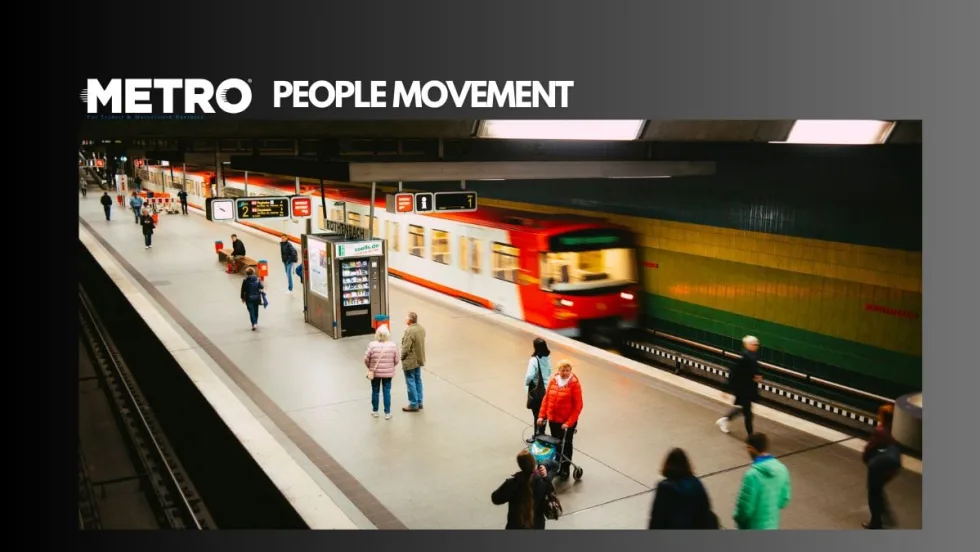
People Movement: Connectpoint Expands Leadership Team, Stadler Names New Group CEO, and More
In this edition, we also spotlight recent personnel moves at Burns, UZURV, and more, highlighting the people taking on new roles across the transportation industry.
Read More →
More Than a Summer Job: Building the Next Generation of Transit Talent
The Delaware River Port Authority and PATCO have transformed their internship program into a hands-on professional development experience that introduces students to the breadth of transportation careers — and creates a pipeline for future employees.
Read More →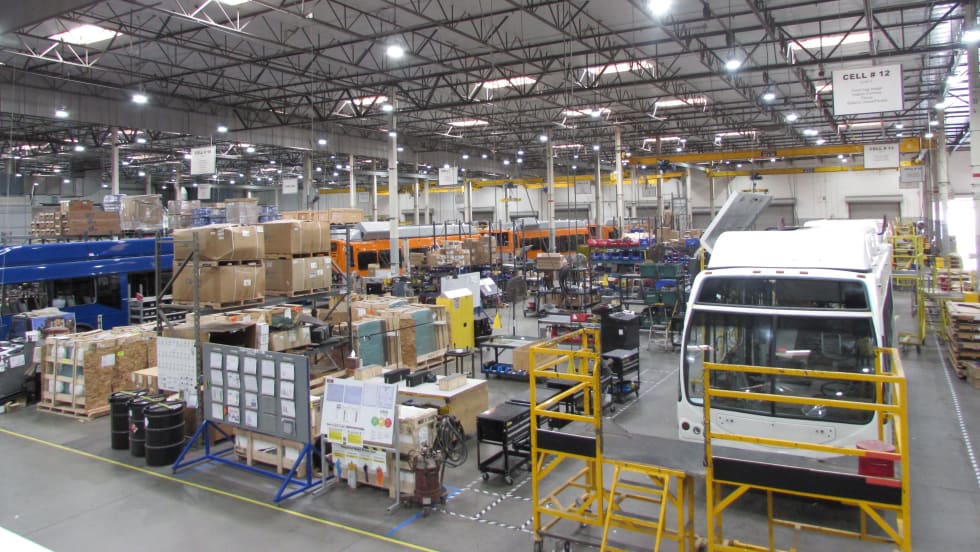
LA Metro Board Awards 220 Battery-Electric Bus Contract to ENC
The contract, which is the largest base award of battery-electric buses by a U.S. transit agency, will be built in Southern California, sustaining good jobs as LA prepares to welcome the world in 2028
Read More →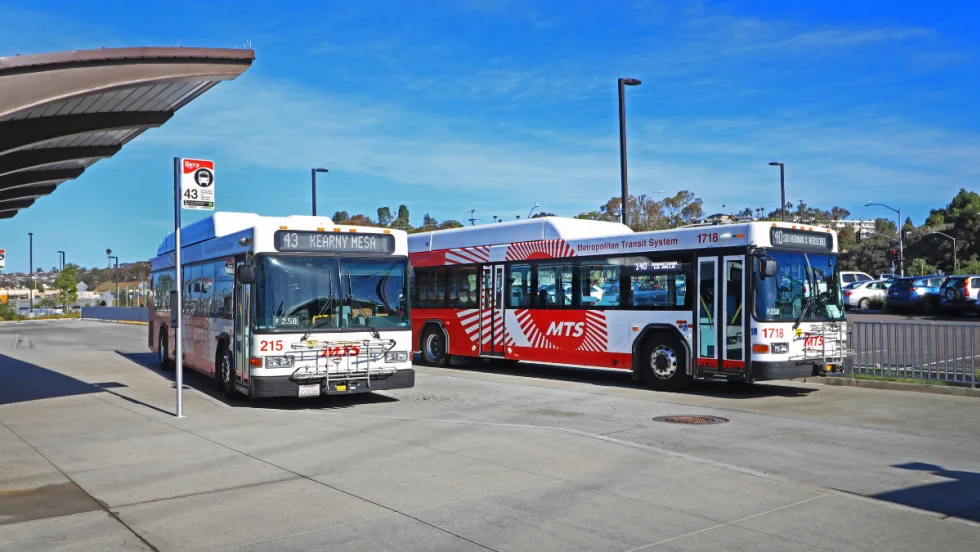
What’s Behind San Diego MTS’s Award-Winning Transit Strategy
Named one of APTA’s 2026 Outstanding Public Transportation Systems with 50 million or more annual passenger trips, California’s San Diego Metropolitan Transit System points to gains in ridership, safety, technology, and reliability as foundations of its success.
Read More →
Public Transit Conference Returning to GFX in 2027, Call for Papers Now Open
The Call for Papers is now open, allowing transit agency professionals and industry experts to help shape the PTC educational program by submitting session ideas for consideration.
Read More →
Indian River Transit’s Community-Focused Approach Earns National Recognition
Named APTA’s 2026 Outstanding Public Transportation System in its size category, Florida’s Indian River County transit system continues to grow ridership through fare-free service and a focus on evolving community needs.
Read More →
ENC Lands MATA Contract and More in Biz Briefs
In this edition of Biz Briefs, we spotlight the latest developments shaping the future of mobility.
Read More →
From Surviving to Thriving: Building Stronger Transportation Organizations
Bus Business Consultants founder Brian Dickson shares lessons on leadership, organizational health, and creating options for long-term success in a changing transportation industry.
Read More →
Everett Transit, Community Transit Outline Consolidation Agreement
The proposed agreement calls for a 50% increase in bus service in Everett, a new microtransit zone, continued paratransit service, and the transfer of Everett Transit operations to Community Transit.
Read More →
Strada360’s Steve Lassey on Turning Transit Data Into Better Decisions
From breaking down data silos to preparing for AI, Strada360 CEO Steve Lassey discusses how transit agencies can use technology to improve operations, customer information, and long-term decision-making.
Read More →