



In Historic Philadelphia, SEPTA Is Busy Moving into the Future
Turning one of the country’s oldest transit agencies into one of the newest is the mission of the Southeastern Pennsylvania Transportation Authority (SEPTA). Its modernization efforts focus on customer service, but financial stability is the ultimate goal.
History comes easy to Philadelphia. Consider Benjamin Franklin, the Liberty Bell and, er, Rocky Balboa. It’s unfastening the moorings of the past that’s difficult. Just ask Sylvester Stallone or the Southeastern Pennsylvania Transportation Authority (SEPTA). The fifth-largest transit agency in the United States, SEPTA is cleaving itself from years of budget shortfalls, declining ridership and faltering public perception. A thoroughly modern outlook—in its business practices, infrastructure, equipment and customer service—has been embraced. “We’re taking one of the nation’s oldest transit properties and bringing it into the 21st century,” says Jack Leary, SEPTA’s general manager, describing the agency’s overarching mission. The practical imperatives of this broad vision translate into the need to revitalize stations and terminals, replace outmoded equipment, improve labor relations and, most importantly, find more riders and treat them so well that they’ll keep coming back. Big job for a big agency That’s a tall order for an agency as large and complex as SEPTA. The agency, established in 1964, operates nearly 2,300 buses, trolleys, trackless trolleys, subway-elevated cars and regional railcars to serve five counties—Bucks, Chester, Delaware, Montgomery and Philadelphia—spanning 2,200 square miles and encompassing a population of 3.7 million. In addition, regional rail service is provided to Trenton, N.J., and Newark, Del. Overall, the authority serves more than 15,000 transit stops and 280 subway-elevated, trolley and rail stations. Moreover, the agency is still recovering from a tumultuous period in the late 1980s and mid ’90s when ridership declined by 21% and operating deficits mounted. To bring the budget under control, SEPTA responded by raising fares and reducing service, which only exacerbated the problem. A few years ago, after determining that its tactics were creating a downward spiral, the agency adopted an ambitious five-year strategic plan and unveiled a new slogan: “SEPTA: Serious About Change.” Ridership gains seen Leary, who arrived at the agency in February 1997, says the “new” SEPTA is winning the battle against long-term decay. The past few years have seen some ridership growth as “people came back to the system,” he says. Last year ridership increased by 4.5%, or 13 million, reaching 305 million. “We saw growth of 4% to 6% in the various modes,” he says. “That’s a pretty substantial turnaround.” SEPTA passengers also traveled 1.6 million more miles and took advantage of changes or additions to 20 bus routes and expanded heavy and light rail services. Leary attributes the ridership gains to more aggressive marketing and advertising and a clearer focus on the needs of the customer. “Our industry is changing,” he says. “People’s expectations are higher.” 5-year plan provides keys The blueprint for the improvement, Leary says, is the five-year plan. Started in 1998, the plan has five key objectives—improve service quality and customer service, improve customer and employee safety, increase ridership and revenue, improve productivity and cost effectiveness and improve employee satisfaction and workplace excellence. Fine goals, all. But, as Leary concedes, predictable. He adds, however, that SEPTA imparted its own spin on these five objectives, redefining them to create SEPTA-specific standards rather than generic managerial jargon. Take, for instance, the directive of improving customer service, an oft-repeated mantra in nearly every industry these days. “We want to go beyond typical bus company standards,” Leary says. “We want customers who are more than just satisfied; we want customers who are delighted.” His vision is to match the service quality of the hospitality industry or the visitors and convention industry. To accomplish this feat, employees throughout the 8,900-person organization needed to be retrained. “Getting a bus from point A to point B isn’t enough anymore,” he says. “In the new world, you have to understand what doing a good job is.” To build employee loyalty and pride, SEPTA promoted the idea of partnerships between management and employees. Training became partnering. The focus turned to accountability and understanding the importance of quality service. Spreading the news Improving communication with customers was also determined to be a critical need. To that end, SEPTA began disseminating 250,000 free copies of a newspaper called Philadelphia Metro to its customers. Riders of trains and buses can grab a copy and catch up on the latest news and sports. In addition, they can read about the latest developments at SEPTA, which has its own dedicated page in the 24-page tabloid. Leary says the tabloid is perfect for announcements about SEPTA promotions, discounts, route changes, service improvements, modernization efforts and so on. SEPTA’s page in a recent issue featured a profile of its Fern Rock maintenance facility in North Philadelphia. The shop employs 70 people who work exclusively on rail vehicles, everything from the Silverliner and Bombardier cars that travel the regional lines to the state-of-the-art Adtranz M-4 heavy rail vehicles for the Market-Frankford line. In addition, the page announced changes in route service and a directory of phone numbers for customer information. “We now have the ability to communicate with our customers,” Leary says, adding that the newspaper helps the agency “manage the travel experience” of its customers by making the ride a little nicer and the wait seem a little shorter. “Waiting for a train for five minutes can feel like an eternity, but thumbing through a newspaper can make it seem very short,” he says. The newspaper also helps SEPTA’s bottom line. It receives $600,000 a year from Philadelphia Metro to distribute the newspaper. Keys to financial stability The money issue cannot be ignored. According to Leary, the agency has produced a budget surplus for four of the past five years, but funding is still a key issue. A critical labor negotiation allowed the authority to save $2 million in operating costs. The contract, Leary says, cost SEPTA $24 million but saved $26 million. “We were able to restructure the organization with 1,000 fewer employees and still put out more service,” he says. “And we were able to reinvest in new and redesigned routes.” One specific project that Leary mentions is the creation of a multimodal transit center at a shopping mall, allowing bus and rail passengers to transfer easily from one mode to the other. “Seamless is an overused word these days, but the expectation is that the system will be integrated,” he says. The operating budget for fiscal year 2002 is pegged at $822 million, a 5.6% increase over FY 2001. The increase is tied to anticipated hikes in fuel prices, wage rates and increased paratransit costs for ADA patrons. According to the FY 2002 budget, passenger revenue is expected to increase by $31.8 million to $324.5 million. That’s a 10.8% jump, much of which hinges on a fare increase instituted July 1. Although it created the expected public outcry, SEPTA raised its fares about 9% across the board. Cash fare for a bus trip went from $1.60 to $2. Leary says the rate hike, the first in more than six years, is part of a program to ensure financial stability and to discourage cash fares and encourage heavily discounted weekly and monthly passes. “The handling of cash is real difficult,” he says, adding that SEPTA’s fare schedule has been one of the most economical in the country. “The truth of the matter is that we’ve offered a huge discount.” Total operating subsidy from federal, state and local sources for FY 2002 is estimated as $399,800, about 48.6% of the total operating budget. According to SEPTA, the percentage of the agency’s direct operating expenses covered by subsidy remains among the lowest in the country for major transit properties. One size doesn’t fit all One of the biggest turnarounds at SEPTA has been upgrading of infrastructure and equipment, especially rolling stock. “We’ve taken the position that one size no longer fits all,” Leary says, referring to the agency’s heavy reliance on traditional 40-foot buses. In recent years, SEPTA has begun procuring 60-foot articulated buses for high-capacity urban routes, 30-foot buses for small-community services and 24-foot buses for feeder service. “We tried to match the product to the marketplace,” says Leary. SEPTA has embraced an aggressive fleet replacement program. As recently as the late ’90s, the average age of a SEPTA bus was over 11 years, according to Patrick Nowakowski, assistant general manager for infrastructure, engineering and technology. Annual replacement of approximately 100 buses has brought the average age down to 7 or 8, he says. “We anticipate that by 2005 we’ll be in the position where we want to be. Every year we’re making progress.” Next on the agenda is SEPTA’s first venture into alternative-fuel buses. The agency has ordered a dozen diesel-electric hybrid buses from New Flyer. “We believe that hybrid buses are the future of the bus fleet,” Nowakowski says. “This gives us a glimpse of that future.” ‘Talking’ to the customer The agency is advancing the technology of its bus fleet in other ways. In 1996, SEPTA bought its first bus with the “talking bus” feature. The device is coupled with a global positioning system (GPS), allowing the annunciator system to communicate route information to customers, both inside and outside the bus. “It will also tell you what the connecting routes are and the points of interest,” Nowakowski says. Buses also have an electronic message board in the passenger compartment that alerts hearing-impaired passengers to upcoming destinations. SEPTA’s rail and trolley systems are also undergoing replacement and upgrading, Nowakowski says. An abandoned rail line that accommodates regular bus service is being refurbished for use as a trolley line at a cost of about $100 million, about two-thirds for infrastructure and one-third for vehicles. “With traffic pre-emption, ADA accessibility and air conditioning, they can run with better performance,” Nowakowski says. Operationally, SEPTA claims to consistently meet its on-time performance goals. “SEPTA has always been very good at that,” Leary says. “We have fewer than 30 trips a day missed.” The agency contracts out its paratransit service and recently switched operators after several complaints of late service delivery, including one well-publicized account of two paratransit riders who refused to get off their van in a five-hour protest. Leary concedes that the agency had a series of “loose contracts” with some of its providers. “We made a decision to change them all out,” he says. “Our goal is zero trip denials and one minute or less of waiting on the phone to make a reservation.” Website provides key info Technology, in the form of the Internet, is helping SEPTA communicate quickly and efficiently with its customers, who can obtain information about travel advisories, traffic delays and schedules with a few clicks of a mouse. The authority’s Website, located at www.septa.org, also offers a trip-planning feature called TransitQuest that provides step-by-step instructions on how to get from, say, your home to Veterans Stadium using SEPTA. This feature is especially useful for those people who are unfamiliar with public transportation. “Transit has always been plagued by the person who never uses the system, but we’re working on that,” Leary says. Actually, SEPTA is working on a lot of things. The notion that it’s an old transit system will soon become a thing of the past. “I think we’re an excellent example of one of the country’s oldest transit agencies becoming one of the newest,” says Leary.
More Management

Bus Tech Talk: Keeping Transit Technicians Ahead of the Technology Curve
In this episode of Bus Tech Talk, Complete Coach Works’ Business Development Manager Mark Hollenbeck and METRO’s Executive Editor Alex Roman sit down with Obed Mejia, Senior Technical Trainer for Bus Maintenance, at LA Metro to discuss how rapidly evolving bus technology is changing the maintenance shop — and the skills technicians need to keep pace.
Read More →
Michael Schneider Joins Paslay Group to Expand Transportation Practice
The longtime transportation executive will help Paslay Group grow its advisory and program management work across transit, highway, and other infrastructure sectors.
Read More →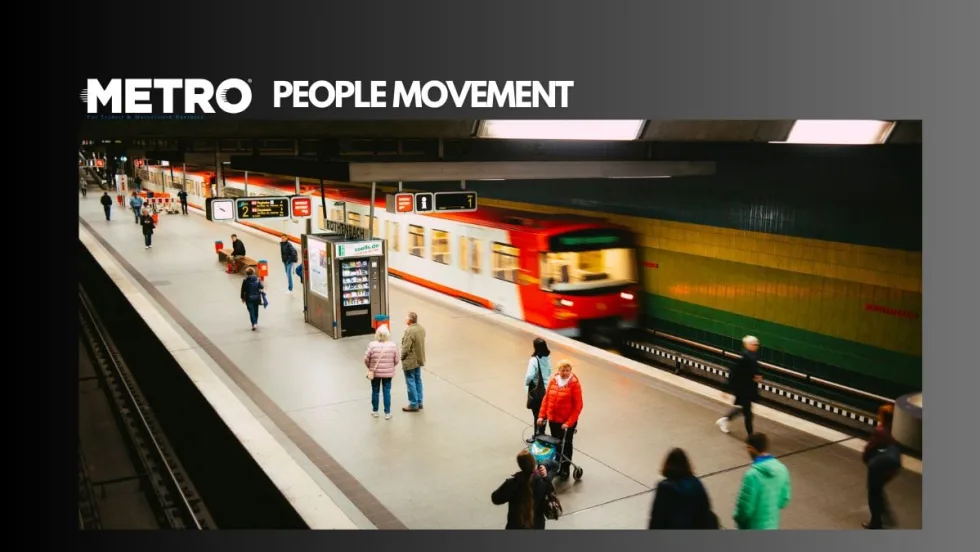
People Movement: Connectpoint Expands Leadership Team, Stadler Names New Group CEO, and More
In this edition, we also spotlight recent personnel moves at Burns, UZURV, and more, highlighting the people taking on new roles across the transportation industry.
Read More →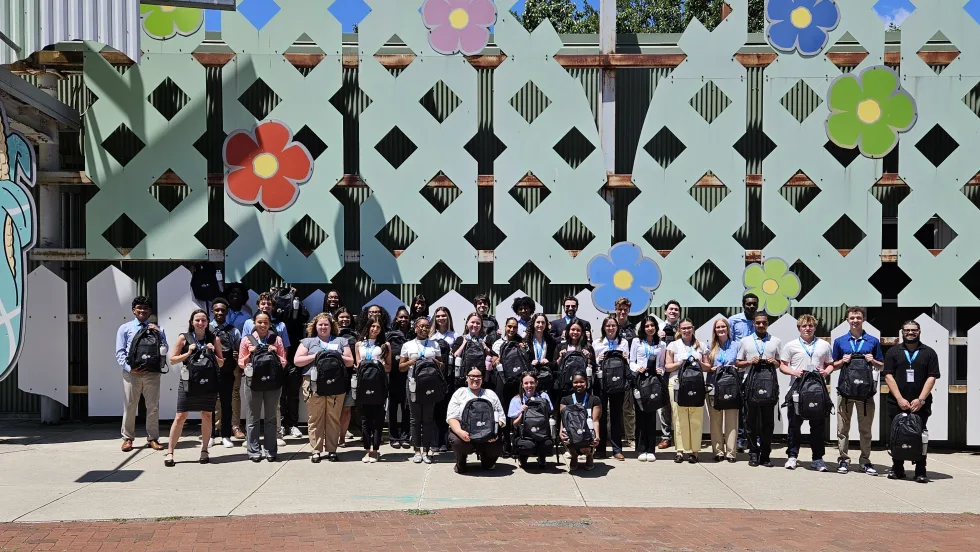
More Than a Summer Job: Building the Next Generation of Transit Talent
The Delaware River Port Authority and PATCO have transformed their internship program into a hands-on professional development experience that introduces students to the breadth of transportation careers — and creates a pipeline for future employees.
Read More →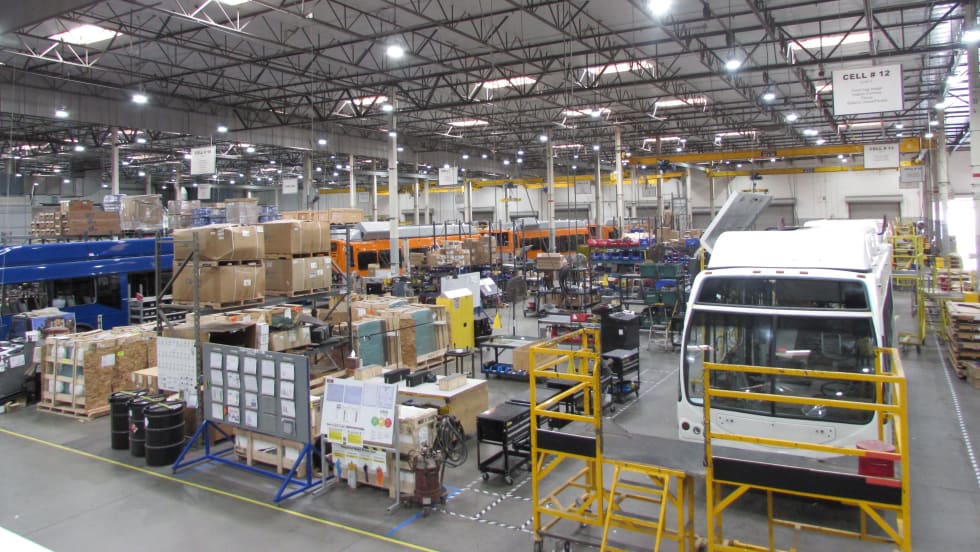
LA Metro Board Awards 220 Battery-Electric Bus Contract to ENC
The contract, which is the largest base award of battery-electric buses by a U.S. transit agency, will be built in Southern California, sustaining good jobs as LA prepares to welcome the world in 2028
Read More →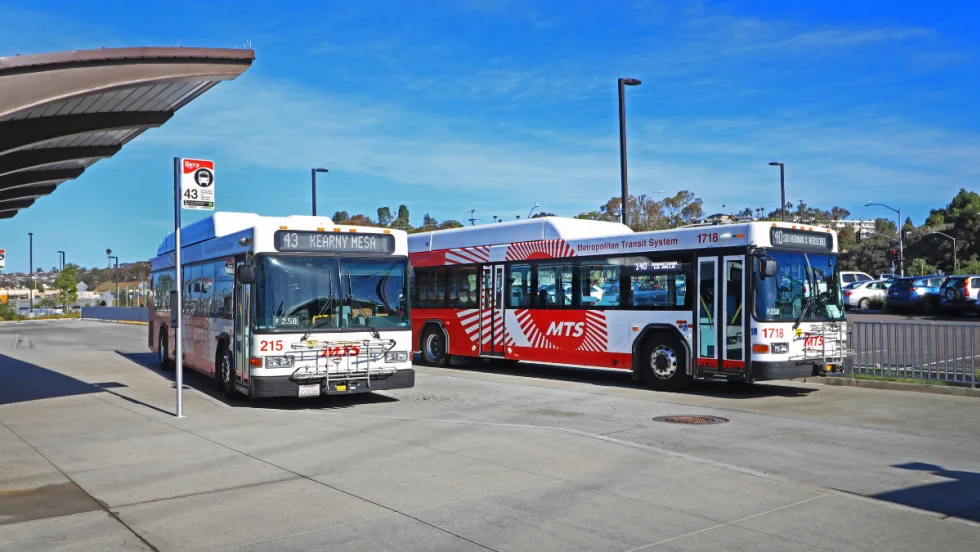
What’s Behind San Diego MTS’s Award-Winning Transit Strategy
Named one of APTA’s 2026 Outstanding Public Transportation Systems with 50 million or more annual passenger trips, California’s San Diego Metropolitan Transit System points to gains in ridership, safety, technology, and reliability as foundations of its success.
Read More →
Public Transit Conference Returning to GFX in 2027, Call for Papers Now Open
The Call for Papers is now open, allowing transit agency professionals and industry experts to help shape the PTC educational program by submitting session ideas for consideration.
Read More →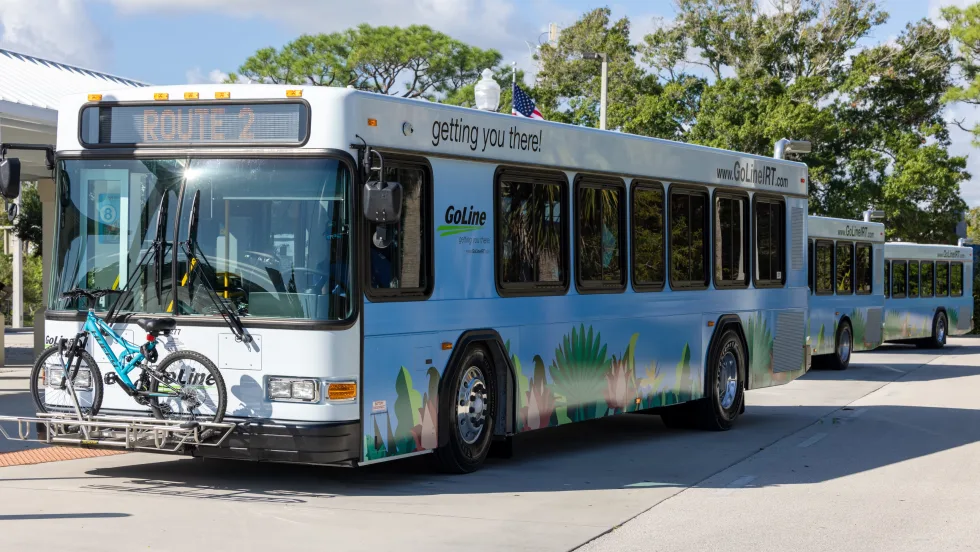
Indian River Transit’s Community-Focused Approach Earns National Recognition
Named APTA’s 2026 Outstanding Public Transportation System in its size category, Florida’s Indian River County transit system continues to grow ridership through fare-free service and a focus on evolving community needs.
Read More →
ENC Lands MATA Contract and More in Biz Briefs
In this edition of Biz Briefs, we spotlight the latest developments shaping the future of mobility.
Read More →From Surviving to Thriving: Building Stronger Transportation Organizations
Bus Business Consultants founder Brian Dickson shares lessons on leadership, organizational health, and creating options for long-term success in a changing transportation industry.
Read More →