



INIT Reduces Environmental Impact Through Zero-Waste-to-Landfill Certification
In an effort to conduct business in a more environmentally-friendly manner, the company took on the daunting task, which at the height, yielded better results than anyone had expected.
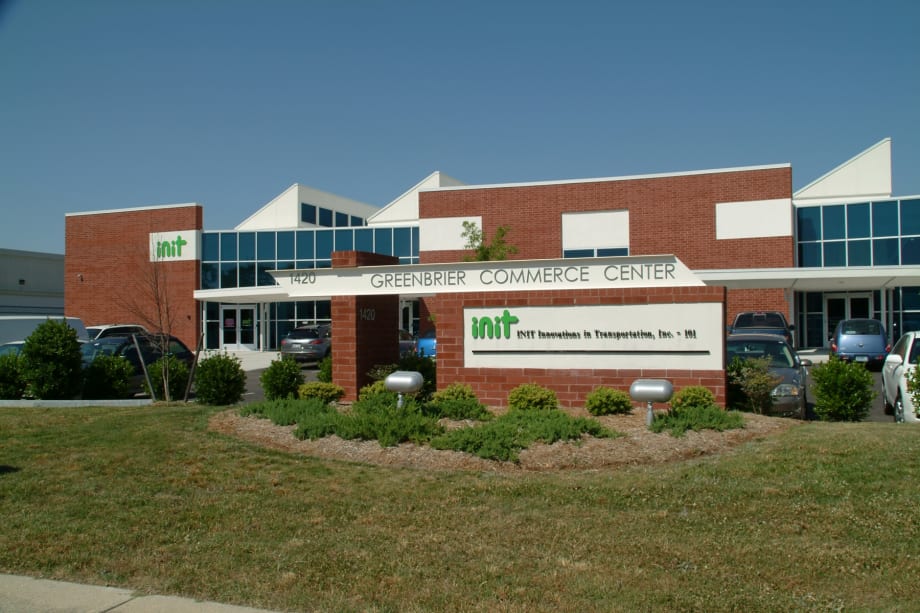
The company’s zero-waste venture began as a simple recycling mission to “green up” its corporate office in Chesapeake, Va.
The company’s zero-waste venture began as a simple recycling mission to “green up” its corporate office in Chesapeake, Va.
INIT, a global leader in ITS technologies for public transit, recently tackled the certification process to become a zero-waste-to-landfill company. In an effort to conduct business in a more environmentally-friendly manner, the company took on the daunting task of reducing their environmental footprint. The story of that journey is described below.
The Road to “Zero Waste” Certification
INIT’s zero waste venture initially began as a simple recycling mission. However, the greening efforts rapidly grew into a full-blown strategy that fueled a mindset change for the company and its employees.
Step 1: Stakeholder Buy-in
Following discussions between management and marketing staff, the decision was made to officially commit to a recycling project. INIT’s management team was fully onboard with the project and provided the catalyst that got the ball rolling.
The next step was employee buy-in. The initial response of INIT staff was positively enthusiastic. Employees were not only open, but also full of fresh ideas. After receiving input, their ideas were reviewed, discussed and finally adopted.
Some of the innovative suggestions from employees included:
• Replace personal trash cans with personal recycle bins. Employees can walk to a centrally located trash bin for non-recyclables.
• Install occupancy sensors for lighting in all offices, restrooms and conference rooms.
• Install hand dryers in restrooms to eliminate paper towel usage.
• Purchase glass dishes and silverware to eradicate the use of paper and plastic in the kitchen
• Sort and reuse cardboard boxes, bubble wrap, and other shipping resources.
• Repurpose or resell used electronic equipment.
• Reroute electronics and cables to an electronics recycler that ensures 100% zero exports.
• Compost organic materials and coffee grounds for use in employees’ gardens.
• Purchase bikes for employees to use for errands, lunch runs, and transportation to our US manufacturing firm (one mile away)
• Offer commuting services, telecommuting and carpooling options
Needless to say, the initiative took off like a rocket launch with complete buy-in from management and employees. By all indicators, excellent headway was being made.
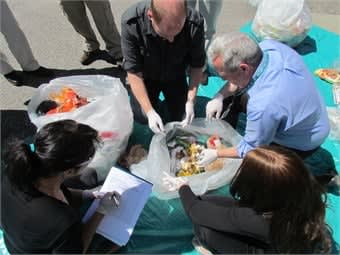
INIT’s management and employees not only supported the initiative, but provided suggestions, such as replacing trash cans with recycling bins.
Step 2: Partnering with TFC Recycling
The next step was to partner with a local recycling company. TFC Recycling is a leader in the collection, processing and marketing of recyclable materials and management of solid waste through innovative material recovery.
TFC offered a single stream recycling process and provided an economically friendly solution for non-recyclable trash. This was a bonus. All non-recyclable garbage would be taken to a Refuse Derived Fuel Plant. The facility treats and burns trash for the creation of energy - energy that powers the local naval shipyard.
Once the partnership was established, the recycling project turned into a zero waste strategy that was successfully kicked off on St. Patrick’s Day with a fun event. (Hey! It’s all about going green, right?)
Employees were introduced to TFC representatives who explained the certification process. INIT presented the large scale plan, and execution began with an enthusiastic start. Management also gave out branded reusable water bottles and solidified their commitment to the process.
Step 3: Trash Audit
Earning zero waste to landfill certification required ongoing, vigorous education and training. The first 6 months were spent educating employees about single stream recycling, and how to discard food items for composting. As part of the process, a mandatory trash audit was scheduled.
With rolled up sleeves and donned gloves, INIT management and staff alike spread out tarps, un-bagged trash, and got down to business. The TFC representative supplied a checklist while the team, including every management member, inspected and compared the bags of recyclables and trash.
The audit helped reveal some areas of improvement, and provided further incentive for refining the efforts.
In the months that followed, weak areas were strengthened, and the program was extended to incorporate INIT’s off-site US manufacturing facility as well as their remote warehouse.
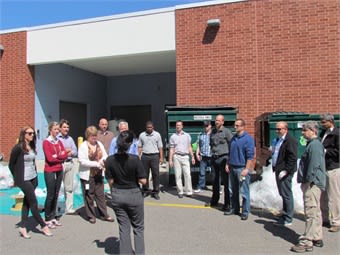
A TFC representative walked INIT’s employees through the zero-waste certification process.
Step 4: Certification
A little over a year after beginning the zero waste certification process, INIT successfully completed every task on the project checklist and realized their goal.
Every suggestion given by employees was implemented, some with modifications. For instance, light sensors were adjusted to accommodate longer periods of occupancy in offices before dimming, and new partners for battery and equipment disposals were identified.
Finally, during a special ceremony with all employees present, INIT received the Zero Waste to Landfill Certification presented by TFC Recycling.
Results
The most significant outcome of the company’s efforts was the 100% reduction of trash going to the regional landfill.
In addition, by the first year, 593 pounds of paper towel usage was eliminated through the use of hand dryers in the restrooms. The impact on the environment is calculated to be the equivalent of 11 trees, with an estimated decrease in the company’s carbon footprint of 69%.
Step 5: Ongoing and Future Efforts
The Zero Waste to Landfill Certification compelled INIT to become a business member signatory on the APTA Sustainability Commitment.
By 2017, INIT plans to build a new facility to house their growing business, two manufacturing firms and warehouses. Discussions are scheduled for the design and build out of a sustainable building.
Ann Derby is director of marketing and events with INIT, Innovations in Transportation.
More Technology

From Hardware to Digital Partner: Luminator Charts Its Next Chapter
CEO Magnus Friberg discusses Luminator’s shift toward becoming a digital partner, the growing importance of software and interoperability, and how AI can help agencies improve operations and passenger experience.
Read More →
Beyond the Checklist: A Structured Approach to Transit Maintenance
Reliability-Centered Maintenance helps transit agencies move beyond routine checklists to focus limited resources on the assets and failures that have the greatest impact on safety, reliability, and service.
Read More →
NJ TRANSIT Advances Bus Technology Upgrades Across Statewide Fleet
More than 1,500 buses now feature upgraded technology designed to improve arrival predictions and provide free Wi-Fi, with deployment expected to reach nearly 2,000 buses by the end of 2026.
Read More →

Building a Flexible Path to Transit Electrification
John Hroncich discusses BAE Systems’ modular and scalable approach, lessons learned from decades of real-world operations, and how agencies can identify electrification strategies that fit their fleets.
Read More →
Biz Briefs: Alstom Lands Canadian Contract, LYT to Supply California TSP, and More
In METRO's latest installment, we take a look at recent news from Complete Coach Works, Beep, FlixBus, and more partnerships making headlines across the transportation sector.
Read More →
From Legacy Silos to Conversational Intelligence
What if transit leaders could ask any operational question and get a trusted answer in seconds? Conversational AI is transforming how agencies use their data.
Read More →
USDOT Announces Rail Vehicle Replacement Grants, Chattanooga AV Shuttle Funding
More than $191 million in federal funding will help three transit agencies replace aging rail vehicles and support a new autonomous shuttle service in Chattanooga.
Read More →
Bus Tech Talk: Keeping Transit Technicians Ahead of the Technology Curve
LA Metro’s Obed Mejia discusses technician training, evolving maintenance technology, fleet replacement, and strategies for getting the most out of today’s transit fleets.
Read More →
Biz Briefs: RIPTA Unveils New Frontrunners, Clevland RTA Adds New Siemens, and More
In METRO's latest installment, we take a look at recent news from Siemens, Prevost, Dodge, and more partnerships making headlines across the transportation sector.
Read More →
Why Simulating Pedestrian Movement Has Become Essential for Modern Rail Stations
Pedestrian microsimulation is helping rail planners identify bottlenecks, test station designs, and prepare complex transit hubs for growing passenger volumes.
Read More →