



Innovative Operator Profile: Thriving in Katrina's Wake
Louisiana Coaches Trailways, Marrero, La.

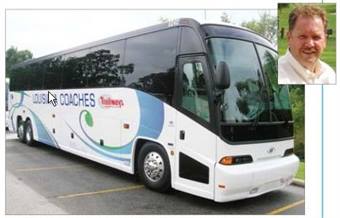
Some businesses never reopened after Hurricane Katrina and others are still struggling, but New Orleans-based Louisiana Coaches Trailways saw its best October ever last year.
A number of factors aided the company’s recovery. Deferred payments to creditors, including MCI, from which it had just received three new coaches, was key. So was vice president and general manager Louis Sanders ’ ability to act quickly to transfer his base of operations to Lafayette and conduct business via cell phones and the Internet.
Sanders let Trailways and the American Bus Association know as soon as possible that Louisiana Coaches was open for business. Then the emails started coming in. As most of his equipment had stayed in New Orleans, Sanders was in an ideal position to contract with a shipbuilder and an aero space company to shuttle displaced workers to sites within the city.
“That was the biggest challenge employers faced — getting their people back to work when their homes had been destroyed and they were scattered,” says Sanders, who kept his drivers busy doing just that. “We were as busy as we could be with the number of drivers we had,” he says. “We were running about two-thirds to three-quarters of the fleet with those two contracts alone.”
Since the beginning of this year, however, his business has shifted to shuttling construction workers, volunteers for Habitat for Humanity and politicians who are in New Orleans to view the devastation firsthand, as well as ship-to-airport shuttles for river cruise lines and, as an even more hopeful sign of life returning to normal, wedding parties.
Of course, it doesn’t hurt that many of Sanders’ former competitors are no longer in operation. “A couple of the largest operators lost their equipment in the hurricane,” he explains. “Because of our ability to hang on, we’re now No. 2 in this market.”
Sanders is also finding new revenue streams to tap. Whereas Louisiana Trailways’ sister company, Trips Unlimited, has targeted seniors, Sanders is now offering tour packages for 25- to 55-year-olds. “Senior-citizen tours have a different focus,” he says. “You can’t mix them with people in their 20s and 30s who want to attend a big music festival.”
Service charges, including those for fuel, are “a whole new revenue stream that customers understand and accept. Also, if a wedding party is going to pay a 20% gratuity to a limo driver, then why not to a bus driver?”
Sanders is thereby able to pay his drivers more without dipping into his profits. “The more you can pay your help, the better help you’ll get. And the grass doesn’t grow any greener than it does right here.”
Sanders speaks with the confidence of someone who has not only survived a difficult time, but has thrived in spite of it: “I don’t have to look out the window and see all our buses gone to know we’re making money. We command the highest rates, and we compete on the highest end of the scale. Pre-Katrina we were making $80 an hour per coach. Now we’re bringing in $100 an hour easy.”
AT A GLANCE
Motorcoaches: 19, 4 minibuses
Fleet mix: MCI
Employees:35
Services: Airport-to-ship shuttle, conventions, package tours
Service area: Primarily the New Orleans and Lafayette, La., metropolitan areas
Drivers:25
Annual mileage: 885,000
Year started: 1990
Vice president and GM: Louis Sanders (pictured)
More Motorcoach

METRO Opens Submissions for 2026 Motorcoach Awards
Nominations are now being accepted for METRO Magazine’s Operator of the Year and Innovative Operator of the Year awards.
Read More →
Biz Briefs: Alstom Lands Canadian Contract, LYT to Supply California TSP, and More
In METRO's latest installment, we take a look at recent news from Complete Coach Works, Beep, FlixBus, and more partnerships making headlines across the transportation sector.
Read More →
Biz Briefs: RIPTA Unveils New Frontrunners, Clevland RTA Adds New Siemens, and More
In METRO's latest installment, we take a look at recent news from Siemens, Prevost, Dodge, and more partnerships making headlines across the transportation sector.
Read More →
People Movement: Holly Arnold Joins Transdev and More
In this edition, we also cover recent appointments and announcements at Pace, CamTran, MCI, and more, showcasing the individuals helping to shape the future of transportation.
Read More →
ABA Report: Motorcoach Travel Generates $161.6B Economic Impact
The 2025 analysis finds motorcoach travel supported nearly 900,000 jobs and generated $28 billion in federal, state, and local taxes.
Read More →
CharterUP’s Armir Harris on Technology, AI, and the Future of Group Mobility
In a recent episode of METROspectives, CharterUP Founder/CEO Armir Harris discussed the company’s evolution from an online charter bus marketplace into a technology platform supporting public- and private-sector mobility and much more.
Read More →
People Movement: ABC Names John Walsh as Chief Commercial Officer
In this edition, METRO also covers recent appointments and announcements at the DART, STV, and more, showcasing the individuals helping to shape the future of transportation.
Read More →
From Surviving to Thriving: Building Stronger Transportation Organizations
Bus Business Consultants founder Brian Dickson shares lessons on leadership, organizational health, and creating options for long-term success in a changing transportation industry.
Read More →
Biz Briefs: Luminator Marks Milestone and More
From manufacturers and suppliers to transit agencies and motorcoach operators, these updates offer a snapshot of the projects, partnerships and business moves driving the industry forward.
Read More →
ABAF Study Reveals Growing Insurance Crisis for Motorcoach Operators
Preliminary findings show 98% of operators faced premium increases over the past five years, while shrinking insurer participation is putting added pressure on businesses and customers.
Read More →