



ioki Enters U.S. Market With Transit Planning, On-Demand Mobility Technology
European mobility technology company looks to bring network optimization, digital twins and integrated transit operations to U.S. agencies, with Georgetown University as its first customer.


With Georgetown University as its first U.S. customer, ioki aims to help transportation providers evaluate service changes through digital simulations while improving network planning and multimodal connections.
METRO
- European mobility technology company ioki enters the U.S. market, focusing on transit planning and on-demand mobility solutions.
- The company intends to offer services like network optimization, digital twins, and integrated transit operations to U.S. agencies.
- Georgetown University has become ioki's first customer in the United States.
*Summarized by AI
European mobility technology company ioki is expanding into the U.S. market, bringing its experience in on-demand transportation, transit network planning and digital mobility platforms to agencies seeking to manage service and costs amid constrained budgets.
The company, part of the BENTELER Group and formerly a subsidiary of Deutsche Bahn, has supported more than 200 mobility services serving approximately 10 million passengers and conducted network analyses through more than 230 planning projects. Its U.S. entry begins with Georgetown University, which is starting with the ioki Platform, a system designed to manage on-demand and scheduled transportation services.
Benjamin Pfeifer, ioki’s chief commercial officer, said the company sees an opportunity to help U.S. agencies evaluate their existing networks and determine how to deploy transportation resources more effectively.
“With BENTELER as our owner, we have the right setup to grow in the U.S. now,” Pfeifer said. ioki is a central building block of BENTELER Mobility’s mobility ecosystem for cities and authorities.
As Ioki prepares to expand its presence and discusses additional transit authorities, Pfeifer said the company recognizes that entering a new market requires understanding local agency needs and operating environments.
“We are new to this market, so I will not pretend to have lessons that we have not earned yet,” he said. “What I can say is that we come with a lot of respect for the way U.S. agencies work, and with the intention to listen first. Where we can contribute is our deep understanding of transit networks and the challenges of operators and authorities. ioki grew out of public transport, and we bring that experience together with our technology.”
Network Optimization the Center of Strategy
ioki initially focused on on-demand mobility services before expanding into broader transit planning and network optimization. That evolution reflected the company's recognition that service planning is central to determining whether a transportation offering can operate effectively.
“We started with on-demand services and recognized early on that planning decides whether a service works,” Pfeifer said. “That is why ioki Analytics became part of our work quickly.”
The company's analytics work initially focused on planning and optimizing on-demand services before expanding to entire transit networks. Today, Pfeifer said, helping agencies assess costs and optimize existing service is central to ioki's approach. The aim is to look across all modes, and to find the best balance between policy goals and operational planning
“At a time of tight budgets, our greatest value for agencies lies in cost and network optimization,” he said.
The company's approach helps agencies understand the consequences of potential service changes, including reductions made to address budget pressures. Rather than examining cost savings in isolation, ioki evaluates how different options could affect passengers and service quality.
“Wherever savings are needed, we look at what each option means for riders, so agencies can choose the least disruptive reduction if that is their goal,” Pfeifer said.
He added that transit agencies face similar fundamental questions in Europe and the U.S., even as the two markets differ in funding, procurement, and regulatory environments.
“Agencies want to reach more people with the budget they have, keep the cost per trip under control, and decide where on-demand adds value next to fixed routes,” he said.
ioki is continuing to learn how U.S. funding structures, procurement processes and regulations influence those decisions. Pfeifer said the company plans to bring its analytics portfolio to the American market, where it sees opportunities to help agencies compare service alternatives before committing resources.
Digital Twins Give Agencies a Way to Test Changes

A key component of ioki's analytics offering is mobility simulation and network analysis, which the company also describes using the term digital twin.
ioki
A key component of ioki's analytics offering is mobility simulation and network analysis, which the company also describes using the term digital twin. The technology creates a virtual representation of a transit network, allowing agencies to evaluate proposed changes before implementing them in real-world operations.
Through its Mobility Analytics and Consulting team, ioki builds models using passenger counts, existing network plans, local traffic data, and its own data warehouse.
Agencies can then use the models to examine potential route changes, new on-demand service zones, frequency adjustments or different vehicle types. The simulations estimate how each option could affect ridership, operating costs and service quality.
“A digital twin lets an agency try out a change in a virtual network before it touches the real one,” Pfeifer said.
He said the ability to evaluate alternatives in detail is particularly relevant to agencies facing financial constraints. Simulations can identify underused services, unmet passenger demand, and adjustments that could improve results.
“Limited funding makes it more important to know when and where each dollar has the most effect,” Pfeifer said. “A simulation shows which parts of the network are underused, where demand is not served, and which changes pay off.”
The analysis can extend to individual stops and specific time windows, rather than relying solely on network-wide averages. Agencies can compare potential outcomes, use the results to inform service changes, and explain those decisions to governing boards, elected officials, and the public.
The ioki Platform and ioki Analytics can be purchased together or separately, allowing agencies to select the solutions that fit their operational and planning needs.
Connecting Multimodal Transportation
Beyond network analysis, ioki's strategy centers on coordinating different transportation modes as parts of a connected system. Pfeifer said fixed-route transit, on-demand services and autonomous vehicles can serve complementary roles, depending on travel demand and operating conditions.
Fixed routes can handle major passenger flows, while on-demand services can serve areas and times when demand is less concentrated. Autonomous vehicles could eventually offer another way to operate both service types.
“I see them as parts of one network,” Pfeifer said. “Fixed routes carry the main flows, on-demand serves areas and times where demand is thinner, and autonomous vehicles will become another way to operate both.”
For agencies, the challenge is determining where and when each mode makes sense and ensuring that services are planned and dispatched together. ioki aims to support that coordination through its platform and analytics capabilities.
The company also integrates control technology from international partners working in autonomous driving into existing transit structures. Its analytics software can help agencies assess where autonomous vehicles and other service models may be appropriate.
“What matters for agencies is that all of it is planned and dispatched together,” Pfeifer said. “ioki works on that layer.”
As the company establishes itself in the U.S., its initial work with the first US clients will help it understand U.S. operating conditions while introducing services designed to help agencies evaluate their networks and coordinate evolving mobility services.
Quick Answers
The European mobility technology company ioki is entering the U.S. market.
*Summarized by AI
More Technology
Exploring AI's Role in the Future of Paratransit and On-Demand Transportation
Spare's Kristoffer Vik Hansen discusses evolving rider expectations, the challenges facing transit agencies, and how artificial intelligence could help improve paratransit and on-demand mobility services.

How Rally OurBus Connects Motorcoach Operators with Event Transportation Demand
The company's crowd-powered model uses passenger reservations to shape routes, determine capacity, and create new business opportunities for independent motorcoach operators.

What Transit Maintenance Facilities Should Know About Gas-Detection Placement
Proper gas-detector placement is critical to maintaining safety in transit maintenance facilities, requiring agencies to consider fleet fuel types, ventilation, shop operations, and ongoing equipment maintenance.
People Movement: Metrolink's Kettle Announces Retirement, Feakins to CEO at UZURV, and More
In this edition, we also cover recent appointments and announcements at King County Metro, SilverRide, and more, showcasing the individuals helping to shape the future of transportation.

Imagry, Endera Partner for Automated Buses, Luminator Teams with Avail, and More in Biz Briefs
In METRO's latest installment, we also take a look at recent news from RIDE, Alstom, and more partnerships making headlines across the transportation sector.
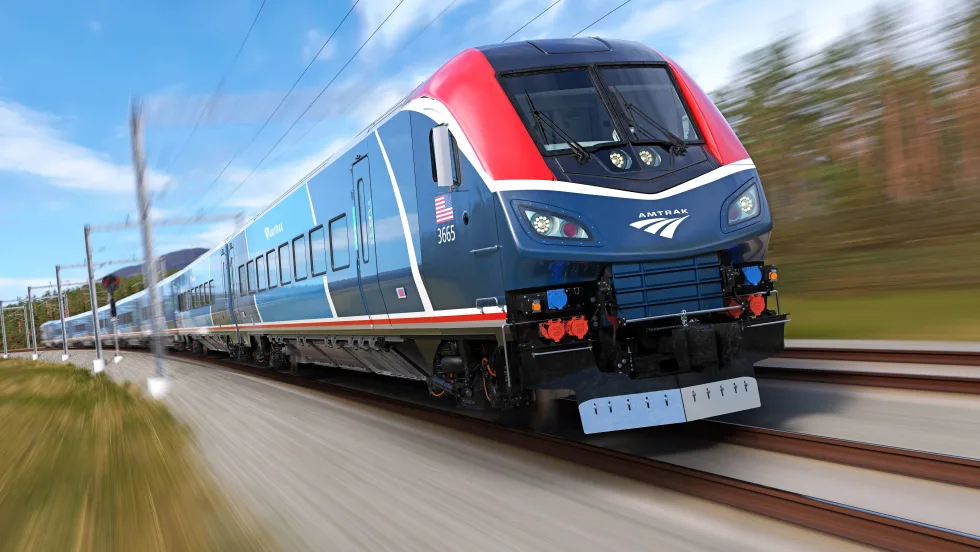
Amtrak Expands Airo Fleet with Eight Higher-Capacity Trainsets
The new 10-car trains, expected to enter service in 2031, will provide about 34% more seating capacity to meet growing demand on the Northeast Corridor.
Improving Transit Safety and Reliability Through AI
Hayden AI’s Chief Growth Officer, Charley Territo, discusses how AI-powered camera enforcement is helping transit agencies keep bus lanes and stops clear, improve accessibility, and move from pilot programs to full-scale deployments.

STraffic Expands North American Presence with Fare Collection Technology
John Moon, Associate Director, Product Strategy at STraffic, discusses the company's growth in North America, its efforts to reduce fare evasion, and more.

Laketran Cuts Fuel Costs, Boosts Efficiency with Propane-Powered Fleet
The Ohio transit agency is using propane-powered vehicles and on-site fueling infrastructure to cut fuel and maintenance costs while meeting growing demand for paratransit services.

Right-Sizing Rural Transit: Lessons from North Grenville’s On-Demand Model
A small municipality shows how flexible service, rider needs, and public accountability can expand mobility with limited resources.