



Right-Sizing Rural Transit: Lessons from North Grenville’s On-Demand Model
A small municipality shows how flexible service, rider needs, and public accountability can expand mobility with limited resources.

North Grenville’s NGtransit provides on-demand transportation throughout the rural Ontario municipality, connecting residents to jobs, healthcare, shopping, and other essential services.
Envisio/NGtransit
- North Grenville's on-demand model demonstrates how adaptable transit services can effectively meet the varying needs of rural riders.
- The initiative highlights the importance of understanding rider requirements to maximize limited transit resources.
- Public accountability plays a critical role in ensuring the success and sustainability of rural transit solutions.
*Summarized by AI
In a rural community without taxis, rideshare, or conventional public transit, mobility can determine whether residents can reach work, healthcare, groceries, and community life. That reality is what anchors NGtransit, an on-demand service launched in January 2024 in North Grenville, Ontario.
The Municipality is home to about 18,000 residents spread across 352 square kilometers (approximately 136 square miles) south of Ottawa. A traditional fixed-route system could have served parts of town but would not have reached many rural households. North Grenville’s answer was not to scale down a big-city model, but to design around its own geography, riders, and service constraints.
For Karen Humphries, the service means getting to errands, pharmacy trips, and volunteer work at a local hospice without driving. Without it, “I would be sitting at home,” Humphries said.
For Scott Elmore, NGtransit provides a lower-cost commute from Kemptville to Ottawa four to five days a week, replacing a drive that cost about $110 a week in gas, plus vehicle maintenance, with a $70 monthly transit pass. “They’ve really brought a service that this community’s really needed,” Elmore said.
NGtransit now operates seven days a week with small, accessible vehicles and ride optimization technology that groups shared trips in real time. Riders can book by phone, online, or through the Blaise app. Since launch, the service has completed more than 30,000 rides and maintained a 4.7-out-of-five passenger rating.
Practical Lessons from North Grenville
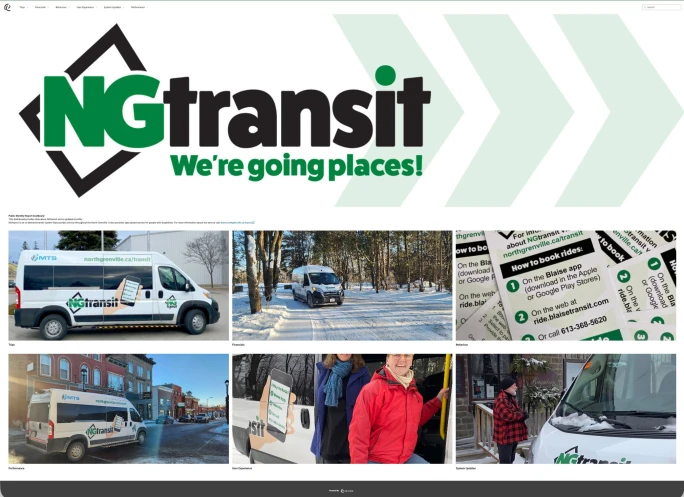
North Grenville uses ridership data, performance dashboards, and community feedback to continually improve NGtransit, offering lessons for other rural communities looking to expand mobility options.
Envisio/NGtransit
For other rural and small-system operators, North Grenville’s experience offers five practical lessons.
Start with the service area: North Grenville council members made one requirement clear from the start: the service needed to reach the whole municipality. That made on-demand transit the best fit for launch, allowing the service to follow actual demand rather than predetermined corridors.
Although North Grenville launched NGtransit as an on-demand service, municipal staff continue to monitor areas where demand may eventually support a fixed route. About 75% of trips now occur in the urban area, and the Municipality uses heat maps, trip distribution data, and boardings-per-hour metrics to monitor where demand is concentrating. One working threshold is five boardings per hour before considering fixed-route service in a specific area.
Match vehicles to the job: NGtransit operates with small, accessible vehicles rather than full-size buses, and that choice matters operationally. Smaller vehicles are easier to maneuver across a wide rural geography, less costly to operate, and more realistic to fill. Some can be driven with a standard license, which helps with driver availability and day-to-day flexibility.
Vehicle planning also requires being realistic about local conditions. North Grenville has explored hybrid and electric options, but long service days and cold-weather range concerns create practical challenges. The Municipality’s buses can operate 14-hour shifts, and replacing that capacity with electric vehicles would likely require additional vehicles and charging time.
Keep technology accessible: Ride optimization technology helps NGtransit schedule trips, group riders, and generate performance data. But in a rural community, technology cannot assume every rider can use an app.
That is why NGtransit offers multiple booking channels: app, web, and phone. The system serves riders with mobility needs, students, commuters, older adults, and residents traveling to medical appointments, the grocery store, work, or social services.
North Grenville has adjusted boarding times, introduced ticket bundles, and partnered with community organizations to help residents facing greater transportation barriers.
Use data to keep improving: When NGtransit launched in 2024, it was designed to learn and adapt.
North Grenville tracks ridership, rejection rates, average daily rides, urban-versus-rural demand, booking behavior, on-time performance, passenger satisfaction, and trip patterns, including why some riders may have stopped using the service.
That data has supported changes, including extending hours until 10 p.m. Monday through Saturday, adjusting accessibility practices, introducing ticket bundles, and adding an Ottawa commuter connection. In its first six months, the commuter service recorded 1,233 riders and added daytime local capacity.
Show the work:Rural transit economics can look challenging when viewed through an urban lens. NGtransit’s fare recovery is about 9%, and the cost per ride is approximately $45. The Municipality is candid about these numbers because they are part of the conversation about public value.
North Grenville maintains a public-facing performance dashboard and a separate council-facing dashboard. These give residents and council members different levels of visibility into service use. This transparency helps answer questions about cost, demonstrate demand, and support funding conversations.
In June 2025, North Grenville received $719,000 through Ontario’s Transit Investment Fund to support the Ottawa commuter connection and expand the existing on-demand service.
A Model that Evolves
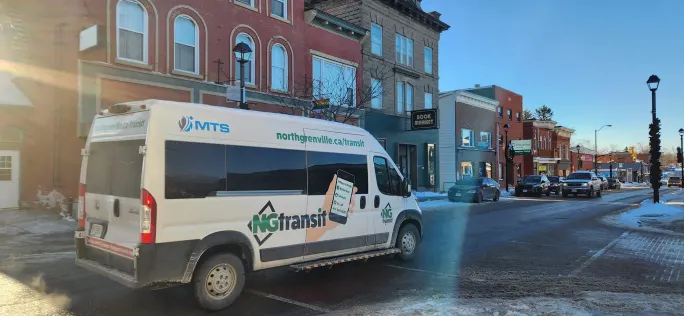
Using small, accessible vehicles and ride optimization technology, NGtransit has completed more than 30,000 rides since launching in January 2024, earning a 4.7-out-of-five passenger satisfaction rating.
Envisio/NGtransit
Small systems do not need to imitate large ones to be effective. They need to understand their riders, measure what matters, and build a service that can evolve with the community.
“I think it’s wonderful that the service exists,” Humphries said. “I can contribute to my community more.”
About the Author: Hillary Geneau is director of corporate strategy for the Municipality of North Grenville, Ontario; and Mary King is senior content writer for Envisio, a strategy and performance management software company serving public-sector organizations.
Quick Answers
The primary goal is to expand mobility within the municipality by using flexible services to meet rider needs while managing limited resources effectively.
*Summarized by AI
More New Mobility

ENC Unveils ZAVIR Medium-Duty Electric Shuttle
The new ZAVIR brand targets shuttle and paratransit operations with battery-electric and range-extended electric vehicle options.
Read More →
Public Transit Conference Returning to GFX in 2027, Call for Papers Now Open
The Call for Papers is now open, allowing transit agency professionals and industry experts to help shape the PTC educational program by submitting session ideas for consideration.
Read More →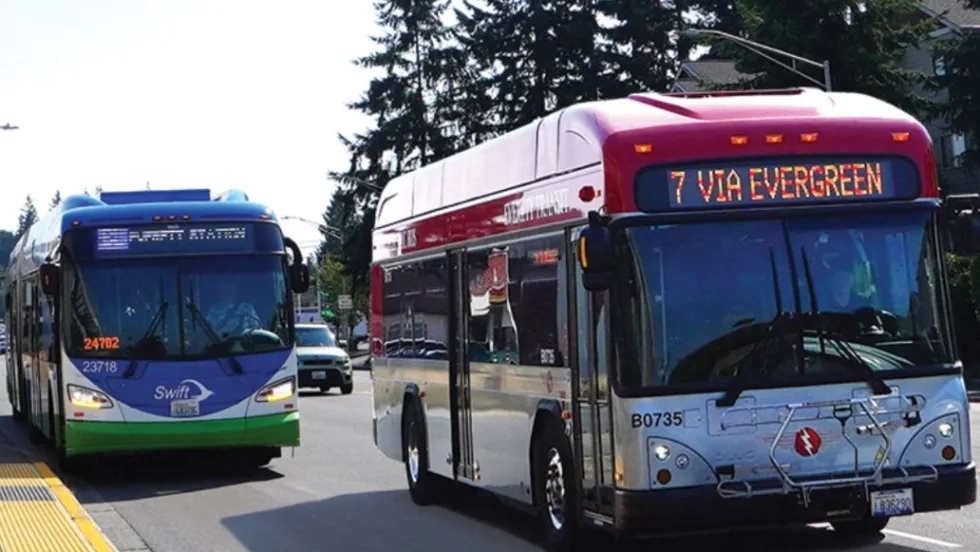
Everett Transit, Community Transit Outline Consolidation Agreement
The proposed agreement calls for a 50% increase in bus service in Everett, a new microtransit zone, continued paratransit service, and the transfer of Everett Transit operations to Community Transit.
Read More →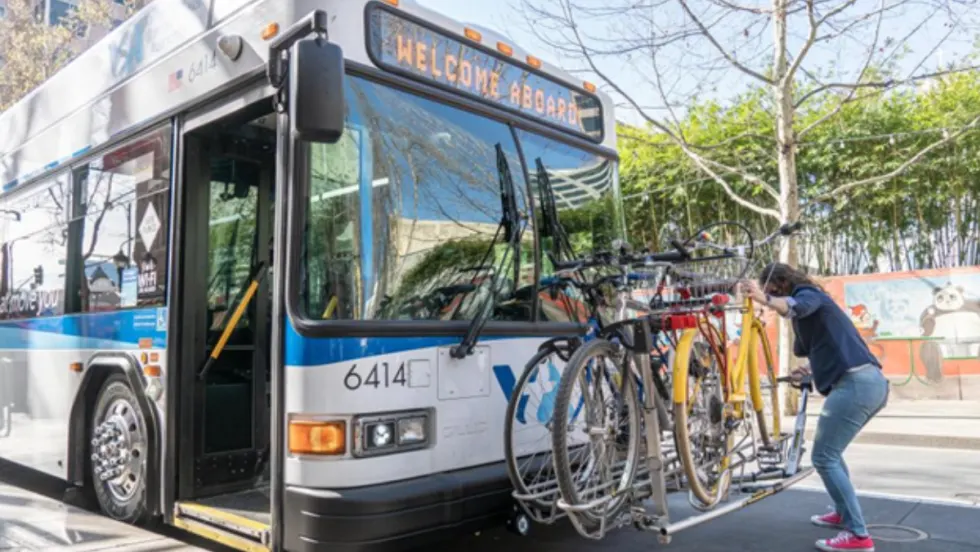
What Multimodal Data Can Tell Transit Agencies About Rider Demand
See how bike-on-bus data is giving transit agencies new insight into rider demand, capacity constraints, and gaps in first- and last-mile connections.
Read More →
From Hardware to Digital Partner: Luminator Charts Its Next Chapter
CEO Magnus Friberg discusses Luminator’s shift toward becoming a digital partner, the growing importance of software and interoperability, and how AI can help agencies improve operations and passenger experience.
Read More →
Biz Briefs: Alstom Lands Canadian Contract, LYT to Supply California TSP, and More
In METRO's latest installment, we take a look at recent news from Complete Coach Works, Beep, FlixBus, and more partnerships making headlines across the transportation sector.
Read More →
CharterUP’s Armir Harris on Technology, AI, and the Future of Group Mobility
In a recent episode of METROspectives, CharterUP Founder/CEO Armir Harris discussed the company’s evolution from an online charter bus marketplace into a technology platform supporting public- and private-sector mobility and much more.
Read More →
Jacksonville’s NAVI Project Charts a New Course for Autonomous Public Transportation
Through its NAVI program, JTA is showing how autonomous vehicles, intelligent infrastructure, and coordinated operations can work together to deliver everyday public transportation.
Read More →
Biz Briefs: Luminator Marks Milestone and More
From manufacturers and suppliers to transit agencies and motorcoach operators, these updates offer a snapshot of the projects, partnerships and business moves driving the industry forward.
Read More →
New Tricks for Old Bureaucracies: Joshua Schank on Making Transit Innovation Stick
Former LA Metro Chief Innovation Officer Joshua Schank discusses why good ideas aren't enough, how transit agencies can overcome resistance to change, and why today's challenges demand more innovation.
Read More →