



What Transit Maintenance Facilities Should Know About Gas-Detection Placement
Proper gas-detector placement is critical to maintaining safety in transit maintenance facilities, requiring agencies to consider fleet fuel types, ventilation, shop operations, and ongoing equipment maintenance.
Proper gas-detector placement in transit maintenance facilities helps ensure potential leaks are identified while accounting for vehicle fuel types, ventilation, and daily shop operations.
METRO
- Proper gas-detector placement is vital for ensuring the safety in transit maintenance facilities.
- Agencies need to consider fleet fuel types, ventilation systems, and shop operations when placing gas detectors.
- Regular equipment maintenance is key to sustaining effective gas-detection systems in these facilities.
*Summarized by AI
The location of a gas detector in a transit maintenance shop matters more than many realize. Placing it in the wrong spot can cause the detector to miss a leak or provide inaccurate readings.
Its location should reflect where leaking gas is most likely to travel, not what’s easier or most convenient during installation. Before ordering equipment or planning the installation, transit managers should consider a few questions:
- Which vehicles will be entering the building?
- What work will technicians perform? Where could gas collect?
- What should happen if a detector responds?
The answers will give the design team a realistic picture of the shop and help shape a gas-detection plan around day-to-day operations.
The plan also needs to account for how maintenance staff will test and service the equipment once it’s installed. The detector layout must work when buses are in the bays, and the shop is active.
Start With the Fleet and the Work
Start the plan with a written inventory of the types of fuel used by the fleet and the work assigned to each bay, including vehicles that often visit and any planned fleet changes. For example, if an agency plans to introduce natural gas buses, it should review the facility before those vehicles arrive.
The U.S. Department of Energy's CNG maintenance-facility handbook explains that protection requirements depend in part on the type of repair work being performed. Fuel-system work raises different design questions than tire changes or other routine service. The handbook also recommends early coordination with the authority having jurisdiction, or AHJ, which reviews and approves the project. [1]
For natural gas facilities, DOE identifies NFPA 30A for maintenance and repair, NFPA 52 for vehicle fuel systems and fueling facilities, and NFPA 88A for parking garages. [3] Each has a different scope. The design team and AHJ should confirm which adopted codes and editions apply, including any local amendments.
The design team also needs an accurate picture of what happens in the shop. Note where buses wait, where technicians work, and which spaces are multipurpose. If certain bays are reserved for specific vehicles or repairs, explain how those are handled.
Exhaust needs its own assessment. Critical Environment Technologies identifies carbon monoxide and nitrogen dioxide as gases of concern in enclosed transit vehicle areas. [2] Consider those hazards alongside the fleet's fuels. A methane detector by itself doesn’t tell the facility whether exhaust conditions are acceptable.
Match Placement to Gas Behavior
Gas density is a good starting point for placement. Methane and hydrogen are lighter than air, so detection plans commonly include locations above likely release points. Meanwhile, propane is heavier than air, so detection plans often focus on lower areas. [5]
Liquefied natural gas requires extra attention. DOE explains that cold vapor released by LNG can initially remain near the ground, then behave differently as it warms. The agency recommends detection near both ground and ceiling levels in areas where LNG or LNG vehicles are stored. [3] That means a facility should distinguish between CNG and LNG during planning, even though both involve natural gas.
But density isn’t the only factor. Air circulation, ventilation, obstructions, and the conditions surrounding a release can also affect where gas travels. [4]
It also helps to document what each sensor does. Is it there to detect a release near a fuel component, watch an area where gas could collect, or measure conditions in an occupied work zone? Writing down that purpose gives the team something concrete to refer to if the layout changes later.
Walk the Facility Before Finalizing the Layout
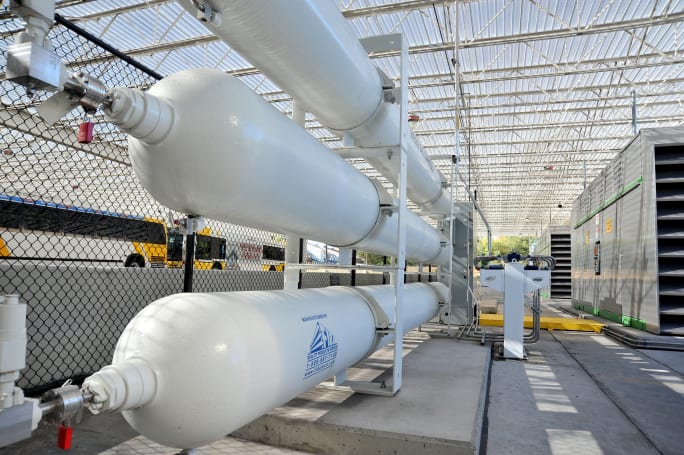
As transit fleets evolve, maintenance facilities must regularly review gas-detection systems to ensure sensors remain accessible, properly positioned, and effective in identifying potential hazards.
DART
Before the layout is finalized, walk the shop with the people who use it. Bring the drawings, but compare them with what is actually in the building. Look at parked vehicles, service platforms, storage areas, and any equipment that may have been added since the drawings were prepared.
Also identify potential release points, areas where gas may collect, and locations where a release could threaten people or equipment.
The same review should reflect how transit vehicles actually occupy the space. Look at a bay with a bus in its normal service position and compare the vehicle’s fuel components with the proposed sensing point. Equipment or structures between the two can affect the path gas takes, so the drawing should be checked against real site conditions.
Also, don’t overlook nearby occupied spaces. DOE’s CNG handbook discusses the possibility of gas migrating into connected areas and the need to address those paths. [1] Offices and mezzanines should be in the facility review even when repairs don’t happen there.
Evaluate Ventilation During Normal Shop Conditions
Ventilation in a building also changes the path gas takes to a detector. Air currents can redirect escaping gas, while strong airflow can dilute it, so account for that. [4]
The mechanical designer should be able to explain how air moves through each monitored area. Review the conditions expected during normal occupied shifts, overnight vehicle storage, and other operating modes tied to the hazard assessment. Bay-door positions should be part of that discussion as well.
One useful question is: What does this sensor monitor when the doors are closed, and the ventilation system is running as designed? Then ask what changes when a bus is parked in the bay. Questions like these connect the placement drawing to the conditions staff sees every day.
DOE-sponsored research on indoor hydrogen sensor placement has used gas-dispersion modeling to study detection strategies in ventilated enclosures. [4] That research shows why gas movement needs to be analyzed for the actual space. For a hydrogen project, the design team should be able to explain why each detector is where it is.
Keep a record of the ventilation assumptions used in the design. If the agency later replaces fans, adds partitions, or changes how bay doors are operated, the team will have a useful baseline for reviewing the detector layout.
Keep Sensors Accessible and Protected
The best place for detecting gas isn’t always easy to reach. But maintenance access should be discussed before installation. Staff will need room to apply test gas, inspect the sensor, and replace parts. For overhead locations, identify the required access equipment and work area before the first service visit.
Environmental conditions also affect equipment selection. Check the detector’s specified temperature and humidity limits and keep the sensing area clear so surrounding air can reach the sensor.
In a transit shop, check proposed locations for exposure to washing, airborne debris, and movement from vehicles or tools. Ask the manufacturer which protective accessories are appropriate for the selected unit. Any guard or cover still needs to let surrounding air reach the sensor.
Also keep each sensing point accessible. A routine shop inspection can include a quick check for storage, temporary equipment, or other objects that may have blocked a detector. Staff should know how to report on a damaged unit or a newly obstructed location.
Connect Detection to a Defined Response

Transit agencies should evaluate maintenance bay layouts, airflow patterns, and potential gas accumulation areas when developing detection systems to protect employees and equipment.
Photo: GILLIG
Detector placement is only one part of the larger safety system. DOE’s CNG handbook describes detection controls that can warn personnel, activate ventilation, and reduce potential ignition sources. [1] The exact response depends on the approved facility design.
Those response actions should be defined before commissioning. Project documents should show which alarm serves each area, which equipment responds, and what staff are expected to do. The design team should also confirm that settings and control actions follow locally adopted requirements and the equipment instructions.
Keep the equipment functions separate when planning a flame and gas detector system. Gas sensors monitor specified gases, while flame detectors look for signs of combustion. They don't have the same placement needs, and one device doesn’t automatically cover the other hazard.
During testing, the project team should demonstrate the full response, not just test the detector. At handoff, staff shouldn’t have to guess what an alarm means. The assigned employees should be able to identify the affected area and follow the approved response. Review the alarm information and procedures with the people who will use them.
Review Placement When the Shop Changes
The detector layout should stay with the facility’s operating records. Keep the approved drawings, equipment instructions, test records, and explanations of sensor locations available to maintenance and safety staff.
Build a review step into changes that could affect the original design. A new fuel type, revised bay assignment, relocated storage, or ventilation change can all alter how gas moves through the shop. Before a detector is moved, the proposed location should go back to the qualified design team.
Testing and calibration should follow the selected equipment’s instructions and applicable requirements. Keep results tied to each detector's identifier so staff can track service history and follow up on faults.
Good gas-detection placement starts with an accurate picture of the fleet, the work, and the building itself. Transit managers can support the process by documenting shop operations, asking why sensors are located where they are, and planning for maintenance access. When the agency checks the layout against real facility conditions and revisits it as those conditions change, it is better prepared to detect a hazard and respond as intended.
About the Author: Jodi Downing, a seasoned professional with a remarkable 15-year tenure, serves as Director of Communications at R.C. Systems Inc.
Sources
1. U.S. Department of Energy: Compressed Natural Gas Vehicle Maintenance Facility Modification Handbook
https://afdc.energy.gov/files/u/publication/cng_maintenance_facility_mod.pdf
2. Critical Environment Technologies: Gas Detection for Transit Facilities
https://www.critical-environment.com/applications/transit-facilities
3. U.S. Department of Energy: Natural Gas Fuel Safety
https://afdc.energy.gov/vehicles/natural-gas-safety
4. U.S. Department of Energy: Guidance for Indoor Hydrogen Sensor Placement
5. Occupational Safety and Health Administration: Flammable Gases: Physical Properties and Hazards
Quick Answers
Gas-detector placement is crucial in transit maintenance facilities to ensure safety by detecting harmful gases early, preventing potential hazards, and maintaining a safe working environment for personnel.
*Summarized by AI
More Security and Safety

RTC Reports Nearly 29% Drop in Transit Operator Assaults
The Las Vegas agency credits expanded security measures, training, and technology for improved safety in FY 2026, while security officers have helped save 19 lives through overdose-response efforts.
Read More →
Improving Transit Safety and Reliability Through AI
Hayden AI’s Chief Growth Officer, Charley Territo, discusses how AI-powered camera enforcement is helping transit agencies keep bus lanes and stops clear, improve accessibility, and move from pilot programs to full-scale deployments.
Read More →
Study: Denver RTD Generates $2.1 Billion in Annual Economic Activity
An economic impact study finds the agency supports approximately 17,500 jobs, delivers $1.6 billion in annual community and mobility benefits, and generates $2.42 in economic value for every dollar invested.
Read More →
SEPTA Launches 'Reach' Program to Connect Vulnerable Individuals with Support
The initiative deploys specialists throughout Philadelphia’s transit system to connect individuals with housing, healthcare, and social services while addressing safety and quality-of-life concerns.
Read More →
LADOT to Launch Bus-Mounted Camera Enforcement on DASH Buses
The program will begin with a 60-day warning period before citations are issued in January 2027, joining similar efforts across Southern California to improve bus reliability, safety, and accessibility.
Read More →
New York MTA Launches Historic $1.9B Signal, Track Modernization Project
Funded in part by congestion pricing revenue, the project will replace nearly century-old signals along the A and C lines in Brooklyn and Queens.
Read More →
CSA Group Releases Climate Resilience Standard for Transit, Passenger Rail
Developed with support from the Standards Council of Canada, CSA D700 guides assessing climate-related risks and planning adaptation measures for transit and passenger rail systems.
Read More →
San Diego MTS Approves New Fare Evasion Penalty Program
The new administrative process will move eligible violations out of the criminal court system, cap penalties at $125, and provide flexible payment options for riders.
Read More →
RTC of Southern Nevada Reports 29% Drop in Transit Operator Assaults
The agency credits expanded security measures, employee training, and technology investments for improvements in transit safety, while security officers have responded to 19 suspected overdoses since July.
Read More →
Public Transit Conference Returning to GFX in 2027, Call for Papers Now Open
The Call for Papers is now open, allowing transit agency professionals and industry experts to help shape the PTC educational program by submitting session ideas for consideration.
Read More →