



Is Your Garage Ready for Alt Fuels?
Figuring total cost-of-ownership — including infrastructure, garaging and maintenance — is an important step in choosing the right fuel and can help you avoid unforeseen expenses.
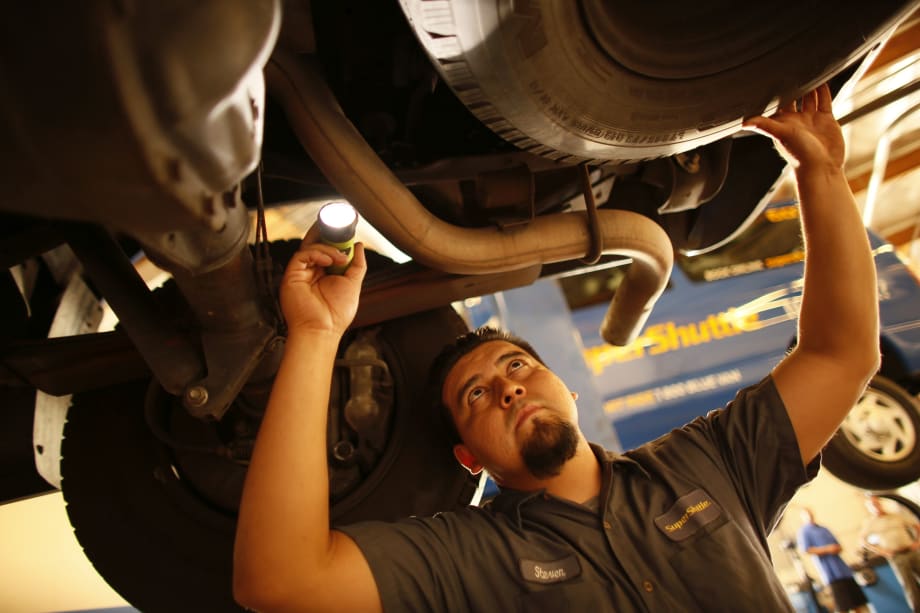
Maintenance technician working on a propane autogas van.
Maintenance technician working on a propane autogas van.
This story appears in METRO's BusOps supplement. To view the digital edition of the full issue, click here.
Overlooking costs and regulations past the pump is one of the most common mistakes fleets make when switching to alternative fuels. Figuring total cost-of-ownership — including infrastructure, garaging and maintenance — is an important step in choosing the right fuel and can help you avoid unforeseen expenses. If you’re modifying a repair garage or building new to suit your green fleet, here are the top questions to ask before you begin.
1) Is your facility code compliant?
The first step in readying a garage for alternative fuels is making sure your facility is compliant with general code requirements for traditional liquid fuels. Since propane autogas has similar requirements to gasoline and diesel, facilities operating within these regulations can easily accommodate propane-autogas-fueled vehicles without modifications for ventilation, gas detection or electrical requirements.
Secondly, a review of national codes and regional compliance codes with your local authority having jurisdiction is recommended before making any changes. The two codes fleets need to review for propane-autogas-fueled vehicles can be referenced online at www.nfpa.org.
2) Will the facility provide minor repairs, major repairs or both?
Repair garages are placed in two different categories for code purposes. A major repair garage is where actions, such as engine overhauls, painting, bodywork and motor vehicle fuel tank drainage, are performed. A minor garage is used for basic tasks, such as tune-ups, parts replacement and fluid changes.
Major and minor repairs may take place in independent facilities or can be performed in separate areas within the same building. A review of compliance to existing local and national codes for liquid fuels is recommended before making modifications to facilities. With propane autogas, there are no additional requirements for minor and major repair facilities — they are the same as gasoline and diesel requirements.
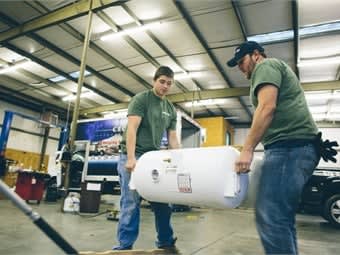
Carrying a propane tank in the facility.
3) Will fuel be stored or dispensed inside the facility?
If you’re building new or planning to store and dispense alternative fuels at an existing facility, you may need to review code requirements in the jurisdiction where your facility is located. Propane autogas performs safely under all operating conditions when properly stored, dispensed and used, and indoor refueling with propane autogas is permitted in facilities that comply with NFPA 58 and NFPA 30A and jurisdictional codes.
If you store propane autogas outside the repair facility, rules may apply for where aboveground tanks can be stored and placed. For instance, aboveground propane autogas storage tanks must be separated by at least 15 feet from devices that dispense liquefied or gaseous motor vehicle fuels. If the facility also has aboveground CNG or LNG tanks, the propane autogas tank must be separated by at least 20 feet from those fuels. No matter the alternative fuel, it’s always good to have physical and security protection in accordance with local laws.
For more information about the benefits of alternative fuels and resources on how fleets can save money and reduce emissions with propane autogas, visit propane.com.
Mike Taylor is the director of autogas business development for the Propane Education & Research Council.
More Technology

From Hardware to Digital Partner: Luminator Charts Its Next Chapter
CEO Magnus Friberg discusses Luminator’s shift toward becoming a digital partner, the growing importance of software and interoperability, and how AI can help agencies improve operations and passenger experience.
Read More →
Beyond the Checklist: A Structured Approach to Transit Maintenance
Reliability-Centered Maintenance helps transit agencies move beyond routine checklists to focus limited resources on the assets and failures that have the greatest impact on safety, reliability, and service.
Read More →
NJ TRANSIT Advances Bus Technology Upgrades Across Statewide Fleet
More than 1,500 buses now feature upgraded technology designed to improve arrival predictions and provide free Wi-Fi, with deployment expected to reach nearly 2,000 buses by the end of 2026.
Read More →

Building a Flexible Path to Transit Electrification
John Hroncich discusses BAE Systems’ modular and scalable approach, lessons learned from decades of real-world operations, and how agencies can identify electrification strategies that fit their fleets.
Read More →
Biz Briefs: Alstom Lands Canadian Contract, LYT to Supply California TSP, and More
In METRO's latest installment, we take a look at recent news from Complete Coach Works, Beep, FlixBus, and more partnerships making headlines across the transportation sector.
Read More →
From Legacy Silos to Conversational Intelligence
What if transit leaders could ask any operational question and get a trusted answer in seconds? Conversational AI is transforming how agencies use their data.
Read More →
USDOT Announces Rail Vehicle Replacement Grants, Chattanooga AV Shuttle Funding
More than $191 million in federal funding will help three transit agencies replace aging rail vehicles and support a new autonomous shuttle service in Chattanooga.
Read More →
Bus Tech Talk: Keeping Transit Technicians Ahead of the Technology Curve
LA Metro’s Obed Mejia discusses technician training, evolving maintenance technology, fleet replacement, and strategies for getting the most out of today’s transit fleets.
Read More →
Biz Briefs: RIPTA Unveils New Frontrunners, Clevland RTA Adds New Siemens, and More
In METRO's latest installment, we take a look at recent news from Siemens, Prevost, Dodge, and more partnerships making headlines across the transportation sector.
Read More →
Why Simulating Pedestrian Movement Has Become Essential for Modern Rail Stations
Pedestrian microsimulation is helping rail planners identify bottlenecks, test station designs, and prepare complex transit hubs for growing passenger volumes.
Read More →