



It takes a rider to know a rider
The best way to understand unfamiliar transit is to find out what you can and then ask those familiar with it.
For me, a transit marketing dude in Miami for APTA’s Marketing and Communications Workshop, it was nothing less than a profound professional decision: I would take public transit the 50 miles from Miami to Del Ray Beach to visit my relatives instead of renting a car. But the big question remained: Would I actually get there? The best way to understand unfamiliar transit is to find out what you can and then ask those familiar with it. The Miami-Dade Website and transit map were terrific, but a recently-arrived visitor does not always have a map and I did not get details from the Web because my side-trip was unplanned. Since I couldn’t figure out how to get on a bus from the airport, I got a cab. Later, a friendly student showed me the multimodal Omni transit center across the street from my hotel. It was well signed and fairly easy to figure out, and I went to Miami Beach on busy and frequent buses. Speaking Spanish with the two Cheech and Chong-like fellows I met on the bus was a big help, but going to Del Ray would not be so easy or direct. A transit information booth was permanently closed, and another information booth was really an uninviting police substation. When I finally understood the route by asking around enough, I went to see my relatives whose ages in years are about that of the Miami air temperature. The elevated track and driverless Metro system was better than an e-ticket at Disney World, and for only a quarter it easily got me to the Miami urban rail system station at Government Center. I entered a large, complex and confusing lobby area wondering where to go and how and where to buy fares. The guard I asked to help me agreed that my questions (very typical ones he reassured me) could be addressed simply, easily and cheaply, if the system managers tried to think and act like first-time customers. I rode to Tri-Rail’s new, clean and pleasant station. It was well signed and marked and, as with any linear system, it was easy to ride. It was only on the way back, however, that I learned I could have transferred for free between the two rail systems. A simple course reversal that afternoon got me back to Miami. The Tri-Rail ride back was only upset by the dozen customers staring at me when I opened my eyes as the guard stood over me saying, “Sir! Your ticket!” That’s better than falling asleep at the wheel of a rental car on the highway. Due to the tropical environment, the multilingual, cosmopolitan and even more than usually eccentric transit customers, Miami rides can be most interesting. Although I was pleasantly surprised that three different modes were integrated enough to take me on a nearly 100-mile round-trip on a Sunday for only $7, it still took nearly most of my precious vacation day when I could have been catching rays on the beach. Some folks may not think twice about spending $75 vs. $7 to go somewhere, but I do. Questions to ask If a transit marketing specialist finds a system to be complex and challenging, what about the average new customer? Why should it be up to the customer to decide how to figure it out? How can transit systems make it easier, especially in cities that are known for tourism? While Miami-Dade’s Website offered much of the information needed for the journey, not all riders have access to the Internet. The same level of information offered online should be available at all other public places. It’s more than a little ironic that our conference did not include a local transit familiarization tour. Transit marketing folks can learn more about what does work, can work or should work just by trying different systems. The systems were efficient, clean and secure, but it should be easier to figure them out. Miami Beach runs cool and quiet (almost too quiet) electric buses, but just try and find a schedule! And while I heard of a “Night Owl” bus running between the beach and downtown, nobody could tell me about scheduled arrivals although everybody knew it came once per hour. Would that information be good enough for you? Lessons to be learned
Think and act like a new customer or a tourist to see if you are making it as easy as possible.
Sometimes only an outsider can help assess these needs.
Train all transit personnel, security guards and tourist destinations in helping customers, and solicit and heed their advice.
Never underestimate the ability of existing customers to help new customers.
Don’t wait for new customers to ask you or come to you. Our job is to go out and show them who we are and what we can do for them.
Time may equal money to some folks, but not to everyone, especially with rising gas prices.
More Management
People Movement: Connectpoint Expands Leadership Team, Stadler Names New Group CEO, and More
In this edition, we also spotlight recent personnel moves at Burns, UZURV, and more, highlighting the people taking on new roles across the transportation industry.
Read More →
More Than a Summer Job: Building the Next Generation of Transit Talent
The Delaware River Port Authority and PATCO have transformed their internship program into a hands-on professional development experience that introduces students to the breadth of transportation careers — and creates a pipeline for future employees.
Read More →
LA Metro Board Awards 220 Battery-Electric Bus Contract to ENC
The contract, which is the largest base award of battery-electric buses by a U.S. transit agency, will be built in Southern California, sustaining good jobs as LA prepares to welcome the world in 2028
Read More →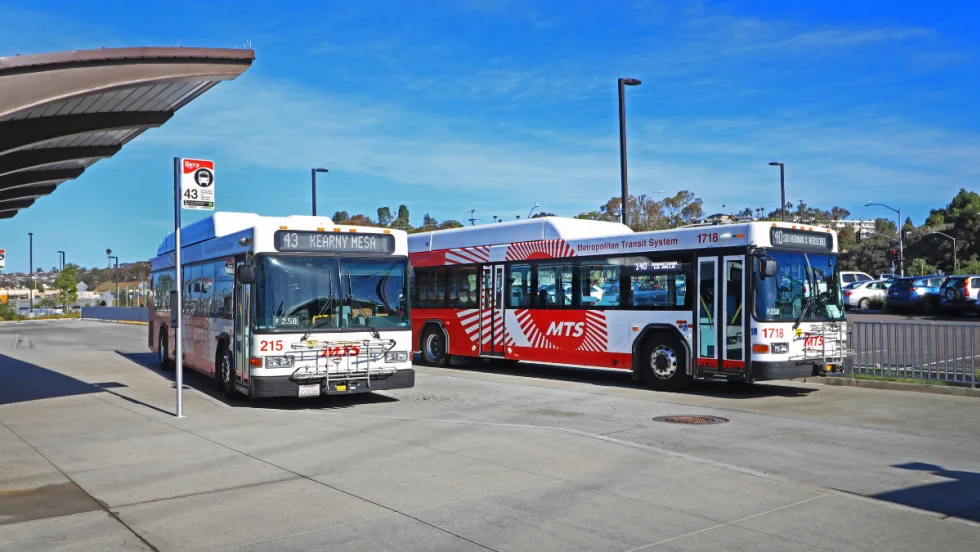
What’s Behind San Diego MTS’s Award-Winning Transit Strategy
Named one of APTA’s 2026 Outstanding Public Transportation Systems with 50 million or more annual passenger trips, California’s San Diego Metropolitan Transit System points to gains in ridership, safety, technology, and reliability as foundations of its success.
Read More →
Public Transit Conference Returning to GFX in 2027, Call for Papers Now Open
The Call for Papers is now open, allowing transit agency professionals and industry experts to help shape the PTC educational program by submitting session ideas for consideration.
Read More →
Indian River Transit’s Community-Focused Approach Earns National Recognition
Named APTA’s 2026 Outstanding Public Transportation System in its size category, Florida’s Indian River County transit system continues to grow ridership through fare-free service and a focus on evolving community needs.
Read More →
ENC Lands MATA Contract and More in Biz Briefs
In this edition of Biz Briefs, we spotlight the latest developments shaping the future of mobility.
Read More →
From Surviving to Thriving: Building Stronger Transportation Organizations
Bus Business Consultants founder Brian Dickson shares lessons on leadership, organizational health, and creating options for long-term success in a changing transportation industry.
Read More →
Everett Transit, Community Transit Outline Consolidation Agreement
The proposed agreement calls for a 50% increase in bus service in Everett, a new microtransit zone, continued paratransit service, and the transfer of Everett Transit operations to Community Transit.
Read More →
Strada360’s Steve Lassey on Turning Transit Data Into Better Decisions
From breaking down data silos to preparing for AI, Strada360 CEO Steve Lassey discusses how transit agencies can use technology to improve operations, customer information, and long-term decision-making.
Read More →