



Keeping Your Coach Clean Puts a Gloss on Your Bottom Line
Your customers form impressions about your service based on several factors — including the cleanliness of the interior. How and why coach operators can take great pains to keep their equipment in mint condition.

Fairly or not, passengers commonly base their opinions of a transit or coach operation on the cleanliness of the vehicles carrying them. To discriminating customers, a littered floor indicates shoddy engine maintenance, and dirty windows suggest a disregard for safety.
The obvious antidote for such associations is a rigorous — and constant — cleaning and maintenance program to ensure that everything within the passengers’ view and reach looks good and works properly. These efforts, however, are neither cheap nor easy.
“The most expensive thing we do is daily cleaning after each run,” says John Leding, president of Pacific Monarch in Monterey, Calif. “The nature of the run will determine the level of cleaning we perform. If a bus was on a dinner run at night, for example, and scheduled for an airport transfer the next morning, we probably wouldn’t give it the full treatment. But if that unit had hauled fans to a Giants )game at SBC Park, it would need a thorough cleaning before going back into service.”
Like a number of fleet operators, Leding tries to make the process as efficient as possible. He’s installed a central vacuum, with a 70-foot hose, in the wash bay so workers can clean a coach’s interior and exterior simultaneously. He also tries to limit food debris and stains by asking groups of younger riders to dine outside, at a restaurant or other suitable location. “If you just let them walk on with anything, you’ll soon have french fries in the seats and ketchup everywhere,” he says. “But if you have rules in place ahead of time, most people will respect that. I always say, ‘We’re not a rolling cafeteria.’”
Keeping up with repairs
Leding is equally particular about keeping up with interior repairs. He asks drivers to document anything that needs attention at the end of a run. “Whether it’s a burned out reading lamp or a broken handle or a malfunctioning back rest, we want to know about it right away so the repairs can be made,” he says.
This attention to detail also includes seat cushions. “Our front aisle seats get the most wear because people are always moving past them or sliding across them,” Leding says. “So we rotate those cushions to the rear of the vehicle and put them in a window position. It’s important to have the best looking seats in the front rows because they’re at eye level as people are boarding the coach.”
Sandy Follis, national sales manager for Sardo Bus and Coach Upholstery, understands the impact of attractive seating. She says seats are the single biggest contributor to a vehicle’s interior appearance. Follis spends her days educating customers about fabrics and patterns, helping them choose the right covers for their particular needs.
“As a reupholstering company, we’ll get anything a customer wants,” Follis says, “but we really try to stay with the more basic designs that appeal to the most people.” She encourages others to do the same.
Follis says fabric patterns change with some regularity. She suggests that coach and transit operators always investigate the expected lifespan of a design. “It’s really sad when someone spends all that money for a new vehicle the same year that the manufacturer discontinues the interior’s fabric pattern,” she says. This can be a problem when the driver’s seat, usually the first to fade and wear, needs to be recovered.
Restoring the seats
Sardo, one of several companies specializing in industrial seat restoration, sews the covers it sells, then installs them at the customers’ facilities. Buyers may do the installation themselves, but Follis advises against this. “At least with older units, we usually need to replace most or all of the foam in the bottom cushions,” she says. “Our people know how to do that and make it look good.”
Ray Robbins, owner of H&R Tours in Boonville, N.C., is a recent Sardo customer. He hired the company to re-cover 57 seats in a 1998 Prevost. He says the cost of installation, roughly $1,000, was money well spent. “The crew arrived at 7 a.m. and left about 11 hours later,” he says. “While they were here, there was no talking or laughing or joking around. They just worked. Then, before leaving, these guys cleaned the coach. It looked brand new.”
Robbins tries to maintain that new look in all six of his coaches for as long as possible, cleaning them after each run and prohibiting certain drinks and food onboard.
“We don’t allow any canned drinks, grape juice or ice cream,” he says. Water in screw-top bottles and orange and apple juice are acceptable.
Kids will be, well, kids
That hasn’t been the case for Steve Pritchett, owner of Pacific Comfort Bus Lines in Medford, Ore. About 70% of his runs — and nearly 100% of his interior damage — are school related. “Some of these kids will intentionally cut a seat,” he says. “Yet it’s nearly impossible to get paid for that. I’ve had athletic coaches come in and inspect damage left by their teams, but school officials have never called and offered to turn in a claim to their insurance company.” He says junior high students seem to be the worst offenders.
Vandalism is always disheartening, but it’s especially irksome to coach operators like Pritchett who place a high value on vehicle appearance. “We pretty much detail our buses after every trip,” he says. “We mop and wash and wax.” Pinesol is used to sanitize the floors, Febreze to freshen the air and Windex to clean the glass.
Patrick Smith, purchasing agent at Gray Lines of Seattle, would agree with Pritchett’s cleaning standards, but probably not his choice of products. Smith is a big fan of Zep, manufacturer of a wide range of chemicals and solutions. “Zep covers it all for us,” Smith says.
Some riders might not fully appreciate all of the effort that goes into coach and transit aesthetic maintenance, in the same way phone and electric customers don’t marvel when those services function properly. Still, most coach operators would agree that the endeavor is critical for ensuring a good “riding experience,” which, after a trip, is an operation’s best sales tool.
More Management

Public Transit Conference Returning to GFX in 2027, Call for Papers Now Open
The Call for Papers is now open, allowing transit agency professionals and industry experts to help shape the PTC educational program by submitting session ideas for consideration.
Read More →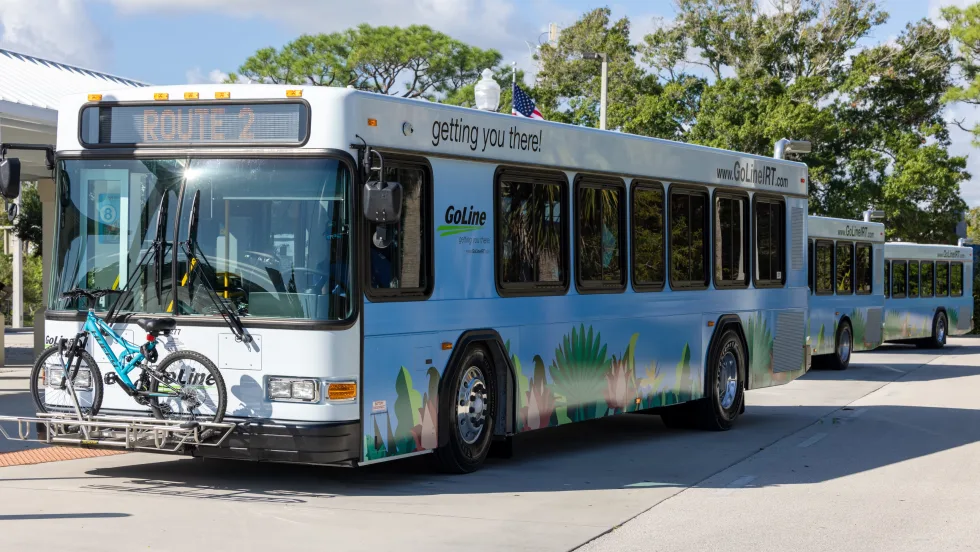
Indian River Transit’s Community-Focused Approach Earns National Recognition
Named APTA’s 2026 Outstanding Public Transportation System in its size category, Florida’s Indian River County transit system continues to grow ridership through fare-free service and a focus on evolving community needs.
Read More →
ENC Lands MATA Contract and More in Biz Briefs
In this edition of Biz Briefs, we spotlight the latest developments shaping the future of mobility.
Read More →

From Surviving to Thriving: Building Stronger Transportation Organizations
Bus Business Consultants founder Brian Dickson shares lessons on leadership, organizational health, and creating options for long-term success in a changing transportation industry.
Read More →
Everett Transit, Community Transit Outline Consolidation Agreement
The proposed agreement calls for a 50% increase in bus service in Everett, a new microtransit zone, continued paratransit service, and the transfer of Everett Transit operations to Community Transit.
Read More →
Strada360’s Steve Lassey on Turning Transit Data Into Better Decisions
From breaking down data silos to preparing for AI, Strada360 CEO Steve Lassey discusses how transit agencies can use technology to improve operations, customer information, and long-term decision-making.
Read More →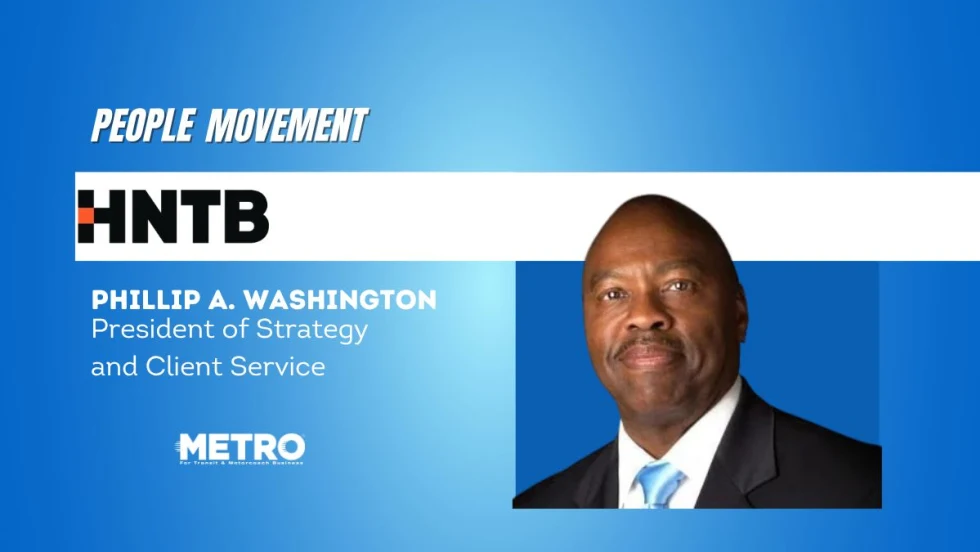
People Movement: Phil Washington Joins HNTB, Denver RTD Launches CEO Search, and More
In this edition, we also spotlight recent personnel moves at STV, the Eno Center for Transportation, and more, highlighting the people taking on new roles across the transportation industry.
Read More →
SEPTA Details Accelerate Vision for Transit System
The plan outlines investments in trolley modernization, new Metro and Regional Rail vehicles, accessible stations, and more frequent bus and rail service.
Read More →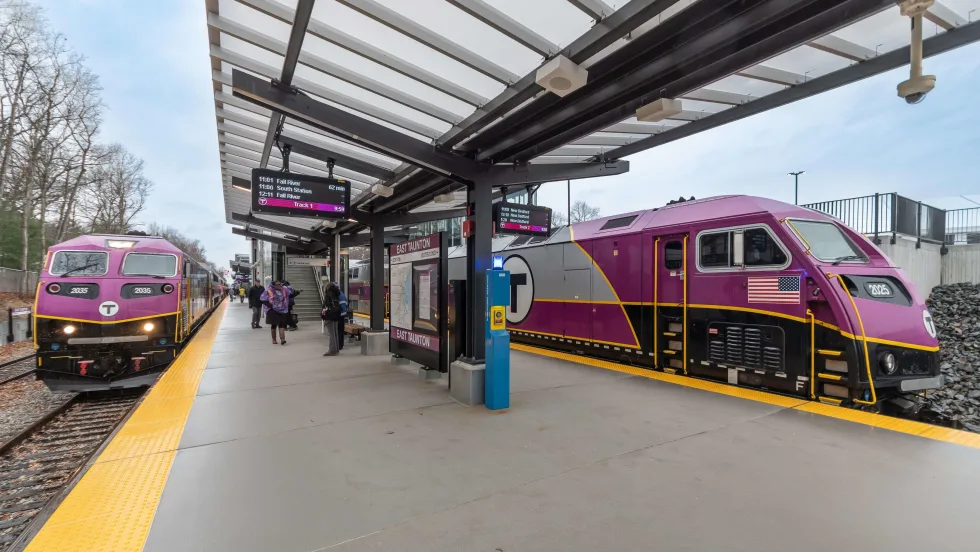
FTA Ends Direct Oversight of MBTA Safety Actions
The federal agency closed its remaining special directive to the Massachusetts Department of Public Utilities following a safety review that began in 2022.
Read More →
Report: Transit Bus Manufacturing Supports 34,100 Jobs, $5.1B in GDP
The “Buses Mean Business” report examines the transit bus manufacturing industry’s economic footprint, supply chain, and rising demand for vehicle replacements.
Read More →