



Leaving unruly teens behind
In cities where large numbers of students ride the transit bus to school, transportation agencies and schools need to work together to ensure the safety of bus stops.
Teenagers acting like, well, teenagers is often not a good thing, especially when they’ve flocked together to wait for the local transit bus after a long day in school. They’re prone to seemingly random acts of stupidity, like running into a busy street and waving their arms at motorists or throwing things at passing vehicles. I seem to recall that we used to think that was funny. But this type of behavior almost got three people killed, albeit indirectly, on Sept. 9. On that day, a nearly empty transit bus operated by the Los Angeles County Metropolitan Transportation Authority (MTA) approached a scheduled stop but left without taking on the dozens of high school students waiting to board. It seems the bus driver was concerned about the unruly behavior of some of the students and decided it was unsafe to allow them to get on the bus. Minutes later, three alleged gang members drove up and fired shots at the students, injuring three, including one who was left paralyzed from the waist down. The assailants reportedly were trying to kill a rival gang member who was among those waiting for the bus. The blame game Following the incident, officials at the nearby high school criticized the bus driver for failing to stop and load the students. Under MTA policy, however, bus drivers have the discretion to bypass stops when they believe their safety or the safety of their passengers might be jeopardized. You have to wonder if this was the first time this group of students was passed by. If the behavior problem was ongoing, what corrective steps were taken by the Los Angeles Unified School District, local law enforcement or MTA police? At the very least, the high school should be trying to determine if similar outbursts of disruptive behavior are occurring at other transit bus stops. Meanwhile, the MTA should be relaying to all schools any types of situations that could be addressed through school intervention. To its credit, the MTA has convened a panel of law enforcement and school district officials to examine its policy allowing bus drivers to bypass stops. New approach in Beantown In Boston, where more than 25,000 public and private school students use the Massachusetts Bay Transportation Authority (MBTA) system to get to and from school, similar outbursts of teen unruliness have led to the creation of the Stop Watch program. Stop Watch is a collaborative effort among MBTA police, Boston Public Schools police, the Boston Police Department, the Suffolk County District Attorney and the Department of Youth Services to ensure the safety of students and other patrons using public transit during school hours. “Many students would make transit stations their playgrounds after school,” said Lt. Detective Thomas McCarthy of the MBTA Police Department. “In recent years we had a zero-tolerance policy, but that failed miserably.” Arresting students did not stem the tide of disorderly behavior. The Stop Watch program, rolled out this school year, encourages law enforcement agencies to pool their resources to “stop and watch” the behavior of young people going to and from school using the transit system. McCarthy said that students acting in an inappropriate manner are identified by the participating agencies without intrusive police contact. The behavior is then dealt with through the schools or parents or it’s referred to another agency. “So far, it seems to be working,” McCarthy said. Although it’s easy to say “teens will be teens,” allowing a predictably disruptive situation to continue at a bus stop or rail station is both unwise and dangerous. Boston’s Stop Watch program deserves credit for trying a new approach.
More Management

LA Metro Board Awards 220 Battery-Electric Bus Contract to ENC
The contract, which is the largest base award of battery-electric buses by a U.S. transit agency, will be built in Southern California, sustaining good jobs as LA prepares to welcome the world in 2028
Read More →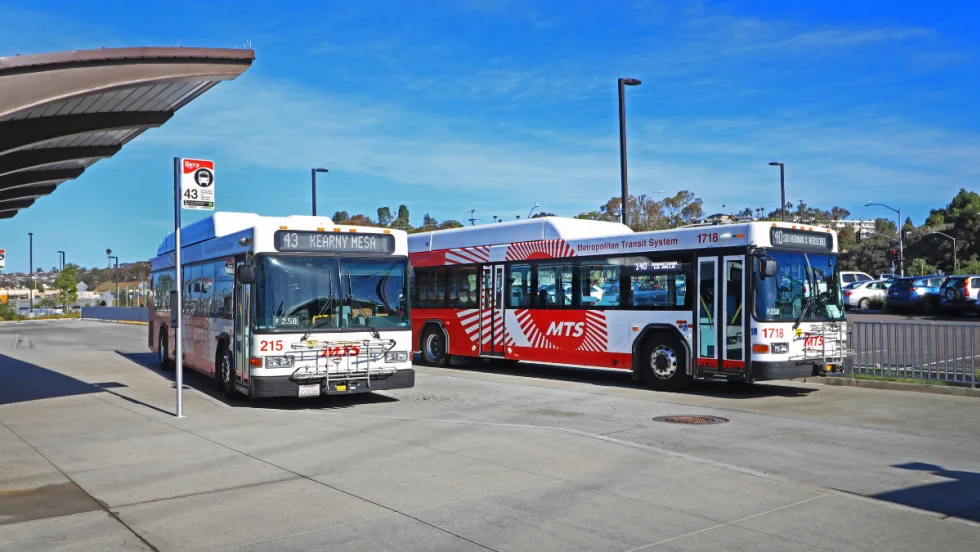
What’s Behind San Diego MTS’s Award-Winning Transit Strategy
Named one of APTA’s 2026 Outstanding Public Transportation Systems with 50 million or more annual passenger trips, California’s San Diego Metropolitan Transit System points to gains in ridership, safety, technology, and reliability as foundations of its success.
Read More →
Public Transit Conference Returning to GFX in 2027, Call for Papers Now Open
The Call for Papers is now open, allowing transit agency professionals and industry experts to help shape the PTC educational program by submitting session ideas for consideration.
Read More →
Indian River Transit’s Community-Focused Approach Earns National Recognition
Named APTA’s 2026 Outstanding Public Transportation System in its size category, Florida’s Indian River County transit system continues to grow ridership through fare-free service and a focus on evolving community needs.
Read More →
ENC Lands MATA Contract and More in Biz Briefs
In this edition of Biz Briefs, we spotlight the latest developments shaping the future of mobility.
Read More →
From Surviving to Thriving: Building Stronger Transportation Organizations
Bus Business Consultants founder Brian Dickson shares lessons on leadership, organizational health, and creating options for long-term success in a changing transportation industry.
Read More →
Everett Transit, Community Transit Outline Consolidation Agreement
The proposed agreement calls for a 50% increase in bus service in Everett, a new microtransit zone, continued paratransit service, and the transfer of Everett Transit operations to Community Transit.
Read More →
Strada360’s Steve Lassey on Turning Transit Data Into Better Decisions
From breaking down data silos to preparing for AI, Strada360 CEO Steve Lassey discusses how transit agencies can use technology to improve operations, customer information, and long-term decision-making.
Read More →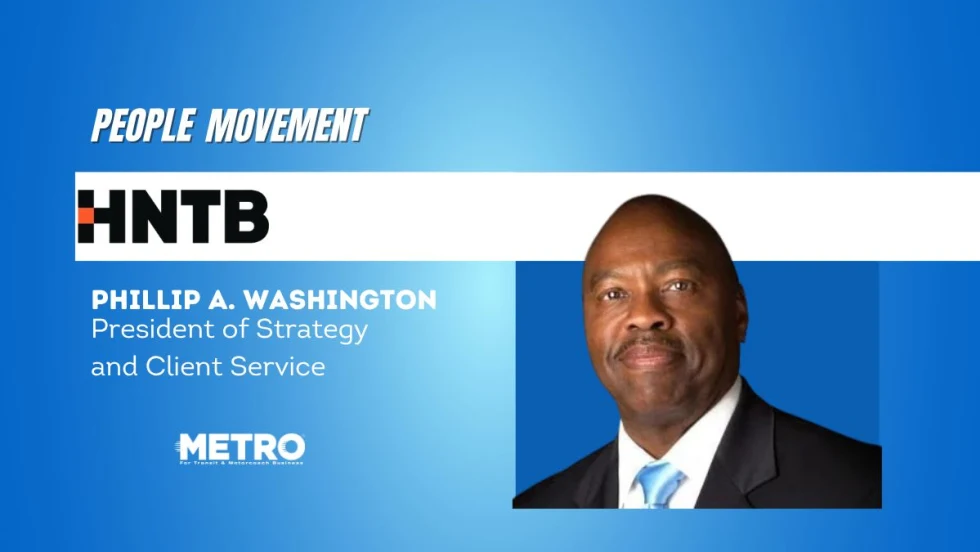
People Movement: Phil Washington Joins HNTB, Denver RTD Launches CEO Search, and More
In this edition, we also spotlight recent personnel moves at STV, the Eno Center for Transportation, and more, highlighting the people taking on new roles across the transportation industry.
Read More →
SEPTA Details Accelerate Vision for Transit System
The plan outlines investments in trolley modernization, new Metro and Regional Rail vehicles, accessible stations, and more frequent bus and rail service.
Read More →