



Light Rail Renaissance Burnishes Pittsburgh's 'Most Livable' Reputation
In the Steel City, a light rail revival that began in the mid-1980s is accelerating with an ambitious plan to effectively double the size of the system in the next two years.
Billed as one of America's most livable cities, Pittsburgh is developing a light rail transit system to ensure that its population has a transportation program that will match the city's reputation. After many years of decline, the renaissance of light rail transit in Pittsburgh began in the mid-1980s with the reconstruction and modernization of turn-of-the-century trolley lines. The "T," as the Port Authority of Allegheny County's light rail system is known, spans 25.2 miles from south of the city to downtown Pittsburgh. Completed in 1987, it includes 13 high-level and more than 50 low-level boarding stations. Service operates on three routes that carry about 27,000 passengers daily. Major expansion project To meet the needs of a shifting ridership base, expansion and modernization of the light rail system is in the works, with the Port Authority expecting to double the size of the system in the next couple of years. Key to the renovation, called the Stage II Light Rail Transit Priority Project, is the reconstruction of the Overbrook Line (see map), which has been out of service since 1993 because of extreme deterioration of the track bed, along with other safety concerns. Other components of the $386 million project, due to be completed by November 2003, include:
Purchase of 28 new light rail vehicles and mid-life remanufacture of the existing 55-vehicle fleet.
Modernization and expansion of the Operations Control Center at South Hills Village.
Installation of improved overhead wire system, new cab signals and gated crossings.
Construction of eight new stations and renovations to existing stations.
Renovation and expansion of five park-and-ride sites, resulting in 2,400 additional parking spaces. New vehicles are being designed and manufactured by Spanish car builder CAF. The propulsion system will use IGBT inverters, and each truck will have two AC motors. That enhances maintainability and reliability vis-a-vis the mono-motor technology on existing vehicles. The Port Authority initiated preliminary engineering on an extension to the "T." The North Shore Connector Project will add three stations to serve the development on Pittsburgh's North Shore and a new convention center. The North Shore Connector will travel under the Allegheny River to North Shore destinations, and a new section of subway will be built from the existing Steel Plaza Subway Station to the convention center, which is under construction. The alignments for the connector will allow for potential future expansions of the system to the east and north. Improving performance As the face of the world economy changed during the 1990s, so, too, did the landscape of Pittsburgh. Many of the steel mills and smokestack industries that dotted the region's rivers no longer exist. Pittsburgh rebounded from the de-industrialization of the 1970s and '80s to become an attractive place for businesses to locate and consistently ranks as one of America's most livable cities. One of the most significant changes brought on by the shift to a service-based economy is that the populace no longer works a standard 9-to-5 or 8-to-4 workday. Consequently, off-peak ridership on the Port Authority system has increased, particularly during before and after the traditional morning and evening rush hours and on weekends. The authority is responding to such changes by creatively managing its workforce. Over the past year, the rail operations department implemented around-the-clock personnel coverage, requiring a more significant portion of its employees to work off-peak hours. That provided more evenly balanced shifts and improved incident response time. Another key to improving the efficiency and effectiveness of the rail system was getting a better handle on system performance. The Port Authority implemented a number of computerized tools to monitor and measure performance. The existing rail operations computer system was replaced with one that provides timely information on system reliability to the subsystem level. Tracking system reliability down to that level allows the Port Authority to perform detailed trend analyses and prevent costly system delays and failures. It also allows managers to provide feedback to rail operators on the maintenance activities conducted after they report in-service defects. The benefits of that are twofold: the feedback can help instructors in training operators on vehicle diagnostics, and it assures the operators that their concerns and input are taken seriously. These developments improved service availability and reliability at a critical time in the rail system's development. The present schedule calls for a peak requirement of 48 vehicles. Rail vehicle maintenance meets that objective virtually 100% of the time. That compares very favorably to an average vehicle availability in 1997 and 1998 of 42 light rail vehicles. Fleet reliability improved A more aggressive preventive maintenance campaign also has steadily improved light rail fleet reliability in recent years despite the fact that the vehicles surpassed their mid-life age. That is particularly impressive considering the harsh operating environment found on the system. "I've been to more than 50 light rail systems worldwide and Pittsburgh unquestionably has the most challenging operating environment that I've ever seen from a track geometry standpoint and with its steep gradients," says Joseph Marie, director of rail service delivery. To compound the challenge, the Port Authority is completely remanufacturing its fleet of 55 light rail vehicles, which requires that five vehicles be removed from the property at any given time during the overhaul. That leaves only 50 vehicles available for service when the remanufacture effort is in full swing, presenting a major test for the rail operations team. Recent availability figures are encouraging. None of the changes were simple. The long history of rail transit in Pittsburgh presented inherent barriers to change, which were not possible without cooperation between labor and management. Another key was challenging the organization to develop practices and policies based not on history but on serving its customers more efficiently and reliably. Finding the right mix The Port Authority's rail project is an extension of CEO Paul Skoutelas' Six-Point Action Plan aimed at making it the nation's premier public transportation agency. When he was named CEO in 1997, Skoutelas directed the agency to, among other things, develop a customer-focused, market-driven approach to doing business, develop partnerships, increase community support and build on its reputation as an effective organization. As part of that effort, the Port Authority enhanced its existing staff with transit professionals from around the country. The intent is to bring different perspectives and experiences to the management team. The development paid off, as the management team adopted a framework of moving forward with positive change while respecting institutional history. Says Skoutelas, "It is vital that we have the right mix of people with different backgrounds and expertise as well as career employees who possess a strong understanding of the organization's dynamics." ******************************************* Pittsburgh's storied rail past Pittsburgh has a long history of rail transportation that dates back to the early 1900s. The Pittsburgh Railways Company (PRC) was formed in 1902 and operated the Steel City's vast electric trolley network for 62 years. The PRC's system included a wide variety of street-running city routes and two interurban lines. All of these routes climbed the undulating terrain and rugged landscape with gradients in excess of 12%. In the late 1940s, Pittsburgh and the surrounding region were served by one of the most extensive PCC (Presidents Conference Committee) fleets in the nation: In 1949, the PRC operated 666 PCC cars that carried more than one half million people daily. The Port Authority of Allegheny County took over the operation of trolley service in March 1964, following the passage of state legislation enabling the consolidation of 33 private transit carriers, including the PRC and 32 independent bus and inclined plane companies. In the early 1960s, Pittsburgh had the largest surviving streetcar system in the United States. In 1964, after years of decline and neglect, the Port Authority of Allegheny County acquired the system. In the early 1970s, only a handful of streetcar routes remained.
More Rail
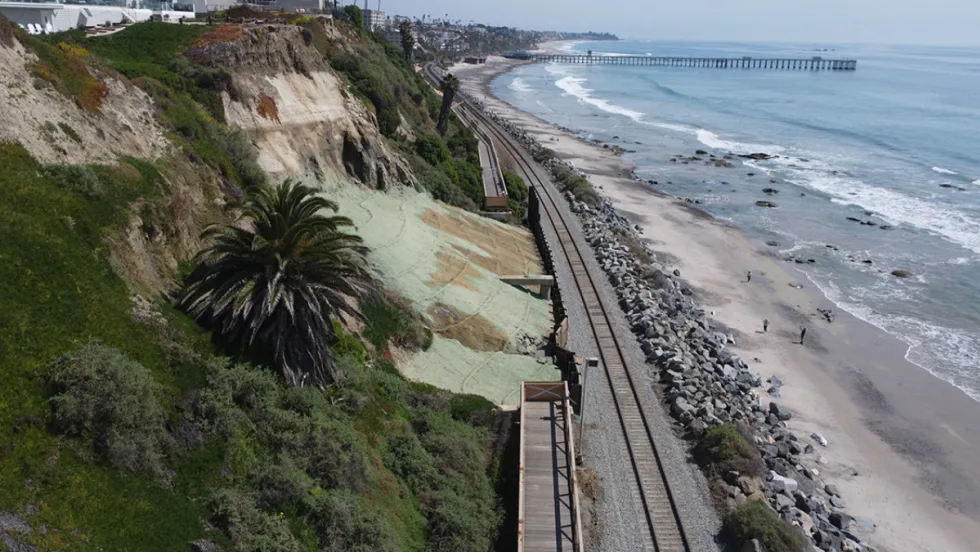
OCTA Declares Emergency to Protect Rail Corridor From Coastal Erosion
The California agency is accelerating shoreline protection and plans to place approximately 690,000 cubic yards of sand along the San Clemente coast to protect a key passenger and freight rail link.
Read More →
More Than a Summer Job: Building the Next Generation of Transit Talent
The Delaware River Port Authority and PATCO have transformed their internship program into a hands-on professional development experience that introduces students to the breadth of transportation careers — and creates a pipeline for future employees.
Read More →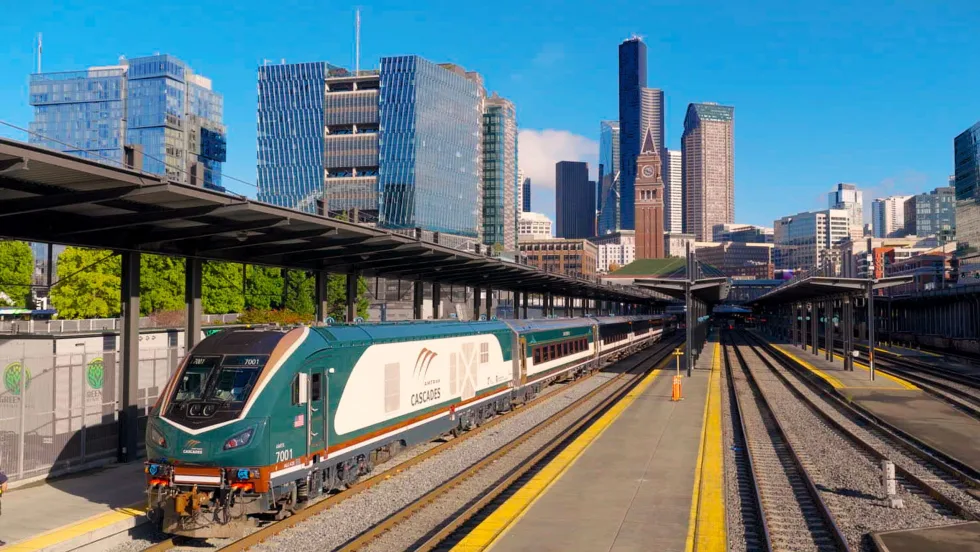
Airo Trains Make Their Amtrak Cascades Debut in the Pacific Northwest
Effective immediately, two cutting-edge Airo trainsets will join the Amtrak Cascades route, operating four daily trips between Vancouver, B.C., Seattle, Portland, and Eugene, Oregon, marking the first introduction of Airo trains into passenger service anywhere in the country.
Read More →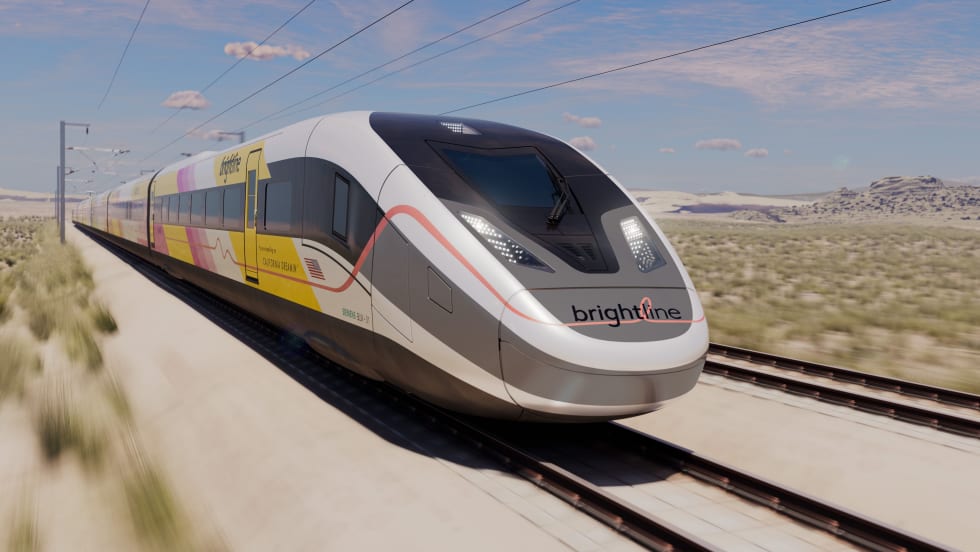
Florida's Brightline Announces Financial Restructuring
Brightline Florida says train operations will continue as normal as certain parent entities enter Chapter 11 and financial stakeholders provide $490 million in new long-term capital.
Read More →
ENC Lands MATA Contract and More in Biz Briefs
In this edition of Biz Briefs, we spotlight the latest developments shaping the future of mobility.
Read More →
Strada360’s Steve Lassey on Turning Transit Data Into Better Decisions
From breaking down data silos to preparing for AI, Strada360 CEO Steve Lassey discusses how transit agencies can use technology to improve operations, customer information, and long-term decision-making.
Read More →
SEPTA Details Accelerate Vision for Transit System
The plan outlines investments in trolley modernization, new Metro and Regional Rail vehicles, accessible stations, and more frequent bus and rail service.
Read More →
FTA Ends Direct Oversight of MBTA Safety Actions
The federal agency closed its remaining special directive to the Massachusetts Department of Public Utilities following a safety review that began in 2022.
Read More →
Amtrak, CN Reach Agreements to Strengthen Passenger Rail Service, Safety
The agreement resolves a more than decade-long proceeding before the Surface Transportation Board concerning the terms and conditions for Amtrak services, such as the City of New Orleans, Illini/Saluki, and Wolverine.
Read More →
New York MTA Advances Final Contract for Second Avenue Subway Expansion
Contract Four is the largest in the Second Avenue Subway Phase 2 project and includes construction of station infrastructure, tracks, and signals for the subway expansion, MTA officials said. Work on Contract Four will begin in 2027.
Read More →