



Metra Celebrates 100 Years of Electric Rail, Looks to the Future
The event was also a celebration of recent reforms to public transportation in the Chicago area, changes that could be as transformative in the future as the major civic achievement a century ago, said officials.

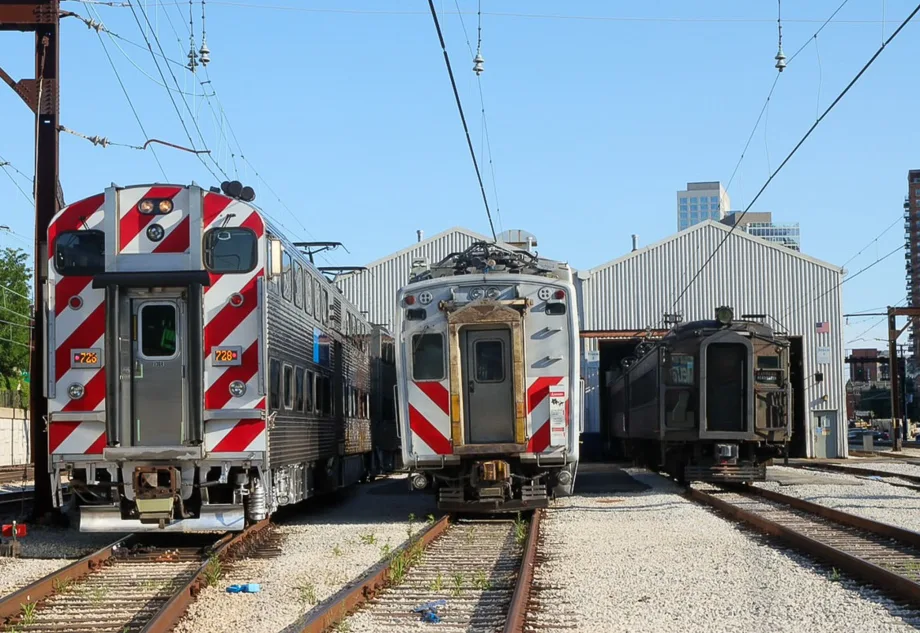
Metra celebrated its past and its future with several guests at a press conference. It also invited the public to tour three vintage railcars at Millennium Station that have served the line over the last 100 years.
Metra
- Chicago's Metra Electric Line celebrated its 100th anniversary of electrification, highlighting its historical impact on the South Side and surrounding suburbs.
- Recent public transportation reforms in Chicago include the establishment of the Northern Illinois Transit Authority and increased transit funding.
- Officials emphasize the ongoing significance of public transit in enhancing regional health and economic development.
*Summarized by AI
Chicago's Metra commuter rail marked the 100th anniversary of the electrification of what is now the Metra Electric Line. This historic milestone transformed the city's South Side and south suburbs while helping shape and enhance Chicago's iconic lakefront corridor.
The event was also a celebration of recent reforms to public transportation in the Chicago area, changes that could be as transformative in the future as the major civic achievement a century ago, said officials.
The reforms include the creation of a new governing authority, the Northern Illinois Transit Authority (NITA), and a significant boost in transit funding.
“This line has played an influential role in the history of Chicago and the south suburbs, and its electrification in 1926 had a dramatic impact on Chicago’s economic development and quality of life,” said Metra Executive Director/CEO Jim Derwinski. “Now, 100 years later, public transportation still plays a key role in the region’s health, and we now have a golden opportunity with NITA to make it work better and harder for the citizens of the region.”
Celebrating 100 Years
Metra celebrated its past and its future with several guests at a press conference. It also invited the public to tour three vintage railcars at Millennium Station that have served the line over the last 100 years.
Earlier this summer, it held several pop-up events at Metra Electric stations featuring displays and giveaways to customers.
The tracks for the line now known as the Metra Electric were laid by Illinois Central Railroad in 1850. Chicago approved their placement along the lakefront because they protected the shore from erosion. Still, that decision backfired over the years as Chicago’s front yard became crowded with dirty and noisy steam locomotives. To address the problem, the city required Illinois Central to electrify the line, which was completed in 1926, opening the way for the development of Grant Park and Burnham Park.
The first electric trains ran on July 21, 1926, the 70th anniversary of the start of the IC’s suburban service, and the city held a major party two weeks later, on August 7.
The electrification and grade-separation of the line, which cost about $52 million — the equivalent of nearly $1 billion today — was an overwhelming success that continues to this day, said officials.
Metra’s Electric Line Trains operate faster, cleaner, and quieter, with none of the freight interference that still plagues other Chicago railroad lines. The railroad acquired the line from Illinois Central in 1987, renaming it the Metra Electric.
Quick Answers
The Metra Electric Line recently celebrated the 100th anniversary of its electrification.
*Summarized by AI
More Rail

New York MTA Advances Final Contract for Second Avenue Subway Expansion
Contract Four is the largest in the Second Avenue Subway Phase 2 project and includes construction of station infrastructure, tracks, and signals for the subway expansion, MTA officials said. Work on Contract Four will begin in 2027.
Read More →
San Diego MTS Breaks Monthly Trolley Ridership Record
Agency officials said July’s ridership indicates MTS’s continued recovery from the pandemic.
Read More →
Report Examines NJ TRANSIT Reliability, Funding Challenges
The Garden State Initiative analysis examines the roles of Amtrak infrastructure, fleet management, and agency operations while recommending a more performance-based approach to improving reliability.
Read More →
Stadler, CapMetro Sign Long-Term Rail Fleet Support Agreement
Beginning in 2027, Stadler will provide on-site technical expertise, spare parts support, training, and obsolescence management to help extend the reliability and longevity of CapMetro’s GTW fleet.
Read More →
Biz Briefs: Alstom Lands Canadian Contract, LYT to Supply California TSP, and More
In METRO's latest installment, we take a look at recent news from Complete Coach Works, Beep, FlixBus, and more partnerships making headlines across the transportation sector.
Read More →
CATS Gold Line Marks 5 Years of Service, 2.8M Passenger Trips
With a six-mile expansion planned, the Charlotte streetcar is positioned to connect more neighborhoods and major transit hubs across the region.
Read More →
Why Simulating Pedestrian Movement Has Become Essential for Modern Rail Stations
Pedestrian microsimulation is helping rail planners identify bottlenecks, test station designs, and prepare complex transit hubs for growing passenger volumes.
Read More →
Amtrak Begins Major Construction at New York’s Sunnyside Yard
The new maintenance facility will support Amtrak’s Airo trainsets while improving maintenance efficiency and turnaround times in New York.
Read More →
Chicago Leaders Unveil Plans for O’Hare Airport Express Train
The privately developed project would offer a 15-minute trip between downtown and O’Hare’s Terminal 2, with trains operating every 15 minutes on a dedicated track. The service would use battery-electric trains and three existing freight rail rights-of-way.
Read More →
OCTA Maps Out 30-Year Strategy to Protect Coastal Rail Corridor
The draft feasibility report identifies strategies to protect the coastal rail line for decades as the agency continues near-term stabilization and sand placement efforts.
Read More →