Maximizing Clean Air, Surface Technologies for Safe Transit Operations
METRO spoke with several suppliers of these technologies about their latest offerings for the transit industry — providing insight on how these systems work and how they can help benefit long-term passenger safety.
Sadiah Thompson・Assistant Editor
June 28, 2021
Credit:
Getty/sturti
5 min to read
Deep cleaning vehicles, sanitizing surfaces, and the use of air filtration technology have become standard practices for most, if not all, public transit agencies throughout the pandemic.
Here, METRO spoke with several suppliers of these technologies about their latest offerings for the transit industry — providing insight on how these systems work and how they can help benefit long-term passenger safety.
Ad Loading...
Credit:
ProAir
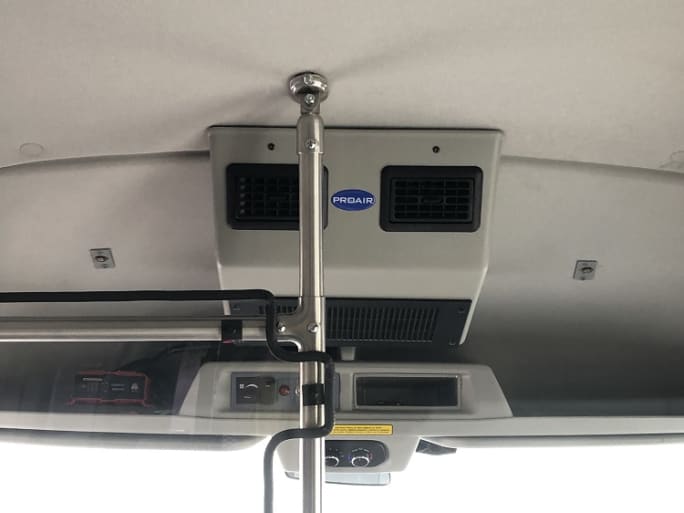
ProAir’s HEPA Filtration Models
At the start of the pandemic in March 2020, the engineering team at ProAir went to work on researching how to effectively apply filtration technology to commercial vehicles, according to Dave Oberdorff, the company’s VP, sales and business development.
As part of the company’s research efforts, ProAir looked to guidelines from the Centers for Disease Control and Prevention and leveraged its experience in supplying the emergency vehicle market with air filtration and purification units. Together, these efforts ultimately helped determine the size of the blowers needed for transit and other air filtration applications.
ProAir’s latest filtration systems — the HEPA-3, HEPA-4, and HEPA-6 models — feature high-capacity true HEPA filters that are designed to deliver up to 99.99% effectiveness in removing airborne mold spores, pollen, dust, bacteria, and viruses, including COVID-19, Oberdorff says. Each unit is equipped with a pre-filter to remove larger particulate matter from the air, helping to extend the lifecycle of the filter and allowing it to focus on eliminating the smaller airborne pathogens down to 0.3 microns in size. The ProAir units are also outfitted with germicidal virus killing UV-C lamps, which operate at a 254 nm wavelength for additional air purification.
Credit:
Webasto
Webasto’s HFT 300
Ad Loading...
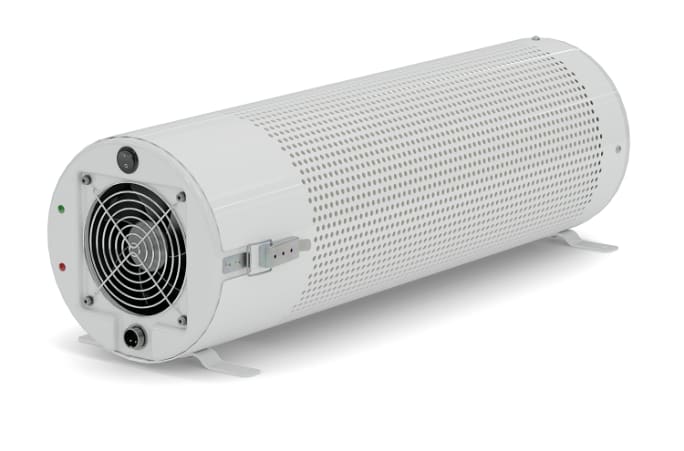
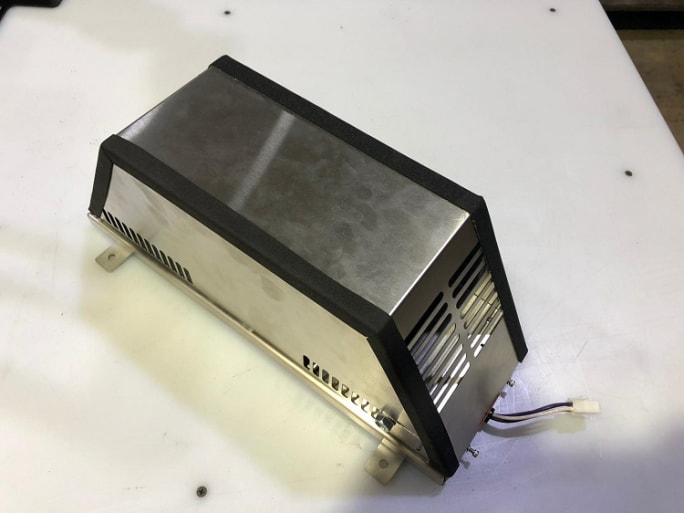
Operating as a stand-alone system (separate from the vehicles HVAC system), Webasto North America’s HFT 300 air filtration system features medical-grade HEPA-14 filtration media and is designed to remove more than 99.995% (0.3 microns or larger) of airborne infections and contaminants like COVID-19.
“The unit moves a very high volume of air at a very high pressure drop,” says Paul Baczewski, Webasto’s national account manager for bus products. “Pressure drop [means] that a high volume of air is entering the filter, but a minimum amount is felt coming out, [so] somebody sitting in front of the filter is not going to feel a tremendous amount of air blowing on them.”
Baczewski adds that both a high volume of air and a high-pressure drop are required to remove a significant amount of viral contaminants in one pass on a bus. Without a single pass removal, he says, operators could potentially be recirculating contaminated air in their vehicles.
The filter in Webasto’s HFT 300 connects to a 12-volt source and can be mounted in any direction — vertically or horizontally — on a bus. The system is also equipped with an air pressure monitoring system that can continuously gauge the air flow and condition of the filter.
Credit:
NFI Parts
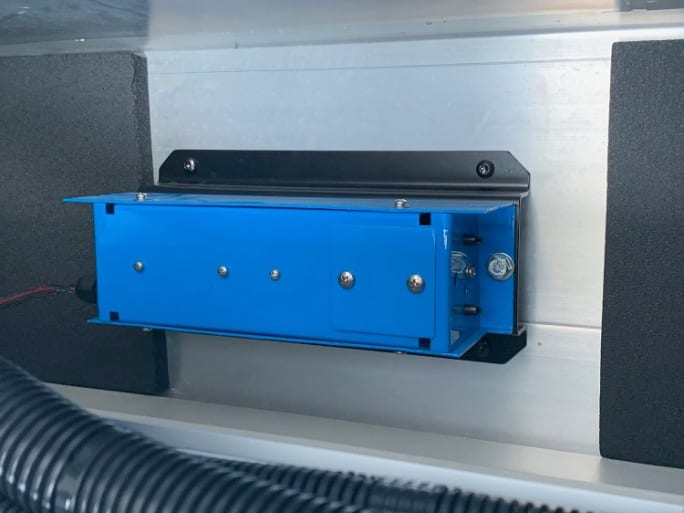
NFI Parts PASP System
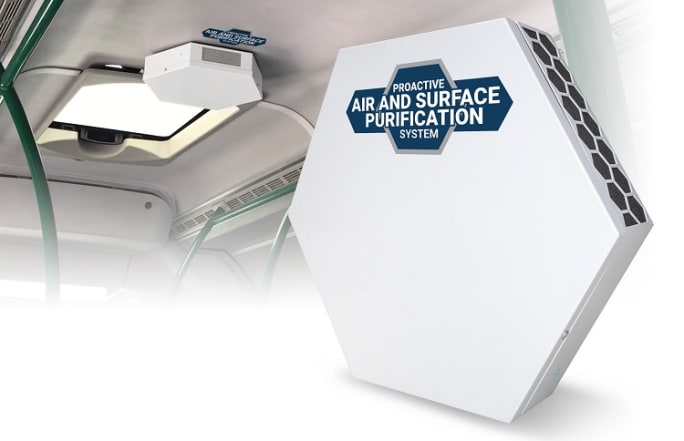
The Proactive Air and Surface Purification (PASP) system from NFI Parts uses proprietary technology to create advanced purification by producing high-energy clusters, which are distributed throughout the interior of the vehicle. The main goal of the solution is to safely sanitize both the air and surfaces in vehicles without leaving behind any harmful residue.
Ad Loading...
“We wanted to provide our customers with a solution that could work for them while their vehicles are in service, and that would be useful beyond the COVID-19 pandemic,” says Brian Dewsnup, president of NFI Parts. “Along with viruses and bacteria, [the PASP system] is effective against mildew, odors, mold, and funguses, ensuring long-term return on investment.”
The solution, which can be mounted directly in the passenger compartment, requires 12-volt power to operate and does not rely on other vehicle systems. It also does not void any vehicle system warranties, and all service components are accessible by removing the system’s cover.
In-service testing of the PASP system has reportedly shown an overall bacteria count reduction of 99.3% and demonstrated the technology’s ability to deactivate the SARS-CoV-2 virus, which causes COVID-19.
Credit:
Climate Comfort Technologies
Air Cleaning Products from Climate Comfort Technologies
Climate Comfort Technologies' (CCT) line of air cleaning products for U.S. transit vehicles are designed to manage elevated ionized air concentrations within a vehicle’s passenger space.
Ad Loading...
“CCT products are purpose built for transit applications and components are selected to handle thermal shock, vibration, and variable voltages while minimizing maintenance in comparison to bulb type technologies,” says Scott Imamura, the company’s COO. “While there are clear advantages for air cleaning systems, there is no silver bullet for both surface and air cleaning in transit vehicles. Air cleaning systems should be considered in addition to surface cleaning procedures, as well as the use of A/C air filters in the vehicle.”
As an active air cleaning technology, Imamura says CCT’s solutions can operate within occupied areas without the production of ozone or harmful by-products. Some of the benefits, he adds, include improved capture rates of filter media, suppression of dust, and the ability to help control various odors and inhibit and/or inactivate various pathogens in a vehicle’s air stream.
Credit:
Knorr Brake Company
Three-Stage Air Purification from Knorr Brake Company
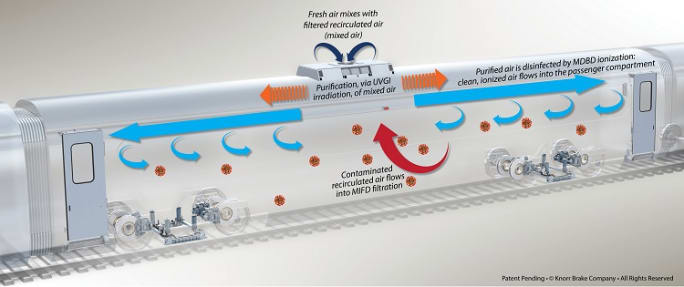
Knorr Brake Company (KBC) — a subsidiary of rail and commercial vehicles braking systems supplier Knorr-Bremse — offers a three-stage air filtration and purification solution for use with rail vehicle HVAC systems.
Working closely with the U.S. EPA, KBC has conducted extensive testing prior to and after the system’s release to ensure its efficiency in protecting against viruses like COVID-19, according to Tyler Bowie, KBC’s rail services sales application engineer. He says the antimicrobial system has been tested to be 99.9% effective in removing harmful viruses and bacteria.
Ad Loading...
The three-stage system starts with the filtration process, incorporating electrostatic discharge to actively target viruses and then uses physical filtration to remove the charged particles and reduce harmful bacteria transmission. The second step involves the Ultraviolet Germicidal Irradiation (UVGI) purification process, in which viruses/bacteria are eradicated with UV-C radiation — without the risk of exposure to passengers. The final step is the disinfection process, which works through bipolar ionization, meaning ions travel through the air and attack pollutants, chemically decomposing them into harmless water and carbon dioxide.
Credit:
United Safety
Active Purification from United Safety
United Safety’s Active Air Purification utilizes safe levels of naturally occurring hydrogen peroxide to actively eliminate 99% of viral and bacterial pathogens from air and surfaces, including SARS-CoV-2, which causes COVID-19. This technology improves air quality and safety for ridership and operators while causing no damage to interior surfaces or electronics.
Beyond Air: Surface Cleaning and Sanitization Below, are some of the latest providers of cleaning and sanitization solutions — ranging from hospital-grade disinfectants to fogging systems — that can help operators safeguard against viruses like COVID-19.
CleanSpray
CleanSpray Technologies provides turnkey solutions to mitigate human exposure to harmful pathogens by cleaning the air and vehicle surfaces. Offering laboratory tested plant-based disinfectants and proprietary delivery systems, CleanSpray seeks to create safe and healthy transportation environments.
CleanSpray's Automated Spray/Fogging System works on an automatic cycle. With customized installation, the system aims to reduce labor costs and give operators peace of mind by removing human error.
The Pure Hard Surface Disinfectant from Whiting Systems is a long-lasting hospital-grade solution designed to keep passengers safe. The solution can eliminate a variety of bacteria and viruses, including COVID-19, within 30 seconds to two minutes. Bearing the EPA’s lowest toxicity rating, no rinse is required after using the solution, which can provide a 24-hour residual once it is applied.
Zep The Zep Assure Program is an integrated cleaning and disinfection management system. The program follows a three-step process, including cleaning surfaces with a properly diluted solution of Zep Assure Armor Cleaner Concentrate, disinfecting surfaces with Zep Aviation RTU Cleaner Disinfectant or a properly diluted solution of Zep Triton, and coating surfaces with Zep Assure Armor Surface Protectant Pro, an antimicrobial that remains on the treated surface for months at a time and through multiple cleanings.
CEO Magnus Friberg discusses Luminator’s shift toward becoming a digital partner, the growing importance of software and interoperability, and how AI can help agencies improve operations and passenger experience.
Reliability-Centered Maintenance helps transit agencies move beyond routine checklists to focus limited resources on the assets and failures that have the greatest impact on safety, reliability, and service.
More than 1,500 buses now feature upgraded technology designed to improve arrival predictions and provide free Wi-Fi, with deployment expected to reach nearly 2,000 buses by the end of 2026.
John Hroncich discusses BAE Systems’ modular and scalable approach, lessons learned from decades of real-world operations, and how agencies can identify electrification strategies that fit their fleets.
In METRO's latest installment, we take a look at recent news from Complete Coach Works, Beep, FlixBus, and more partnerships making headlines across the transportation sector.
What if transit leaders could ask any operational question and get a trusted answer in seconds? Conversational AI is transforming how agencies use their data.
More than $191 million in federal funding will help three transit agencies replace aging rail vehicles and support a new autonomous shuttle service in Chattanooga.
LA Metro’s Obed Mejia discusses technician training, evolving maintenance technology, fleet replacement, and strategies for getting the most out of today’s transit fleets.
In METRO's latest installment, we take a look at recent news from Siemens, Prevost, Dodge, and more partnerships making headlines across the transportation sector.
Pedestrian microsimulation is helping rail planners identify bottlenecks, test station designs, and prepare complex transit hubs for growing passenger volumes.